



Africa-first visits speak volumes about ties









Each January, as the world takes stock of shifting geopolitical priorities, China quietly reaffirms one of the most consistent traditions in contemporary diplomacy: Africa remains the first overseas destination of the year for the Chinese foreign minister.
This month, Foreign Minister Wang Yi's visit to Ethiopia, Tanzania, Lesotho and the African Union headquarters — the 36th consecutive Africa-first tour by a Chinese foreign minister — once again underscored a diplomatic practice that has endured leadership transitions, global crises and changing international orders. Far from being symbolic, this tradition reflects the depth, direction and future of China-Africa relations.
To understand why Africa comes first, one must return to history. China and Africa's modern engagement emerged from shared experiences of colonial domination and struggles for sovereignty. In the 1950s and 1960s, as African nations fought for independence, China offered political solidarity and other forms of support. This sense of common cause crystallized in 1971, when African countries played a decisive role in helping restore China's lawful seat at the United Nations. That moment reflected a shared belief in equality among nations and the right of developing countries to be heard on the world stage.
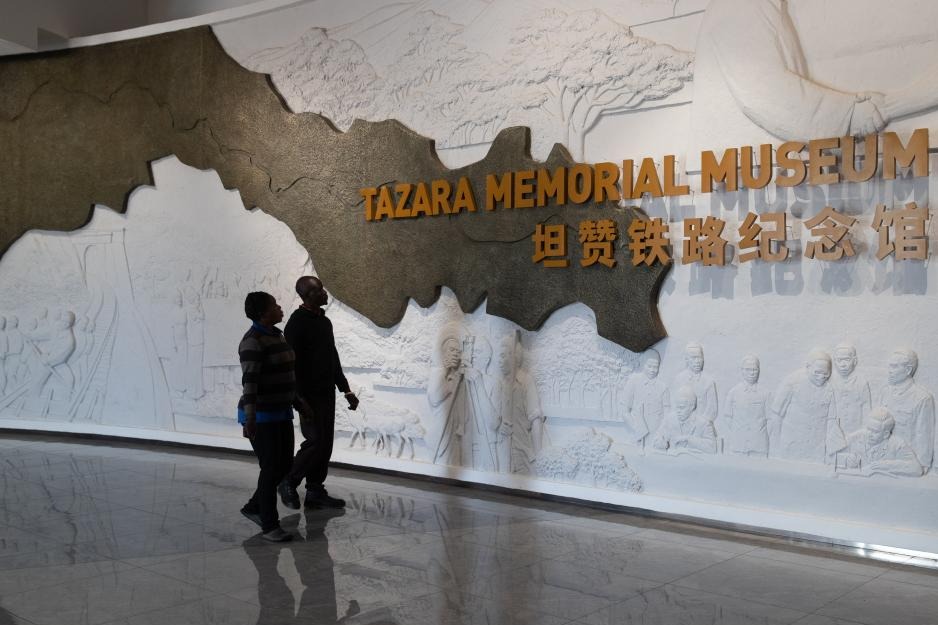
These early bonds matured into a development-oriented partnership. Landmark projects — such as the Tanzania-Zambia Railway in the 1970s — symbolized China's willingness to support Africa's development even when its own resources were limited.
Over time, cooperation expanded into infrastructure, agriculture, health, education, trade and industrialization. What distinguished this relationship was not only scale, but continuity. While many external partners recalibrated their engagement with Africa according to shifting strategic interests, China maintained a steady, long-term approach grounded in mutual respect and noninterference.
The significance of this year's visit is amplified by both timing and location. Foreign Minister Wang attended the launch of the China-Africa Year of People-to-People Exchanges at the headquarters of the African Union in Addis Ababa, Ethiopia. This was no coincidence. Addis Ababa is not only the diplomatic capital of Africa, but also a symbol of African unity. Launching the initiative there signaled that the next phase of China-Africa relations will be as much about societies as it is about states.
People-to-people exchanges represent a deliberate broadening of the partnership. For decades, China-Africa cooperation focused primarily on infrastructure, trade and macro-level development — areas that remain essential. Yet as both sides pursue modernization, there is growing recognition that sustainable partnership must be rooted in social connection: among students, young professionals, civil servants, artists, journalists and entrepreneurs. Scholarships, vocational training, media exchanges, cultural festivals and youth innovation programs are no longer peripheral; they are central to building long-term trust.
This shift reflects a deeper understanding of development itself. Modernization cannot be imported wholesale; it must be learned, adapted and owned.
China's development experience — characterized by long-term planning, policy experimentation, strong state capacity and gradual reform — offers valuable lessons. African countries, each with distinct histories and conditions, are not seeking replicas of China's path. Rather, they are engaging in selective learning: how to align infrastructure with industrial policy, how to invest in human capital, and how to balance growth with social stability.
Youth are critical in this process. Africa is the world's youngest continent, while China has accumulated decades of development experience. Exchanges that bring young Africans to Chinese universities, factories, technology hubs and governance institutions — and young Chinese to African societies — create a shared language of development. These interactions cultivate a generation that understands each other beyond stereotypes and headlines, and one that can sustain cooperation well into the future.
The Africa-first tradition also carries broader global significance. Today's international environment is marked by fragmentation, geopolitical rivalry and mounting global challenges — from climate change and public health risks to debt pressures and digital divides. In this context, China-Africa cooperation offers a model of South-South engagement that prioritizes development and dialogue rather than confrontation. It reinforces the voice of the Global South at a time when developing countries seek greater agency in global governance.
China and Africa's shared emphasis on peace, development, fairness, justice, democracy and freedom — understood through diverse cultural lenses — provides a normative foundation for cooperation. These are not abstract ideals. They are expressed through joint efforts in climate adaptation, renewable energy, agricultural modernization, health system strengthening and digital connectivity. By coordinating positions in multilateral forums and advancing practical cooperation on the ground, China and Africa contribute to a more balanced and inclusive global order.
Equally important is the element of consistency. Diplomacy is often judged by announcements and summits, but trust is built through repetition and reliability. The fact that Africa has remained China's first diplomatic destination for 36 consecutive years sends a powerful message: Partnership is not episodic, and Africa is not an afterthought. This consistency resonates strongly across the continent, where long-term planning is essential for development and where predictability in partnerships matters.
As China and Africa mark the 70th anniversary of diplomatic relations, the meaning of Africa-first diplomacy becomes clearer. It is a statement of values, a reflection of shared history and a commitment to a common future. It affirms that modernization can be cooperative, that development can be inclusive, and that global challenges are best addressed through unity rather than division.
Traditions endure because they serve a purpose. China's Africa-first visits speak not only to the past, but to the future — one in which China and Africa continue to learn from each other, empower their people, and work together to shape a more equitable world. In an era of uncertainty, such consistency is not just reassuring; it is transformative.
The author is the founder and executive director of the Ghana-based Africa-China Centre for Policy and Advisory.
The views do not necessarily reflect those of China Daily.










