



Steering Sino-US relations in the right direction









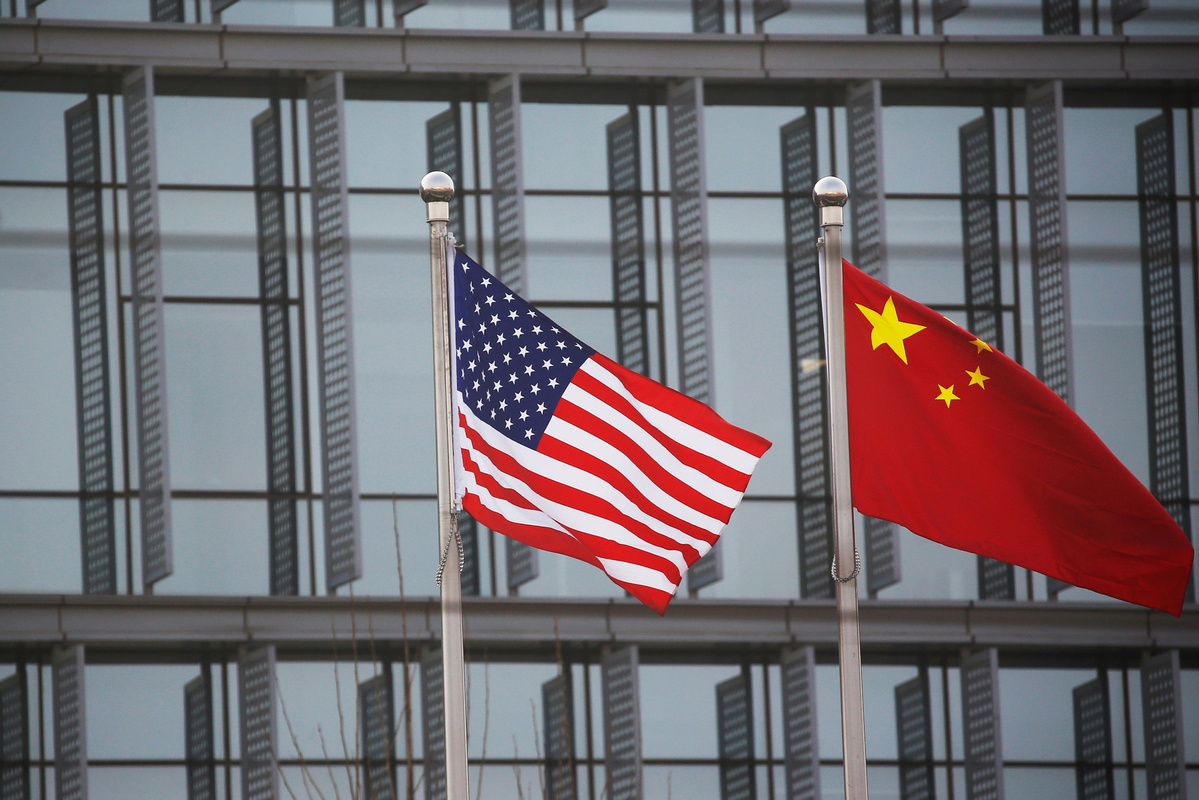
When Donald Trump returned to the White House in early 2025, China-US relations initially experienced intense friction due to the unilateral hike in tariffs. But as the months passed, the relationship gradually stabilized. Washington had underestimated the resilience of the Chinese economy. The tariff threats failed to extract concessions from Beijing and China's countermeasures brought the US to the negotiation table with a more pragmatic mindset.
From Geneva to Kuala Lumpur, several rounds of talks produced a basic consensus on key economic and trade issues. The October meeting between the two heads of state in Busan, the Republic of Korea, marked a visible easing of tensions and reassured the international community. The US president also announced wish to visit China in April.
Preventing the derailment of bilateral relations is in the common interest of both Washington and Beijing. China's response to pressure has been steady rather than reactive. Beijing wants to safeguard its legitimate interests in trade and technology while remaining firm on its core interests, including the Taiwan question.
This confidence comes from China's economic fundamentals. The country's annual GDP came in at 140.19 trillion yuan ($20.13 trillion) in 2025, an increase of 5.0 percent over the previous year, securing its status as the world's second-largest economy. Consumption — which now contributes about 60 percent to growth — has reinforced China as the world's second-largest consumer market.
Following the US tariff war, China has also rebalanced its development model. "Cool China" has emerged as a global buzzword, reflecting the country's remarkable achievements in science and technology. The year 2025 witnessed breakthroughs for artificial intelligence applications in China, showcasing the nation's technological prowess.
Science and technology are central to China-US competition. In July 2025, the White House unveiled "Winning the Race", its action plan for AI. The next month, China released guidelines for its "AI Plus" initiative, targeting over 90 percent adoption of new-generation intelligent terminals and AI-driven applications by 2030. Preliminary estimates indicate that China's core AI industry exceeded 1.2 trillion yuan in 2025.
Sustained engagement between China and the US, even in the form of trade frictions, has deepened understanding of each other and a new pattern is taking shape. The US has signaled a willingness to enhance consultations with China and explore avenues for cooperation. The 2025 US National Security Strategy report adopts a relatively measured tone in its references to China. During a news briefing on Dec 19, Secretary of State Marco Rubio stated "China is and will continue to be a rich and powerful country and a factor in geopolitics" and expressed confidence that the US can find productive ways to cooperate with China.
Military ties are also thawing. Following a meeting between Chinese Defense Minister Dong Jun and his US counterpart Pete Hegseth in Malaysia in October, military-to-military exchanges are moving toward normalcy.
This year is politically significant for both China and the US. China embarks on its 15th Five-Year Plan (2026-30), a critical phase for achieving the goal of basically realizing socialist modernization by 2035. These five years will test its ability to navigate the external environment and ensure that no major conflict disrupts its continued development.
The central leadership's recommendations for the 15th Five-Year Plan recognize a world marked by complex transformations, turbulence and heightened geopolitical risks. Domestically, China faces challenges such as insufficient demand, a transition between old and new growth drivers, as well as pressures on employment and household income growth. But a clear understanding of risks, combined with a strong industrial foundation, innovation capacity and policy continuity, adds predictability to China's development trajectory.
On the other hand, the US is heading toward midterm elections in November, a major concern for the Trump administration and the Republican Party. Multiple polls suggest that Trump's approval ratings have dropped from around 52 percent at the beginning of 2025 to around 41 percent. "Affordability" has become a buzzword in US politics, reflecting growing public frustration over rising living costs. The K-shaped economic divergence in the US has exacerbated, where the rich grow richer while the poor face increasing struggles.
What's more, the negative effects of Trump's tariff policy are likely to become more pronounced this year. The Federal Reserve has projected that inflation in the US could range between 3.5 and 4 percent in 2025, significantly above the 2 percent target.
However, there are still some underlying risks.
First, hardliners in Washington are not in favor of a thaw in bilateral relations. Recent legislative moves in the US Congress targeting China reflect efforts to steer back toward a confrontational approach. Second, US policies on the Taiwan question and the South China Sea are also a matter of concern. Washington's recent approval of arms sales to Taiwan worth over $11 billion has added to the tensions. Third-party factors also warrant attention. Japanese Prime Minister Sanae Takaichi's erroneous remarks on Taiwan were intended to provoke a confrontation. The Russia-Ukraine conflict and the Korean Peninsula could further complicate matters.
But both countries have to manage the differences as an overall stable bilateral relationship serves both countries' interests.
The author is a professor and deputy director at the Center for American Studies of Fudan University.
The views don't necessarily represent those of China Daily.
If you have a specific expertise, or would like to share your thought about our stories, then send us your writings at opinion@chinadaily.com.cn, and comment@chinadaily.com.cn.





