Sino-UK ties enjoy renewed momentum
Trade, investment, and business cooperation continue to anchor bilateral relations










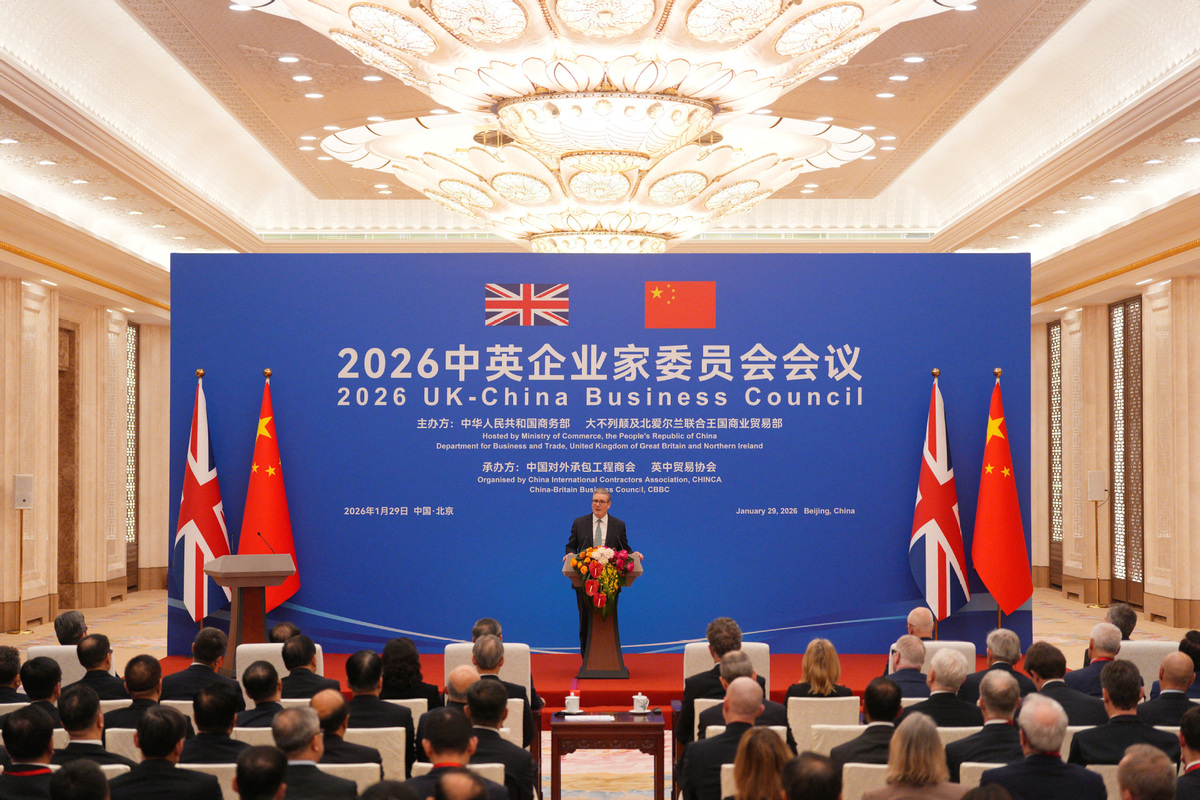
United Kingdom Prime Minister Keir Starmer is in China this week with a high-level delegation, seeking to revitalize his country's ties with the world's second-largest economy during the first visit by a British leader since 2018.
Accompanied by senior officials from the finance and trade departments, Starmer's delegation also includes executives from major UK companies, underscoring the central role of economic cooperation — the icebreaker in bilateral relations seven decades ago and a long-standing ballast of China-UK ties.
In the early 1950s, when Western countries imposed trade embargoes on the newly founded People's Republic of China, a group of 48 British businesspeople overcame significant obstacles to make an icebreaking trip and start doing business with China.
Though there were ups and downs in bilateral relations during the following years, the icebreaking spirit endured. Guided by the principles of equality and mutual benefit, bilateral trade expanded from just $300 million in 1972 — which was when China and the UK established ambassadorial diplomatic relations — to more than $100 billion annually during the past five years.
Despite disruptions attributed to the global pandemic and rising geopolitical tensions, trade, investment, and business cooperation have continued to anchor China-UK relations, delivering tangible benefits to the peoples of both nations.
The latest data shows that in the four quarters to the end of the second quarter of 2025, trade in goods and services between the UK and the Chinese mainland reached 103 billion pounds ($140.9 billion), according to the UK's Department for Business and Trade. China is the UK's largest trading partner in Asia, while the UK ranks as China's third-largest trading partner in Europe.
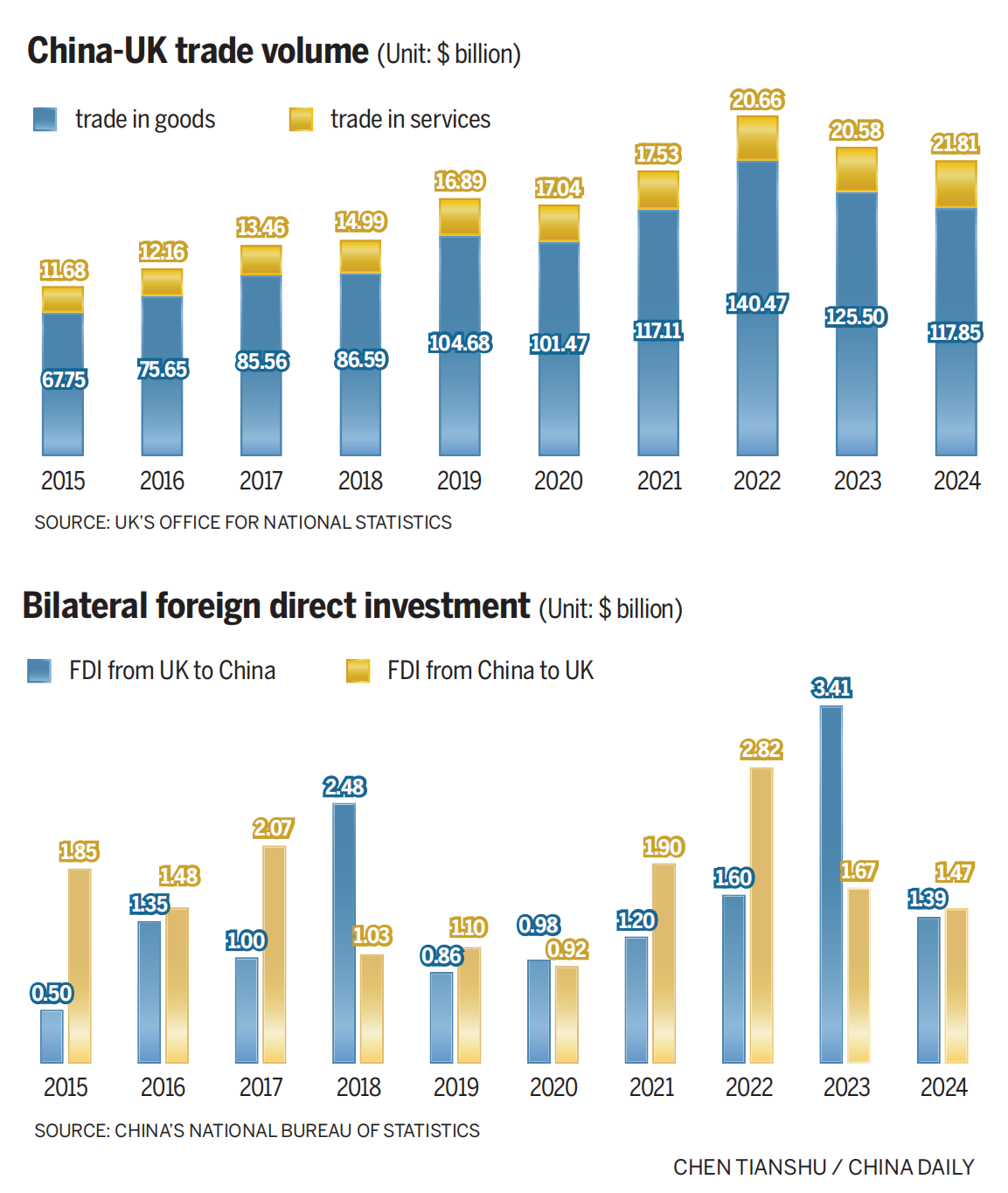
But, despite the scale and resilience of bilateral trade, high-level political engagement between the two countries has lagged behind that of other major European economies with China.
In a recent foreign policy speech, Starmer noted that other European leaders had paid frequent visits to China since 2018, but that no UK prime minister had gone there.
"I'm talking here about the second-biggest economy in the world — a nation that accounts for over a quarter of global R&D, and leads in some critical technologies that are key ... it is our third-largest trading partner, supporting around 370,000 British jobs," Starmer told leaders in business, banking, and professional services at the Lord Mayor's Banquet in London in December. "This room knows very well — the scale of the opportunity in China is immense."
The opportunities are not limited only to one or two sectors. In financial services, London is the world's second-largest offshore renminbi trading hub, accounting for 21.9 percent of total trading volume in 2024.
In education, around 158,955 Chinese students were enrolled at UK universities in the 2024–25 academic year, making them the second-largest cohort in the country. And in tourism, the UK welcomed 463,000 visitors from China in 2024, who spent a total of $990 million.
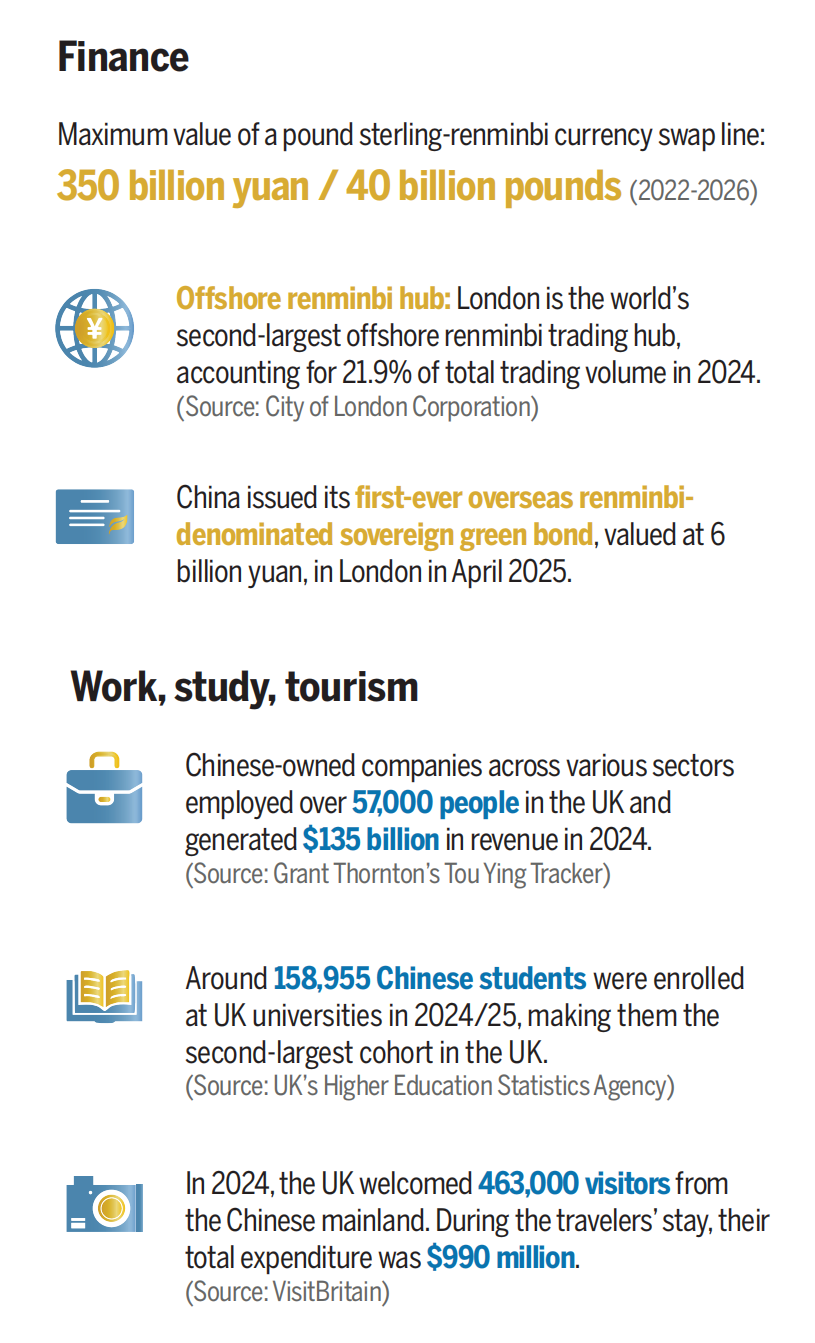
UK companies are also benefiting from opportunities in sectors including pharmaceuticals, aerospace, luxury goods, and professional services.
In a commentary published ahead of Starmer's visit, Zheng Zeguang, China's ambassador to the UK, said that as China formulates its 15th Five-Year Plan (2026–30), the country will continue focusing on high-quality development and deepening reform and opening up in all respects.
"China is sharing its vast market demand with the world and providing its partners with more cutting-edge technologies, investments and high-quality yet affordable products," said Zheng. "Closer collaboration with China will only benefit the UK in attaining its development goals. British businesses and consumers are becoming increasingly aware of this through first-hand experience."
Over the next decade, China's middle-income population is projected to grow to 800 million, further unleashing market potential. This helps explain why, despite challenges, 76 percent of UK companies operating in China plan to maintain or increase their investment levels, while only 8 percent plan to reduce investment, according to a 2025 survey by the British Chamber of Commerce in China.
Jack Perry, chairman of the 48 Group, the British icebreakers club formed in the 1950s, has been active in business and trade between China and the UK, as were his father and grandfather before him.
"Across the past 70 years, each generation has seen a very different China," said Perry, who recently returned from a business trip to China. "My grandfather's China was rebuilding, industrializing, and reopening to the world. My father's China was reforming, modernizing, and learning from global partnerships. The China I work with today is innovating, globalizing, and beginning to lead the next phase of industrial technology."
Chinese companies, meanwhile, also view the UK as an attractive destination for investment, and a gateway to the global market. Chinese-owned enterprises across the services, manufacturing, and energy sectors employed more than 57,000 people in the UK and generated $135 billion in revenue in 2024, according to Grant Thornton's Tou Ying Tracker.
Chinese companies in the UK also posted strong financial results in 2024. More than 92 percent expect their revenue to remain stable or grow during the next two years, while 64 percent plan to collaborate with British organizations, according to a report by the China Chamber of Commerce in the UK, or CCCUK, last year.
Fang Wenjian, chairman of the CCCUK, said: "As we look ahead, we remain optimistic that deepening engagement will unlock new opportunities, drive sustainable growth, and foster renewed partnerships, shared success and enduring friendship between our two great nations."
Gao Kejing contributed to this story.