Beijing enters Belt and Road time


BEIJING - The Chinese capital is in Belt and Road time with high hopes that the Belt and Road Forum for International Cooperation means a new dawn for globalization.
A total of 29 heads of state and government leaders are scheduled to be in Beijing for the forum which opens on Sunday. Chinese President Xi Jinping will attend the opening ceremony and deliver a keynote speech. On Monday, he will host a leaders' round table summit.
The forum is by far the most important meeting on the Belt and Road Initiative since Xi first raised the concept in 2013. It is also the largest-scale and highest-level international meeting initiated by China.
Participants will also include more than 1,500 delegates from over 130 nations; more than 70 international organizations including the United Nations, the International Monetary Fund and the World Bank; representatives of the European Union, France, Germany, Britain, Japan, the Republic of Korea and the United States.
The forum comes at a time when the world is waiting to see a new chapter of globalization which features more inclusive and inter-connected development.
Jose Vinals, chairman of Standard Chartered PLC, praised the "very good timing" of the forum, saying it will do much for communication between governments, business communities and other stakeholders as they develop new strategic cooperation mechanisms.
In an email to Xinhua, Vinals writes of a globalization "under attack and suffering setbacks." The Belt and Road Initiative, he believes, is the strong support which globalization needs today.
Roads, railways, pipelines and ports will give developing nations and landlocked regions easier access to capital, goods and talent, creating growth opportunities for those who benefited little from the last round of globalization.
The initiative is essentially about balancing the global economy, said Zhang Yansheng of the China Center for International Economic Exchanges.
"While globally we see an overall excess of industrial capacity, liquidity and welfare, many Belt and Road countries face a shortage of those very things," Zhang told Xinhua in an interview. "Left unsolved, this problem will lead to a widening gap between developed and developing economies."
The Belt and Road puts priority on infrastructure and connectivity. It means better linking countries to the global trade network and enabling them to bring their comparative advantages to the market.
Improved infrastructure will particularly benefit those economically least developed regions, including Central and South Asia with large infrastructure gaps and difficulties in financing new projects, according to Tianjie He and Louis Kuijs, economists at the Britain-based advisory firm Oxford Economics.
They estimate that Belt and Road countries will contribute 80 percent of global GDP growth by 2050, up from 68 percent last year, with China's share remaining broadly stable at around 40 percent and that of the rest of Asia doubling to over 30 percent.
Differing from previous models, the globalization actuated by the Belt and Road will be more inclusive. Cooperation will not be subject to restrictive rules nor high thresholds, said Wang Yiwei of the Renmin University of China.
"The Belt and Road Initiative does not force other countries to accept China's plans and rules, but calls for alignment of development strategies," he told Xinhua.
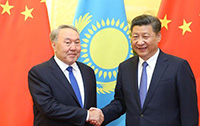
Many countries and regions along the Belt and Road have dovetailed the initiative with their own programs, including Mongolia's Prairie Road, Kazakhstan's Nurly Zhol (Bright Path), the Russia-led Eurasian Economic Union and the EU's Junker Investment Plan.
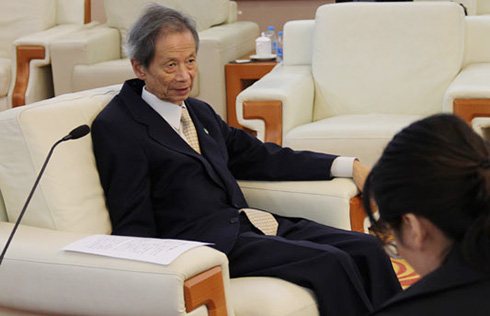
Without predefined rules, the Belt and Road is about learning from doing, about seeking consensus project by project, said Zha Daojiong of Peking University.
Expectations are high: no one will be left behind in the new era of globalization. However, there might be lingering risks of protectionism, financial constraints and regional insecurity.
Zha believes a vibrant economy, blossoming trade, investment, jobs and profits can keep the lid on security risks.
"The Belt and Road Initiative helps people get busy with business, rather than busy with terrorism," he said.