BIZCHINA> 30 Years of Reforms

|
BIZCHINA> 30 Years of Reforms
|
|
Related
Nation promotes vocational education
By Liu Jie (China Daily)
Updated: 2008-09-03 10:45
 Management talents and engineers may be in short supply, but what the Chinese business sector needs most is skilled workers and technicians. As China's manufacturing industry has climbed up the value chain since the beginning of economic reforms 30 years ago, the demand for highly skilled blue-collar workers on the factory floor has been growing.
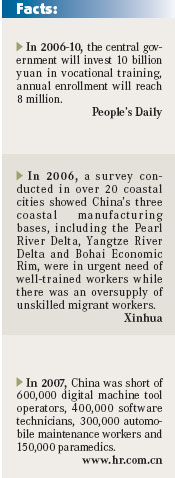
Despite that, factory owners traditionally pay blue-collar workers, even the highly skilled ones, disproportionately low salaries compared with those at the management level. Not enough workers are therefore willing to spend the time and the effort to acquire skills in their trade, leading to a shortage of technicians since the late 1990s. To solve this problem, the government began to promote vocational education, which can help ease the pressure on universities and increase job opportunities for urban youth. According to China Statistics Yearbook, there were 11,570 secondary vocational schools around the nation with over 3 million students in 2003. The number of schools rose to 11,813 and that of students crossed 14 million in 2006. At the same time, the number of schools for skilled workers stood at 2,884, while that of students jumped from 2.35 million in 2003 to 3.21 million in 2006. People's Daily reported in 2006 that the central government planned to invest 10 billion yuan in vocational training in the 2006-10 period, with an annual enrollment target of 8 million. Minister of Education Zhou Ji said at a recent national meeting that China will enroll 8.2 million students in secondary vocational schools this year. He also said that to attract more students to secondary vocational schools, the government will offer more financial support, build a better school management system and try to improve teacher training. But more than a government push, the development of vocational education in China needs corporate support, which may involve cooperation with schools to increase the practical skills of students, offering internship opportunities as well as providing on-the-job training for existing workers. And more important than that is an improvement in salary levels and social status, which will automatically attract more urban youth to the factory floor.

(For more biz stories, please visit Industries)
|
主站蜘蛛池模板: 亚洲精品一区二区在线播| 亚洲成a人无码av波多野| 日韩av中文字幕有码| 亚洲国产精品综合久久网各| 熟女国产精品一区二区三| 日韩成人一区二区三区在线观看 | 欧美白妞大战非洲大炮| 国产真人无码作爱视频免费| 成人久久18免费网站入口 | 国产精品99中文字幕| 亚洲AV无码久久精品成人| 痉挛高潮喷水av无码免费| 在线观看成人永久免费网站| 国产精品成人不卡在线观看| 午夜成人性爽爽免费视频| 国产在线精品一区二区中文| 五月婷之久久综合丝袜美腿| 日本一区二区精品色超碰| 国产免费高清69式视频在线观看| 欧美日韩性高爱潮视频| 亚洲欧美日韩国产国产a| 日韩V欧美V中文在线| 国内精品久久久久影院日本| 亚洲精品国产免费av| 激动网视频| 日韩精品一区二区三区在| 手机成人午夜在线视频| 日韩美少妇大胆一区二区| 中文日产幕无线码一区中文| 国产精品白浆免费视频| 日韩av一区二区三区在线| 91亚洲国产三上悠亚在线播放| 久久精品国产亚洲AV麻豆长发| 国产亚洲精品视频中文字幕| 欧美人与禽2o2o性论交| 国产精品久久久久久久久久免费| 欧洲一区二区中文字幕| 国产精品一区自拍视频| 精品一区二区三区蜜桃麻豆| 国产精品毛片一区二区| 无码av永久免费专区麻豆|