BIZCHINA> 30 Years of Reforms

|
BIZCHINA> 30 Years of Reforms
|
|
Related
The nuclear option
By Wan Zhihong (China Daily)
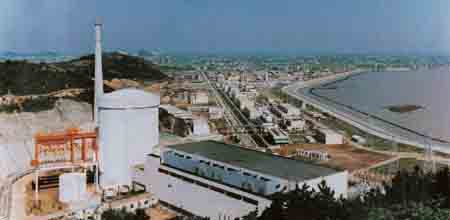
Updated: 2008-10-20 15:58 Prior to the 1980s, few Chinese knew about Qinshan, a small town in Zhejiang province on the shores of the East China Sea. But Qinshan became well known after China began building its first nuclear power plant there in 1985. China's plans to build a nuclear power plant dates back to 1970. After reading a report that China's industrial center, the city of Shanghai, may face power shortages, the late Chinese Premier Zhou Enlai said on February 8, 1970 that in order "to ease the power crisis in Shanghai as well as in east China, we should develop nuclear power as a long-term plan.
"Nuclear power should not only be used for weapons. It should also be used to serve China's economic development," Zhou said.
China had exploded its first atomic bomb in 1964 and its first hydrogen bomb in 1967. Zhou's exhortations transformed the country's nuclear industry. Many scientists from different parts of the country came to Shanghai to prepare for the first civilian nuclear power project. However, the preparations were fraught with controversy. Safety was the foremost concern, especially after the accident at Three Mile Island nuclear power plant in the United States in 1979. Although it resulted in no deaths or injuries, the Three Mile Island accident engendered a heated debate on whether to develop nuclear power in China as well as across the globe. Technology was another issue. Some scientists insisted that China should build its first nuclear power plant with domestic technology. Others thought China should use foreign technology, which was more advanced and reliable. A site for a nuclear power plant also became a problem. Shanghai's Chongming Island, Jiangyin city in Jiangsu province, and Zhoushan Island in Zhejiang province were considered as possible sites, but were abandoned for safety or environmental reasons. Qinshan was then taken into the consideration. Facing Hangzhou Bay with some hills, it was ideal geographically and convenient for transportation. In 1981, China finally approved the construction of its first nuclear power plant at Qinshan with a Chinese-made pressurized water reactor with a capacity of 300 MW. Construction began four years later. However, in 1986 when the Chernobyl nuclear power plant disaster occurred in the former Soviet Union, it again triggered concerns about nuclear power and the safety of the Qinshan project. The Chernobyl accident caused many deaths and long-term radiation pollution, and changed the pace of development of the nuclear power industry globally. Additionally, because the Qinshan plant was designed and constructed domestically, some experts worried about safety during the construction process; others even wanted to halt construction. In 1989, the Chinese government invited 11 experts from the International Atomic Energy Agency (IAEA) to conduct a safety evaluation of the Qinshan project. After three months of careful testing, the IAEA issued a report saying the plant was "safe and of good quality". It allayed many fears. In December 1991, Qinshan's reactor was connected to the power grid. It began commercial operation in April 1994. The Qinshan project made China the seventh country in the world to build and operate a nuclear power plant. By the end of last year, the plant had generated a total of 31 billion kWh of electricity, earning about 9.6 billion yuan in sales revenues and paying 1.8 billion yuan in taxes. After 14 years of operation, nuclear power has proved to be a clean source of energy for China. In contrast, a thermal power plant with a 1000-MW capacity will consume three million tons of coal a year and produce heavy emissions. A nuclear power plant with the same capacity will use 250 tons of fuel, producing fewer emissions. After tracking the area around the power plant for more than ten years, the Zhejiang provincial environmental authority has reported that the power plant has caused no environmental changes. (For more biz stories, please visit Industries)
|
主站蜘蛛池模板: 国产精品无圣光一区二区 | 少妇高潮惨叫久久久久电影| 国产suv精品一区二区四| 久久久久无码中| 亚洲精品综合第一国产综合| 国产精品麻豆成人AV电影艾秋| 人妻美女免费在线视频| 极品少妇无套内射视频| 医院人妻闷声隔着帘子被中出| 99网友自拍视频在线| 亚洲色欲在线播放一区二区三区 | 成人国产精品日本在线观看| 午夜福利国产精品视频| 亚洲男人第一av天堂| 少妇和邻居做不戴套视频| 被灌满精子的波多野结衣| 亚洲综合成人av在线| 一级欧美牲交大片免费观看| 亚洲综合不卡一区二区三区| 日本三级香港三级三级人妇久| 国产乱沈阳女人高潮乱叫老| 中文字幕人妻中文AV不卡专区| 97av麻豆蜜桃一区二区| 呦女亚洲一区精品| 免费A级毛片中文字幕| 毛片大全真人在线| 日本福利一区二区精品| 色欲天天天综合网| 国产国拍亚洲精品永久软件| 国产午夜视频免费观看| 中文有码字幕日本第一页| 医院人妻闷声隔着帘子被中出| 亚洲综合高清一区二区三区| 国产精品成人午夜福利| 99久久国产综合精品女图图等你 | 中国熟妇毛多多裸交视频| 在线视频一区二区三区不卡| 免费看成人毛片无码视频| 亚洲一区二区三区无码久久| 国产线播放免费人成视频播放 | 激情的视频一区二区三区|