Top Biz News
Choosing the right Chinese name for a foreign firm
By Wang Xing (China Daily)
Updated: 2010-02-01 08:00
 |
Large Medium Small |
|
 |
|
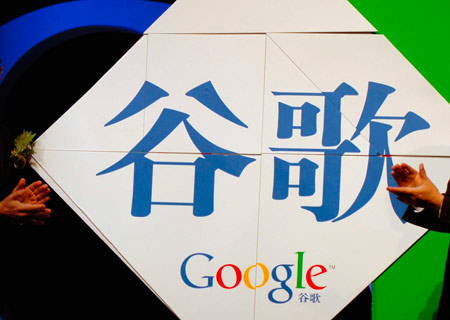
Google's Chinese name Guge became the object of ridicule among many in China because they considered it strange and unsophisticated. [China Daily] |
Getting it wrong can prove to be disastrous for a foreign firm?
Overseas technology companies may possess hundreds of reasons for not having a great presence in China but one of the major ones, according to some, may be their local names.
Industry experts say many foreign firms don't pay enough attention to their Chinese names. Some fail to research the culture while others choose characters that put potential customers off.
"Most companies need to have a strong Chinese name because a bad name can bring the company down," said Ray Ally, executive director of Landor Associates, a brand consulting firm.
Compared with other factors such as a good business model, quality investment and having a strong relationship with the local government, possessing a good Chinese name may not be the top priority for executives of many foreign businesses. But in reality, many firms, even the most prestigious ones, may find that overlooking a good name can bring problems.
Google, for example, upset a great number of its Chinese fans when the world's largest search engine launched its Chinese brand name "Guge" in 2006. The name, which in Chinese means "harvesting song", was considered by many to sound strange and unsophisticated.
The disaffection drove a group of Google Chinese fans to create a site called noguge.com, aimed at collecting suggestions for alternative names.
"Many Chinese users find it hard to pronounce Google and its Chinese name Guge," said Edward Yu, president of domestic research firm Analysys International. "That partly resulted in a lower brand awareness for US firms in China, especially in third and fourth-tier cities."
According to Google, the company's Chinese name came from research by its Chinese employees, who listed all the possible combinations of two Chinese characters starting with "G" using computers. They then voted for their favorites and guge emerged the winner.
"Naming is a specialist profession and even domestic employees don't know the language well," said Ally from Landor, which helped give Chinese brand and product names to many multinationals including Accenture, Telefonica and FedEx. "It's not like naming a child."
According to Ally, his company often presents 50 to 100 name candidates when first given a naming project by clients. Only three to five of these would be sent to the clients after additional work such as a search for legal availability, dialect research and even a Feng Shui consultation had taken place.
He said the price for the naming service from his company was about $50,000 on average.
Naming a brand campaign
A name often plays an essential part in a company's marketing campaign. However, sometimes, even a good Chinese name doesn't guarantee success.
Microsoft, for example, launched its latest search engine "Bing" to compete with Google last year. The company kicked off a Chinese version of Bing on June at cn.bing.com, marking the first time the company had offered a web product in the world's largest Internet market.
The Chinese version of Microsoft's search engine was named "biying", which means "must respond/answer". But the name was ridiculed by many Chinese users because the pronunciation of Bing is the same as the word for "sickness" in Mandarin.
Bing has gained nearly 10 percent market share in the United States, according to figures from research firm ComScore, but its share in China is still "negligible". Microsoft also failed to launch any significant marketing campaigns in China for the search engine.
According to industry experts, the Chinese team in multinational firms often has a big say in supplying the company's Chinese name, but they usually don't have the final say. The most frequent procedure is to send about three name candidates together with their Chinese pronunciation and cultural relevance to their oversea headquarters to get approval.
Orders from the top can sometimes bring trouble and difficulties.
An unnamed?PR manager from Alcatel-Lucent Shanghai Bell, the Chinese subsidiary of telecom equipment maker Alcatel-Lucent, says she had great trouble explaining her company's name to journalists.
"Many press journalists continually complained our company name was so long that it was almost impossible to fit it into any headlines in the newspaper," she said. "But what can I do?"
The name of the firm, which includes 8 syllables in Chinese, derived from a series of company integrations and acquisitions: The Burgeon firm Bell Telephone Manufacturing Company first established a joint venture in China called Shanghai Bell in 1984. Then Alcatel acquired the Burgeon firm in 1988 and managed to take majority share of Shanghai Bell in 2003. And, lastly, Alcatel was merged with Lucent in 2006.
As part of the efforts to solve the problem, Alcatel-Lucent Shanghai Bell announced in January last year it would change its Chinese name from Shanghai Bell Alcatel to the shorter "Shanghai Bell". The company's English name changed from Alcatel Shanghai Bell to Alcatel-Lucent Shanghai Bell.
No Chinese name
In order to avoid potential trouble, some firms limit their Chinese names to legal documents.
| ||||


"We think many Chinese people would accepte our English name AMD: it's short and easy to pronounce," said an AMD marketing director who declined to be named. "In that respect, using our Chinese name is not necessary."
However, Ally from Landor said only a few companies which already have a strong brand that is very well-known in China can afford to do that. In addition, their English brand also has to be short, easy to pronounce and not have any negative meanings in Chinese.
"That is why Hewlett-Packard, which has a very strong brand, has the localized Chinese name 'Hui Pu," he said.