Top Biz News
Stronger yuan not tonic for US economy
(Xinhua)
Updated: 2010-03-18 09:47
 |
Large Medium Small |
CHICAGO - A stronger?yuan would not be a tonic for the US economy or manufacturing and it would be a huge mistake to raise tariffs on imports from China to force a change in the yuan, says a US trade expert on Tuesday.
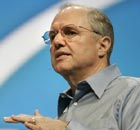
Daniel Griswold is director of the Center for Trade Policy Studies at the Cato Institute, a non-profit public policy research foundation headquartered in Washington, DC. He is also the author of a new book, Mad about Trade: Why Main Street America Should Embrace Globalization.
The trade expert told Xinhua during an exclusive interview, "China has been moving in the right direction since 2005 by allowing the currency to appreciate. Threats from the US government actually make it more difficult for the Chinese government to resume appreciation because it would look as though Beijing was giving in to foreign pressure."
Griswold pointed out that a stronger yuan would not be a tonic for the US economy or manufacturing. "China would remain competitive in a broad range of manufactured products even if the yuan were 25 percent higher. The dollar depreciated sharply against the currencies of Canada and the Eruozone after 2002, yet our bilateral deficit with both those regions continued to grow," he added.
New York Times' Nobel laureate economist, Paul Krugman, recommended in his latest column that the US impose a 25 percent tariff on Chinese imports unless China appreciates its currency Renminbi. Griswold considers it a huge mistake to raise tariffs on imports from China to force a change in the yuan.
Regarding President Barack Obama's new export push to double the US export in the next five years, Griswold believes this goal will raise false expectations.
He noted: "The goal will be difficult to realize. It hasn't been done since the 1970s, and that was driven in large part by inflation. It also depends on robust growth abroad, which is beyond the control of even this president. Faster export growth would be good for the US economy, but it will not put much of a dent in high unemployment."
| ||||


He further explained, "US companies are currently facing sanctions from Mexico, Brazil and other countries because we have failed to live up to our commitments in the WTO and the North American Free Trade Agreement. We are losing export opportunities abroad because Congress has failed to enact trade agreements with South Korea and Colombia, and the administration has failed to exercise leadership in WTO negotiations."
In January the US government data showed that the gap between what Americans sell abroad and what they import narrowed unexpectedly. While the usual crowd hailed it as an "improvement," Griswold believes that the numbers point to the slow growth of demand at home and abroad.
He said: "We shouldn't read too much into the monthly trade numbers. The smaller-than-expected trade deficit in January could be a warning sign that the economic recovery remains sluggish. Exports were down, and imports down even further."
When commenting on the US-China trade relations, Griswold said, "US-China relations remain fundamentally sound. Our commercial relationship is mutually beneficial and among the most important in the world."
He further remarked, "American families benefit from affordable consumer products from China, while US companies benefit from exports to China. And all Americans benefit from lower interest rates from Chinese investment in US Treasury bonds." He noted that "the confrontational attitude of the Obama administration is driven almost entirely by domestic politics." ?
Griswold's new book, Mad about Trade: Why Main Street America Should Embrace Globalization, is a spirited defense of free trade which tells the underreported story of how a more global US economy has created better jobs and higher living standards for American workers.
Since joining Cato in 1997, Griswold has authored major studies on globalization, trade, and immigration. He's written articles for major newspapers, appeared on CNBC, C-SPAN, CNN, PBS, and Fox News, and testified before House and Senate committees.