Opportunity knocks for EU and China
Updated: 2011-10-11 14:17
By Nicola Casarini (China Daily)
|
|||||||||||


Growing Chinese investments in Europe including the purchases of peripheral eurozone bonds contribute to sustaining the value of the euro and help to reassure the markets, particularly in these turbulent times. Such Chinese investment is welcomed by countries, such as Greece, Portugal, Spain and Italy, that are beset by worsening public finances.
This trend of Chinese economic activism presents both Beijing and the indebted European countries with the opportunity to further their bilateral relations, including the role that China can play in solving Europe's debt crisis, and the concessions that Europe will be willing to make.
The declarations of Chinese leaders in support of the eurozone are no novelty. Beijing has espoused the idea of a European common currency for many years. This is due to the importance of the European Union market for Chinese exports the EU is currently China's main trading partner and as part of China's desire to create an international currency system where the US dollar is less dominant.
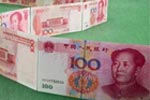
China began diversifying away from the dollar in earnest in 2011 by buying far more European government debt than US dollar assets. According to economists at Standard Chartered Bank, the euro holdings of China's total foreign reserves are evaluated to be between 26-28 percent, while holdings in the US dollar are between 63-67 percent.
China's euro-denominated assets seem to be more likely invested in the safer core eurozone countries of Germany and France than in Greek, Portuguese, Spanish and Italian bonds. Yet data on this point over the last few months have been contradictory. The Financial Times reported some weeks ago, that China holds 4 percent of Italy's treasuries. While in an interview during his visit to China in mid-July, Franco Frattini, Italy's foreign minister, declared that 13 percent of Italian public debt is now in Chinese hands. If the latter figure is true, this would make China one of the most important foreign holders of Italy's public debt. It would also raise the question as to whether China is actually investing more in some of the peripheral eurozone countries since the yields there are higher. Apart from Greece, the other peripheral eurozone countries of Spain, Portugal and Italy do not face a serious risk of a sovereign default.
Investing in euro-denominated assets allows China to diversify risk away from the US dollar. The Chinese government and monetary authorities have, in fact, expressed growing disaffection for the loose monetary policy of the US Federal Reserve. Chinese investors represented a strong proportion of the buyers of the 5 billion euro ($6.7 billion) tranche of Portuguese bail-out bonds being auctioned by the eurozone's 440 billion euro rescue fund in mid-September 2011. On the same day, Wen Jiabao, the Chinese premier, declared that China would continue to help Europe.
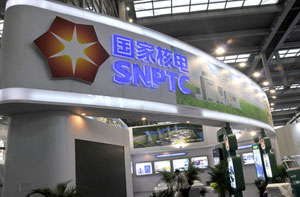
Alongside the purchase of eurozone bonds, Chinese investments in European companies have also been growing at an unprecedented rate. Europe is proving more fertile ground for Chinese investments than the US: China's total investments in Europe are, in fact, 53 percent greater than the $1.39 billion that went to the US in 2010, according to the Chinese Ministry of Commerce. The debt crisis has also forced some EU governments such as Greece, Portugal, Hungary and Italy to consider possible sales to China of stakes in public-controlled companies.
The political implications of these investments in Europe are becoming evident. China has long demanded that the EU recognize China's market economy status, a political decision with significant economic implications for both sides.
The recent events indicate that the time has come for the EU and China to start a thorough round of negotiations over their economic and political relations for the next 10-20 years.
The seriousness of Europe's debt crisis and the potential blow that it could deal to the world economy call for European and Chinese leaders to show courage and vision in order to step up their cooperation and reduce acrimony and misunderstanding. For EU member states, it is essential to make extra efforts to find the necessary cohesion to adopt a coherent and united approach toward Beijing, including a clear position on politically sensitive issues such as China's investments in public companies, market economy status and the arms embargo issue. On the Chinese side, the leadership should seriously ponder substantive concessions on issues pertaining to the domestic economy and politics.
If Chinese and European leaders are able to strike a bargain on their bilateral relations at this historical juncture, they would not only contribute to solving Europe's debt crisis but also advance the case for further international cooperation in the face of growing signs of economic nationalism.
The author is a research fellow of the Institute of the EU for Security Studies, Paris.
Related Stories
Ongoing eurozone crisis gives boost to dollar index 2011-10-10 11:53
Experts urge caution in Eurozone aid bids 2011-09-24 13:53
- Tired of long wait for license? Try renting one
- Payments by mobile phone ring up
- Harsh harvest looms for Xinjiang cotton growers
- Transport data raise privacy concerns
- Regulator to review Beijing Jingkelong IPO
- City govt fails to clean up pollution
- Letter calls Gucci stores 'sweat shops'
- City's Wal-Marts to close for 15 days