Comments()
  Print
Print  Mail
Mail  Large Medium Small
Chinese consumers display differences from their Western counterparts
Brand positioning, the image of the brand within the consumer's mind, is no longer a fixed, static concept. Instead, it is becoming increasingly dynamic and often varies across countries and cultures and according to specific consumer experiences.
Many brands enjoy a quite different image across cultures, even when the branded product and other marketing-mix elements are largely similar. China and the Chinese consumer provide a good example of this phenomenon, where many "medium quality" Western brands are perceived as "premium", "glamorous" or even "exclusive" and "luxury".
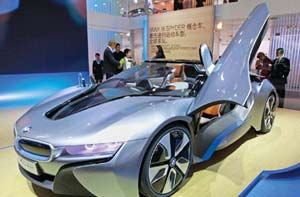
Examples that spring to mind are Starbucks, Apple, Holiday Inn and BMW, which are all associated with "prestige" and "elitism" by the new, affluent urban Chinese consumer, while across Europe and the US they are considered high-quality but functional brands.
One obvious reason for this rush to purchase and visibly consume such "exclusive" brands lies behind the rapid economic and social development of certain parts of China. Chinese consumers in these areas, largely the first-tier cities and southeastern coastal provinces, suddenly find themselves for the first time in a position to enjoy such expensive luxuries. In consequence, Chinese consumers with lower purchasing power are also attracted to the relatively new, glamorous brands, such as clothes and cars, in order to combat any feelings of inferiority.
But why is the Chinese consumer's perception of Western brands so often associated with prestige and exclusivity when the very same branded product or service in the West is merely a value-for-money means to an end? To understand this further, it is necessary to move away from the traditional view of brand positioning, in which consumer brand perception starts with the branded product itself and remains fixed regardless of the experiences during which the brand is consumed.
For the Chinese consumer, brand image starts with the experience that the consumer envisages during brand consumption. Chinese consumer culture, despite economic development, remains rooted in group orientation and the acceptance of societal hierarchy.
Economic development has simply led to the immediate and extended family being replaced as the most influential groups by close friends, colleagues and peer groups. Achievement of societal position or ranking has also been replaced by conspicuous brand consumption rather than occupational prestige where "elite" occupations usually included senior Party positions or elevated positions in education.
"Face" or "gaining face" often drives brand consumption among the Chinese, where conspicuous consumption of an expensive brand acts as a very powerful status symbol.
Western consumers take a far more rational approach to brand choice; purchases of Apple's latest phone or computer would be motivated mainly by convenience and communication, whereas Chinese consumers will rush to the nearest Apple store, and often camp out overnight, in an effort to be one of the first to be able to display publicly their new "status".
Chinese consumers are also more likely to form a deeper emotional attachment to their favored brands, partly due to the need to aspire to higher societal status but also because modern consumer culture remains relatively new across China. Chinese consumers, especially the younger generations, are therefore bursting with enthusiasm for "new", "cool" and "fun" branded products and, at the moment, associate such brand values very firmly with the West.
Celebrity endorsements and product placements also contribute considerably to the Chinese consumers' emotional brand attachment. Typical Western consumers react with indifference or even skepticism when confronted with a famous person advertising or promoting a branded product, even if there is a clear "fit".
Chinese consumers, however, expect to see a celebrity heavily involved in the advertising and promotion of branded products. On Chinese television you rarely see an advertisement that does not contain a well-known public figure.
Product placement, the use of well-known branded products as part of a television show or film's actual storyline, also plays on the Chinese mind differently compared with a typical Western viewer. A Chinese audience is far more likely to associate with a brand that appears during the TV show or film, whereas Western consumers will pay little attention to the brand on display and simply concentrate on the show itself.
This relative immaturity among the Chinese brand-buying public also contributes to a lack of confidence in their individual decision-making capability, which often leads to the most well-known, publicly acceptable (and usually Western) brand chosen. But this is only a short-term, temporary phenomenon.
It is only a matter of time before the typical urban Chinese consumer reaches a level of maturity and also feels a desire for change, at which point their brand choice will switch from an emotional, status-driven decision to a far more rational, analytical and even rebellious selection.
Therefore, the message to all brand producers targeting the Chinese market is, in the short term, continue with a more emotional position and focus more on the consumer's brand experience and not just brand image. But be aware of a possible, imminent backlash against well-known products, where conspicuous consumption and societal status will not be facilitated by the purchase and display of expensive brands but by a more innovative, non-conformist choice of consumption and lifestyle.
Yao Shujie is head of the School of Contemporary Chinese Studies at Nottingham University and Mike Bastin is a researcher at the school.
Copyright 1995 - 2010 . All rights reserved. The content (including but not limited to text, photo, multimedia information, etc) published in this site belongs to China Daily Information Co (CDIC). Without written authorization from CDIC, such content shall not be republished or used in any form. Note: Browsers with 1024*768 or higher resolution are suggested for this site.
License for publishing multimedia online 0108263 Registration Number: 20100000002731