BEIJING -- China's decade-long cultural sector reform is seeing encouraging results. And the Jiangxi Repertory Theater is one particular example that shows how a formerly state-financed art organization has flourished under this government innovation.
The playhouse, in Nanchang, the capital of east China's Jiangxi province, joined many of the country's other arts institutions early this year, when it was transformed into a state-owned company, instead of a wholly state-funded organization.
Being a company, the troupe has to face the market to attract customers and increase earnings, and at the same time, has more rights on distribution of profits. The change of focus has proved a success in giving the Jiangxi Repertory Theater more commercial appeal, and attracting a larger number of locals to consume cultural products.
Mao Lei is one of its newly happy customers. The 38-year-old civil servant used to see KTV and playing cards as his only pastimes.
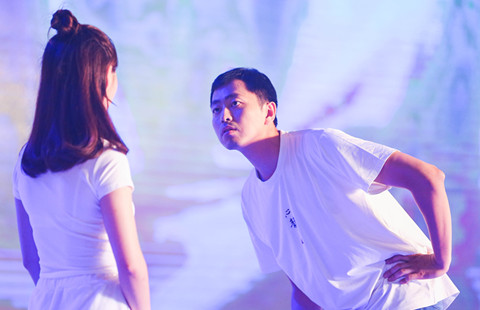
Yet he recently sat down at the Jiangxi Repertory Theater to watch his seventh performance at the venue in two months -- a revised edition of award-winning comedy "Out of Order," which has proved to be a blockbuster in Nanchang. He was joined by his wife, sister and friends.
It has been a long time since the 50-year-old Jiangxi Repertory Theater has had such a following. As a government-supported troupe, it only produced two politically themed plays annually, eulogizing Party achievements or heroes.
Because the actors' salary had nothing to do with market performance, they had no passion for producing new plays.
From June to August, however, the troupe brought seven new plays to the stage. More than 40 performances within two months have reaped 400,000 yuan ($63,414) in profits, the best ever tally for the venue's40 performers.
These goings-on in Nanchang are just an epitome of China's decade-long cultural sector reform.
The nation has developed into the second-largest economy in the world because of its opening up in recent decades. But its cultural industry has remained relatively weak.
The sixth plenary session of the 17th Communist Party of China (CPC) Central Committee last October formulated a blueprint to beef up the arts. Culture is emerging as an important part of the country's competitiveness in today's world, and the upcoming 18th CPC National Congress is expected to establish more measures to boost China's soft power through the area.
Based on its per capita GDP scale of around $5,000 in 2011, China should be enjoying 4 trillion yuan's worth of cultural products per year, experts have calculated. But the population's actual consumption is only valued at 1 trillion yuan.
In the United States, Hollywood and Broadway have used mature marketing strategies to promulgate American values throughout the world and have made huge impacts on different nationalities and generations.
The Republic of Korea, China's close neighbor, is also taking a lead in culture exports. In 2009, the ROK exported online games worth $1.5 billion, while China only managed one fifteenth of that, according to official data.
China began refining its cultural industry 10 years ago. At the 16th CPC National Congress in November 2002, non-profit cultural undertakings and commercial cultural industry were separated. The government initiated a reform of printing houses, film studios, newspapers, radio and TV stations as well as arts troupes, bringing those formerly government-affiliated agencies to the market.
The restructuring of the Jiangxi Repertory Theater is such an attempt, which has put the actors under commercial pressure but also given them incentives to produce better plays in order to attract more customers and increase takings.
As of September 2012, 580 printing houses, 3,000 bookstores, 850 film studios and 99.5 percent of China's arts troupes have been remodeled into enterprises in the same way.
China has enjoyed rapid growth and the conflicts between resources and development has become more and more serious. Developing the cultural industry, which eats through few resources but brings in much profit, is a natural choice for economic transition, said Song Jianwu, director of the Media and Cultural Industry Research Center with China University of Political Science and Law.
As China's per capita income surpassed $3,000 in 2008 and $5,000 in 2011, the Chinese people have more demand for the arts, he added.
Culture has made great contributions to China's economy in light of the global financial crisis since 2008. But it still needs deepened reform to improve its competitiveness abroad, according to Song.


Copyright 1995 - . All rights reserved. The content (including but not limited to text, photo, multimedia information, etc) published in this site belongs to China Daily Information Co (CDIC). Without written authorization from CDIC, such content shall not be republished or used in any form. Note: Browsers with 1024*768 or higher resolution are suggested for this site.
License for publishing multimedia online 0108263 Registration Number: 130349