Trade experts say China needs another round of decisive measures to put its export growth on a firmer footing in 2015, amid declining demand in major foreign markets.
Zhou Shijian, the standing councilor of the China Society for World Trade Organization Studies, said new measures should include pushing the Chinese currency to play a bigger role in foreign trade, developing new trading routes in neighboring regions, and encouraging more high-value added products onto the global market.
The nation's foreign trade rose by 3.4 percent year-on-year in 2014, missing its annual target of 7.5 percent. In 2013, China's trade growth was 7.6 percent, a marked contrast to the annual target of 8 percent.
The country's annual exports grew by 4.9 percent in 2014 to 14.39 trillion yuan ($2.32 trillion), while imports fell by 0.6 percent to 12.04 trillion yuan.
The 2014 slowdown in export growth was seen as a clear indication of the risks threatening China's economic growth this year, as international demand weakens.
In addition to the enforcement of previous measures such as paying export tax rebates faster, granting more loans to exporters, and increasing export credit insurance to small and medium-sized enterprises, Zhou said China must encourage more use of its currency in international trade, swap arrangements between central banks, bank deposits and bond trades.
"As China and its trading partners build the Silk Road Economic Belt and 21st Century Maritime Silk Road to strengthen regional connectivity, it certainly has the opportunity to set up more financial service institutions and settle bilateral trade in local currencies within the Eurasia passage and certain parts of Southeast Asia," said Zhou.
The implementation of currency settlement agreements effectively promote more currency exchanges between different markets to stimulate export.
A similar method has already been successfully implemented.
The current bank coordination mechanism between member nations of the Shanghai Cooperation Organization has had a significant effect on improving a number of sectors in Russia and Central Asian countries, including trade, energy, infrastructure, transportation, logistics, retail, education and tourism.
Zhao Zhongxiu, a trade professor at the University of International Business and Economics in Beijing, said holding a certain amount of renminbi assets would help many foreign governments "ease their heavy dependence on the US dollar and build a fair trading environment between China and them".
As the world's dominant reserve currency, the US dollar is mostly used in global trade transactions and for invoicing goods and services.
The majority of transactions between Chinese companies and their trading partners in Africa, South America, Central and Southeast Asia are still based on its exchange rate.
"If you look at the currency rate risk management of the reserve portfolio, the renminbi has performed well in recent years because it is supported by China's enormous international reserves," said Zhao.
China still faces severe challenges, however, in the process of economic restructuring, said Zhao. In the past it put great emphasis on being the "world's factory" to stimulate the economy, but international consumption is no longer as strong as it used to be.
The deterioration of global demand caused by political tensions between Russia and the West, low employment rates in both developing and developed nations, as well as dropping international crude oil and commodity prices have prompted China to realize that it must carry out economic restructuring to upgrade its high-end manufacturing system.
"Under such circumstances, improving the export structure in a way that boosts exports of high-tech and value-added products, and encouraging the transfer of processing trade into the inland regions from the coastal areas are urgently needed," said Wang Haifeng, a researcher with the Institute for International Economic Research at the National Development and Reform Commission.
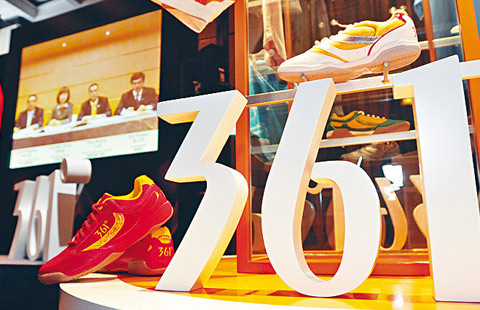
Wang said China's exports no longer focus on shoes, toys, metallurgical materials, garments and steel products. They have shifted onto high-end products such as high-speed trains, machinery, telecommunications equipment and offshore engineering products, which can compete against s international rivals head-to-head over the next decade.

Copyright 1995 - . All rights reserved. The content (including but not limited to text, photo, multimedia information, etc) published in this site belongs to China Daily Information Co (CDIC). Without written authorization from CDIC, such content shall not be republished or used in any form. Note: Browsers with 1024*768 or higher resolution are suggested for this site.
License for publishing multimedia online 0108263 Registration Number: 130349