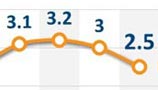
We live in an abnormal world of falling consumer prices. The phenomenon is so rare that the United States, for instance, saw year-on-year price declines only in one month (this January) in the past 50 years, if we leave out the depths of the financial crisis in 2009. Indeed, deflation fears have been increasing globally since last year, notably in Europe and Japan, and increasingly in China.
Generally, deflation is bad for equity investors as companies lose pricing power, affecting profit margins, which curbs their appetite for investment and growth. Also, consumers delay spending, hoping prices will fall further, hurting demand. The good news is that we see the current phase of disinflation as a transitory phenomenon caused primarily by the sharp fall in oil prices (which was led by excess supplies from the US rather than due to deteriorating global demand). If anything, lower energy prices are helping consumers, giving them a higher disposable income to either spend or repay debt. This is supporting growth worldwide.
The world economy is set to accelerate for the fourth successive year. The US economy is, at last, achieving very healthy growth rates. Consensus estimates point to 3 percent growth this year, which would be the strongest pace since 2005.
Europe contributed more to the acceleration in global growth last year than any other region as the economy went from a full-year recession in 2013 to modest growth in 2014. We believe it will build on this performance this year.
Finally, China's targeted policy easing should help minimize default risks associated with the huge rise in debt levels while supporting growth, as authorities continue to pursue reforms to turn local consumers into the main drivers of the economy.
How should Asian investors position themselves against this backdrop? The expected acceleration in growth in the US and Europe is supportive for riskier assets worldwide, while China's sustained stimulus offsets the headwind from slowing growth. The good news is inflation pressures in the region are muted, which allows authorities to maintain loose monetary policies intended to stimulate domestic demand.
Given excess capacity in the global economy and weak commodity prices, there appears to be little to suggest the trend for loose monetary and fiscal policy settings will reverse soon. This should allow for a modest acceleration in economic activity in Asia in 2015.
We expect Thailand to lead the way with pent-up investment demand triggering a sharp acceleration in economic growth. Developments in India will be closely watched, but we expect reforms to gather pace and lead to a more favorable economic climate over the coming years. Falling inflation and lower oil prices are also helping authorities there to boost monetary and fiscal stimulus.
Against this backdrop, developed market equities, particularly in Europe and Japan, and select Asian markets, remain our preferred investments. However, volatility is likely to increase as we head toward the first US interest rate hike since 2006.
The key challenge is to construct a robust portfolio with the right balance. Usually, investment-grade bonds would be used to provide a hedge within portfolios and reduce volatility. However, low bond yields mean this may be an expensive and risky hedge.
Meanwhile, the "taper tantrum" in 2013 showed any abrupt tightening of US monetary policy could push the correlation between equities and investment-grade bonds higher (with both falling at the same time), reducing the effectiveness of the hedge.
We should not forget that higher volatility can create significant opportunities: investors can buy assets cheaper than they have been for some time or seize on opportunities to buy good assets that become relatively attractive against peers during such periods of dislocation.
We recommend that investors ensure their exposure to equities is not excessive to their risk tolerance and use leverage judiciously.
Income generation from a diversified range of asset classes remains one of our key investment themes for the fourth consecutive year. The challenge for investors is that traditional sources of income, namely bonds, offer very low yields. This not only reduces the income generated, but also increases the risk profile of such assets.
A more diversified approach to income investing is recommended. This includes buying high dividend-paying equities, particularly in Europe where yields and expected returns are higher.
There are two other themes that could become increasingly beneficial in the emerging landscape.
First, using a "covered call" strategy, which involves the simultaneous purchase of a stock and the sale of a call option on the same stock to generate income. This strategy generally performs better than a pure equity investment when stock market returns are more muted and volatility rises, which is exactly the scenario we expect to develop in the coming quarters.
Second, buying bonds denominated in the Indian rupee and the yuan, where the yield remains attractive relative to the currency risks involved with investing in non-dollar assets.
The dollar is likely to continue appreciating on growing monetary policy divergence as the US Federal Reserve starts to hike interest rates while the majority of the world remains in easing mode. Against this backdrop, investors need to be very selective in terms of their non-dollar bond allocations and also hedge their currency exposure, notably in Europe and Japan (our preferred equity investment destinations) but also in Asia.
The author is chief investment strategist at Standard Chartered Bank's wealth management unit.

Copyright 1995 - . All rights reserved. The content (including but not limited to text, photo, multimedia information, etc) published in this site belongs to China Daily Information Co (CDIC). Without written authorization from CDIC, such content shall not be republished or used in any form. Note: Browsers with 1024*768 or higher resolution are suggested for this site.
License for publishing multimedia online 0108263 Registration Number: 130349