Perhaps surprisingly, China's economy has persisted until the middle of 2015, despite all the forecasts of its collapse at the beginning of the year. In fact, with all its chronic symptoms, the size of the economy, and its diversity on corporate and individual levels, can help it do many things at a time when it seems nothing can be done, such as to overcome its existing problems bit by bit, and build up new momentum for the future.
There is already an indication that the growth rate may not remain as questionable an issue.
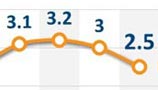
In all likelihood, the economy's slowdown will bottom out in the fourth quarter of the year. And a 7 percent annual growth in GDP is within range.
With more credit, more infrastructure projects in central and western regions, and more activities in the capital market (more stock listings and trading, more local government bond issuance), growth in industry and in employment will come along easily.
Although it is contestable whether these are better and smarter ways to generate growth, at least officials and their economic advisers know these are not enough, and they have to make better efforts in reform, in cutting down the red tape that stifles new businesses, and in building a stronger regime for environmental protection. These will translate into some good figures.
People will see that, as experienced Chinese economic watchers have pointed out, economics is always a long-term thing in China. Both good and bad things can be quickly spotted on the local level, but they can be slow to become over-whelming and form a general trend. And most likely, once there is a general trend in a country of this size, it must contain some new phenomena on the local level to warrant the government working out long-term-policies to avoid letting them grow into new concerns.
All the things that the central government has been doing since the end of last year are largely consistent with its goal to build an economy less dependent on exports and more on domestic services. It is always arguable whether it has been effective in delivering this service.
Against this broad background, many forecasts have been floated in various Chinese business forums (online and offline) about the second half of the year. Events to watch, they say, include President Xi Jinping's visit to the United States, to see how the two heads of state will define the framework of their future political and business relations, such as the US-led Trans-Pacific Partnership network and the bilateral investment treaty.
Another thing to watch is the reform of the stock listing system in the domesticstock market, which will allow greater rights for corporate management to offer shares to the public market. In theory, for investors, the change in listing rules will likely bring along more choices and fewer opportunities for the majority shareholders to manipulate share prices.
In the meantime, new policy changes will be made to further reduce the central bank's control of interest rates and over yuan conversions for investors.
However, one thing the Chinese analysts have seldom talked about is the growing dichotomy between State-owned enterprises and more market-oriented enterprises in their growth vitality and potential, and between local governments with SOE reform tasks and the ones with market opportunities.
Most large SOEs will be slow in any meaningful reform. As a result, they will lose out on more opportunities. Investors cannot be expected to have much interest by working with them, whatever their plans may be.
Meanwhile, some of the largest companies of mixed ownership ( joined or controlled by private capital) will grow much faster and more aggressively-but only if they are placed under professional and innovative management. They will continue to be the most active force in the domestic and global business arena.
The author is editor-at-large of China Daily.

Copyright 1995 - . All rights reserved. The content (including but not limited to text, photo, multimedia information, etc) published in this site belongs to China Daily Information Co (CDIC). Without written authorization from CDIC, such content shall not be republished or used in any form. Note: Browsers with 1024*768 or higher resolution are suggested for this site.
License for publishing multimedia online 0108263 Registration Number: 130349