|
|
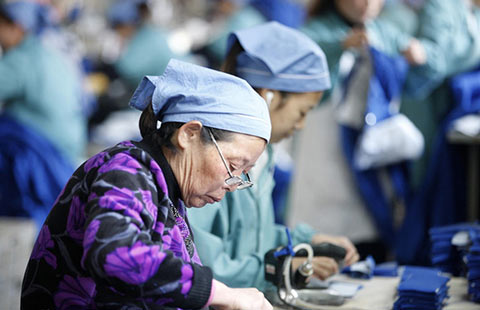
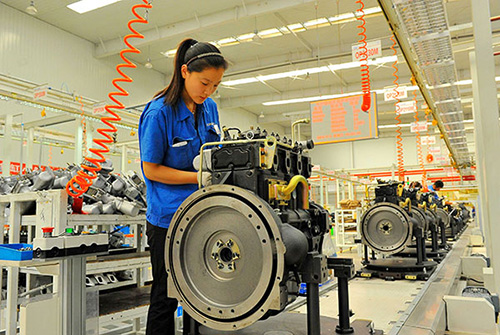
An assembly line of a Daimler AG venture in Minhou, Fujian province. Investment from Germany jumped 59 percent year-on-year to $410 million in the January-February period, 2015. [Yang Enuo/China Daily] |
My on-the-ground experience in China stretches back to the beginnings of the reform era in 1981. Yet I cannot recall a time when so much pessimism, especially in English-language media, has surrounded the Chinese economy. Yes, it is a time of large, perhaps unprecedented transition and challenge.
But the negative outlook is overdone, and starts from a false premise. China does not need to search for a new economic model to generate further prosperity. Instead, what is happening now is a return to a simple formula that has previously worked extraordinarily well: applying pressure on China's State-owned enterprises to improve their efficiency and profitability, while also doing more to tap China's most abundant and valuable "natural resource"-the entrepreneurial spirit of the Chinese people, the talent to start a company, provide new jobs and build a successful new business.
These two together provided the impetus for the economic growth since the 1990s. In the 1990s, SOEs accounted for perhaps as much as 90 percent of China's total economic output. Today, the SOEs' share has fallen to below 40 percent by most counts. Once the main engine of growth, SOEs are now more like an anchor. Profits across the SOEs have been sinking, while their debt has risen sharply.
Arresting that slide of SOEs is now vital. SOE reform has long been on the agenda of the Chinese government. But such a reform has become more urgent than ever, as well as more difficult. There are fewer SOEs today than in 1991 when serious SOE reform was first undertaken. Among those that remain, many are now extremely big and rank among the biggest companies in the world. The restructuring of any such large company is always difficult.
China, however, has taken some key first steps in that direction. The Chinese government has divided SOEs into those that will operate entirely based on market principles and those that perform a social function. It is downsizing the coal and steel industries, two of the largest red-ink sectors. Senior managers of some large SOEs have been dismissed or are under investigation for corruption, and experiments linking SOEs' salaries more directly with profitability are underway.
Less noticed, but in my opinion, as important is a strong push now at some SOEs and SOE-affiliated companies to become not better but among the best in the world at what they do. Tsinghua Unigroup in semiconductors, China National Nuclear Corporation and China General Nuclear Power in building and operating nuclear power plants, and CITIC Group in eldercare are seeking global glory. They are trying to sprint while most other SOEs are limping.
Luckily for China, the overall situation in the entrepreneurial sector is far rosier. All it needs is a more level playing field. Important steps to further free up the private sector are now underway-taxes are being cut, banks pushed to lend more, and markets long closed to protect SOE monopolies are being pried open. Healthcare is a good example in this regard.
All these moves are part of what the government calls its new "supply side" policy. The aim is to demolish barriers to competition and efficiency. Chinese entrepreneurs have shown time and again they have world-class aptitude to spot and seize opportunities. They are leading the charge now into China's underdeveloped service sector. This, more than manufacturing or exports, is where new jobs, profits and growth will come from.
Opportunities also await smart entrepreneurs in less efficient industries like agriculture, in getting food products to market quickly, cheaply and safely. In cities, traditional retail has been hit hard by online shopping. Struggling shopping malls are becoming giant laboratories where entrepreneurs are incubating new ideas on how Chinese consumers will shop, play, eat and be entertained.
China's economy is now 30 times larger than what it was in 1991, and far more complex. The private sector 25 years ago was then truly in its infancy. But, there is still huge scope today for China to gain from its original policy prescription: prodding SOEs to get in line for reform while letting entrepreneurs meet the needs of Chinese consumers.
The author is chairman and CEO of China First Capital.


Copyright 1995 - . All rights reserved. The content (including but not limited to text, photo, multimedia information, etc) published in this site belongs to China Daily Information Co (CDIC). Without written authorization from CDIC, such content shall not be republished or used in any form. Note: Browsers with 1024*768 or higher resolution are suggested for this site.
License for publishing multimedia online 0108263 Registration Number: 130349