BIZCHINA> 30 Years of Reforms

|
BIZCHINA> 30 Years of Reforms
|
|
Related
Thrust on energy efficiency as country advances
By Fu Jing (China Daily)
Updated: 2008-08-15 17:13
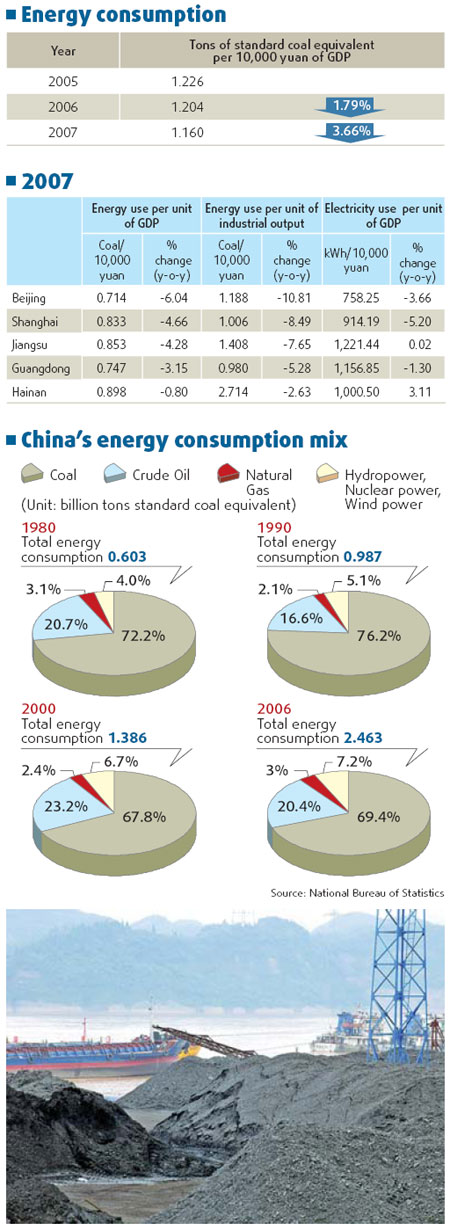
 China, in some ways, had not officially put itself on the path of industrialization until early 1980s. And it's hardly surprising that China's total energy demand has been and will keep rising to meet the increasing demand stemming from modernization. Energy efficiency has long been regarded as a way to reduce production costs as China moves forward to becoming a market economy despite the fact that before 2006, the notion was not as high on the government agenda as it is today. Figures show that China's energy consumption density per unit of GDP has been falling. In 1980-90, the annual pace was 3.6 percent and that in 1991-2005, 3.1 percent. However, China made great strides from 1991 to 1995, when the energy density was cut by 5.8 percent annually. Partly based on these impressive achievements, China's top legislative body National People's Congress has approved a goal of cutting energy consumption in 2006-10 by 20 percent. In 2006 and 2007, China has reached a little more than 5 percent of that goal. To achieve the overall goal, the country will have to cut energy density by a minimum average of 5 percent a year from 2008 to 2010. More technical improvement and awareness will be sought as the Chinese leadership has taken energy efficiency not only as an economic but also as a political mission. The government has also linked energy-saving performance to the career path of officials and leaders of State-owned enterprises to curb energy consumption. At the same time, the government has been gradually deregulating the oil prices after allowing coal prices to be set by the market several years ago. China has reached a stage when its economic and industrial structure is being upgraded and as the market economy matures, the service industries have more opportunities to prosper. So far, the rapid economic growth in China has been achieved through heavy input of financial resources and energy. Apart from the relatively low efficiency of energy consumption, another important reason behind the huge energy consumption is the high proportion of manufacturing industry in the country's economy. The service industry does not involve heavy energy consumption but human resources. Therefore their boom would diminish the overall demand for resources in the economy and facilitate energy saving and emission reduction. However, this would require long-term, sustained efforts. Latest research shows China's energy consumption is likely to reach 3.1 billion tons of standard coal equivalent by 2010, 100 million tons more than the earlier ceiling. The numbers are "the most likely scenario" for China's energy consumption, as were revealed by a recent report of the State Council Development Research Center.
Premier Wen Jiabao has stressed energy wastage is still a serious problem in government departments and institutions, State-owned enterprises, large public projects and individual households. Wen is right: energy saving is the common responsibility of the entire society.
 (For more biz stories, please visit Industries)
|
主站蜘蛛池模板: 亚洲黄色成人网在线观看| 痉挛高潮喷水av无码免费| 日韩成人性视频在线观看| 亚洲一区二区三区18禁| 久热这里有精品免费视频| 波多野结衣视频一区二区| 色偷偷人人澡人人爽人人模 | 日韩av中文字幕有码| 10000拍拍拍18勿入免费看| 国产粉嫩学生高清专区麻豆 | 欧美视频专区一二在线观看| 亚洲大片中文字幕久久| 成人啪精品视频网站午夜| 无码人妻少妇久久中文字幕蜜桃| 亚洲天堂亚洲天堂亚洲色图| 精品乱人伦一区二区三区| 亚洲一区三区三区成人久| 日本中文字幕在线播放| 久久综合色天天久久综合图片| 青草精品在线视频观看| 久草热8精品视频在线观看| 成人免费亚洲av在线| 中文字幕国产日韩精品| 国产欧美日韩免费看AⅤ视频| 国产精品久久大屁股白浆黑人| 韩国青草无码自慰直播专区| 精品一区二区三区色噜噜| 麻豆亚洲精品一区二区| 姑娘故事高清在线观看免费| 欧美和黑人xxxx猛交视频| 欧美国产视频| 亚洲一区二区三区激情视频| 亚洲欧美激情精品一区二区| 亚洲老熟女乱女一区二区| 三上悠亚精品一区二区久久| 中文字幕久久波多野结衣av| 亚洲区1区3区4区中文字幕码| 欧美18videosex性欧美tube1080| 国产a级三级三级三级| 麻麻张开腿让我爽了一夜| 又爽又黄又无遮挡的视频|
