BIZCHINA> Center

|
BIZCHINA> Center
|
|
Related
China's CPI rises 4.6% in Sept
(Xinhua)
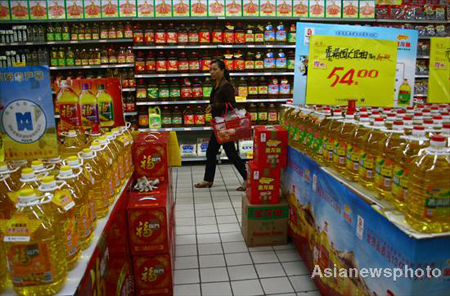
Updated: 2008-10-20 10:06 China's consumer price index (CPI), the main gauge of inflation, rose 4.6 percent in September over the same period last year, the National Bureau of Statistics (NBS) said on Monday. The figure, compared with 7.1 percent in June, 6.3 percent in July, 4.9 percent in August and a nearly 12-year-high of 8.7 percent in February, was broadly in line with most forecasts.
In the first nine months of this year, the inflation indicator rose 7.0 percent from the same period last year: 6.7 percent for urban areas and 7.7 percent for the countryside. The growth rate was 0.9 percentage points lower than that in the first half. Food prices, which account for more than a third of the CPI calculation, rose 17.3 percent during the January to September period. Zhuang Jian, an Asian Development Bank economist said: "The figure indicated the government's measures to tame inflation were effective, and the country's inflationary pressure has been greatly eased." An official with the Ministry of Commerce who declined to be named told Xinhua that the declining CPI growth was within the government's expectation, and it was likely to continue a declining momentum in the future. Despite a drop in the CPI growth, the producer price index (PPI), which measures the value of finished products when they leave the factory, rose 8.3 percent in the first nine months, said the bureau. The growth rate was 5.6 percentage points higher than the same period last year. In September alone, the PPI rose 9.1 percent over the same month a year earlier. The growth rate was one percentage point lower than the record 10.1 percent in August. Meanwhile, the purchaser prices for raw materials, fuel and power rose 12.4 percent in the first nine months. The growth rate was 8.6 percentage points higher than a year earlier. "Surging fuel and raw material prices in the world markets had pushed up domestic prices through a chain effect. Oil price, for example, rose almost 50 percent than that at the beginning of the year," Zhuang said. "However, the PPI rise is expected to slow down in the coming months as world fuel price drop. It would not immediately increase pressure on the CPI. " he added. Yao Jingyuan, chief economist of the bureau, said price falls in consecutive five months had given the government more leverage to implement economic control, expand domestic demand and loose price control on resources materials. "Since inflation pressure has been greatly eased, the country should be cautious about a weakening economic growth," said Li Xiaochao, spokesman with the bureau. The NBS said on Monday morning that China's gross domestic product (GDP) grew 9.9 percent year on year to 20.163 trillion yuan ($2.96 trillion) in the first three quarters of this year. The growth rate was 2.3 percentage points lower than the same period of last year, or 0.5 percentage points lower than the first half of this year. Zuo Xiaolei, China Galaxy Securities chief economist, said the country should consider moderately easing the tightened economic policy and focus its efforts on maintaining a fast economic development. In recent months, most of China's economic figures indicated that the country's economy has cooled down, led by both domestic policies and the ebbing world economy. China's foreign trade, in particular, was affected by a weakening international demand. Earlier figure from China Customs showed the country's export was $1.07 trillion in the first three quarters, up 22.3 percent over the same period last year, but the growth rate was 4.8 percentage lower year on year. "China has to upgrade its economic growth structure--export can hardly grow fast in the near future -- it is the right time for the government to boost domestic demand and stimulate consumption, " Zuo said. "Considering the poor people are more prone to spend their money when incomes increased, the policy makers should increase incomes and improve lives of this kind of people," she said. Zhao Jinping, an economist, suggested China should increase prices of farm products and increase income of farmers, while improving social insurance system covering education, medical treatment, and aged treatment. (For more biz stories, please visit Industries)
|
主站蜘蛛池模板: 亚洲精品日韩中文字幕| 国产精品一亚洲av日韩| 亚洲 欧洲 自拍 偷拍 首页| 国产精品亚洲一区二区三区在线观看 | 欧美人与动zozo| 欧美丰满熟妇xxxx性ppx人交| 大胆欧美熟妇xxbbwwbw高潮了| 亚洲综合激情六月婷婷在线观看 | 日韩精品国产一区二区| 国产精品自拍中文字幕| 色天天综合网| 九九热视频在线免费观看| 国产美女被遭高潮免费网站| 国产91色综合久久高清| 欧美日韩国产图片区一区| 毛多水多高潮高清视频| 最近中文字幕完整版| 欧美视频网站www色| 久久久这里只有精品10| 园内精品自拍视频在线播放| 最新亚洲人成网站在线影院| 日韩精品一区二区三区中文| 欧美日韩精品一区二区三区高清视频| a在线亚洲男人的天堂试看| 麻豆精品一区二区三区蜜臀| 亚洲国产一区二区三区| 日韩美少妇大胆一区二区| 亚洲粉嫩av一区二区黑人| 国产亚洲精品久久久久婷婷图片| 亚洲av鲁丝一区二区三区黄| 99这里有精品视频视频| 亚洲中文字幕精品第一页| 日日爽日日操| 国产精品人伦一区二区三| 国产极品美女高潮无套| 国产精品国产亚洲区久久| 久久精品国产一区二区蜜芽| 99视频在线精品国自产拍| 亚洲av无码国产在丝袜线观看| 蜜桃av亚洲精品一区二区| 国产精品毛片一区二区|