Comments()
  Print
Print  Mail
Mail  Large Medium Small
Opportunities abound as the middle class comes of age
Over the past 10 years, China has undergone unprecedented economic growth. Never before has a country developed as rapidly as China, and that change has affected nearly every aspect of life in the country.
The middle class grew especially fast, increasing at an annual rate of 23 percent from about 23 million people in 2000 to 179 million in 2010. By 2030, Asia as a whole is forecast to have 3.3 billion people in the middle class, with nearly 1 billion in China.
This makes China a proving ground for global and local brands. Success stories of global brands adapting to the Chinese market, local brands rising to take the competitive edge or even some mid-tier brands successfully positioning themselves as premium are all around.
However, in the shadow of those successes are brands that fail due to the increasing competitiveness of the market. One of the key reasons for failure is that some brands simply do not understand what Chinese consumers really are and what they want, because the Chinese consumer has evolved.
Those living in the largest cities have become more sophisticated in their purchasing behavior, while a burgeoning middle class in the lower-tier cities are becoming "first-time" consumers, with incomes that enable them to make their lives more comfortable, buy homes and cars and discover new products. It is time to meet the new Chinese consumer.
One of their vital characteristics is the evolving social breakdown of China's population. Chinese consumers are highly segmented, across different income levels and even city tiers. Combined with China's economic resurgence and their increasing disposable income, these different classes of consumers are moving into higher income brackets and are looking to affirm their new social status.
With more disposable income, consumers have the ability to either expand their basket or trade up to higher-tier products. Taking fast-moving consumer goods as an example, the latest Nielsen study shows that 42 percent of total market growth comes from trading up. This is true even for second and third-tier cities, where 26 percent of consumers have traveled to nearby cities seeking a wider selection of premium goods as well as an enhanced high-end shopping experience.
The push for high-end products comes from consumers from different income segments, resulting in a range of definitions of what is premium. Higher-income consumers often seek similar high-end, high-price brands as shoppers in other countries. However, for the middle class, traditional luxury brands remain out of reach, so the need for premium yet accessible brands emerged.
Hence, being well known can be synonymous with being premium. A recent Nielsen study shows that friends, family and relatives are still the most important source of information, with 83 percent of shoppers getting their trusted information from them and more than 23 percent of shoppers believing that brand reputation is more important than price level or value for money.
But while brand reputation is important in China, it does not guarantee the success of top global brands. In developed markets, products are developed based on consumer demand, but in the early 1990s Chinese consumers were suddenly surrounded with superior products before they felt the need for them. These consumers got used to following the lead and also being educated by manufacturers and brands.
This caused Chinese consumers to be more open to trying new brands. A recent Nielsen study shows the ratio of trendsetters - who are willing to try new or untested products ahead of others - in China is 43 percent, which is significantly higher than the global average of 32 percent. Although this does not guarantee the success of all brands, it still works as a good foundation for brands to build their success in China.
However, reaching consumers is not as easy as it used to be in developed countries. Above-the-line activities are cluttered with increased ad spend through more diversified channels, while consumers and retailers are looking to make the shopping experience more efficient and productive.
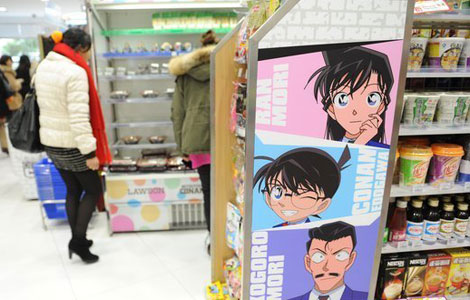
Consumers in China might be heading in the same direction, but they are not there yet. Shopping, not only in larger-format retailers such as department stores or hypermarkets but also convenience stores or personal-care stores, is considered a leisure activity. It is not unusual to see middle-aged ladies wearing pajamas and strolling in Shanghai hypermarkets, while office workers spending some of their lunch break browsing and chatting in convenience stores is a common scene in Guangzhou. As the latest Nielsen study shows, leisure and killing time is the third most important shopping occasion China.
Nevertheless, this opens up an opportunity for manufacturers as it provides a chance to engage more closely with consumers. With the right touch point and right message, consumers are more likely to give a brand the time to showcase its benefits.
The next two decades will constitute a coming-of-age for the Chinese middle classes, with rapid growth in their numbers as well as their consumption potential. To realize the full scope of the opportunity, businesses need to understand the growth in domestic demand and consumption from the current and emerging middle class. This can create a virtuous cycle of growth for the Chinese economy, where skills, jobs and an expansion of both quantity and quality of products and services aimed at this group can mutually reinforce each other.
The author is director of consumer research at Nielsen China.
Copyright 1995 - 2010 . All rights reserved. The content (including but not limited to text, photo, multimedia information, etc) published in this site belongs to China Daily Information Co (CDIC). Without written authorization from CDIC, such content shall not be republished or used in any form. Note: Browsers with 1024*768 or higher resolution are suggested for this site.
License for publishing multimedia online 0108263 Registration Number: 20100000002731