Holcim is clearly confident in its Chinese partner and its strategy in China. Despite a rather sluggish market with an acute oversupply in cement production capacity, Holcim reinvested in Huaxin in December to raise its shares to 42 percent of the total.
"We've already seen the slowing down of the Chinese economy is affecting the construction business. So maintaining 30 percent growth in sales this year is difficult but may be achievable," said Riley, who joined Holcim in 2006 and works as the vice-president of Huaxin Cement in Wuhan, the capital of Hubei province.
"The top priority is to continue to support Huaxin's growth, particularly to support the direction Huaxin is taking to become an environmentally friendly business," he said, adding there are a lot of opportunities in co-processing. It can pre-treat waste to use it as fuel to replace coal, gas or oil for the production of cement.
Riley said the cost of adding a co-processing facility to cement production and building a garbage pretreatment platform is about one third of the cost of constructing a waste incinerator.
He believes that using co-processing in the cement industry is a better solution than building incinerators to tackle China's garbage problems, especially for the treatment of municipal waste.
China overtook the United States in garbage output in 2004. The amount of waste has been rising at a rate of 8 to 10 percent a year. The slow process in sorting and recycling garbage and the scarcity of available space for landfill sites have made incineration a more preferable option in China.
Environmentalists in China, however, are opposed to incineration. They argue that hazardous emissions, such as the toxic dioxin, are unavoidable if the burning temperature is less than 950 C. Dioxins have been known to damage people's health. People who live near incinerators are especially vulnerable.
"The temperature used to produce cement can be as high as 1,700 C, which is much higher than the regulated temperature within an incinerator. Co-processing is a much safer way to treat waste," Riley said.
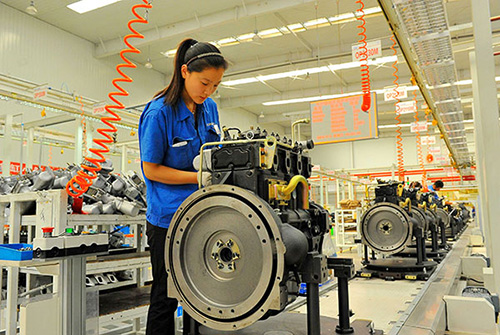
Out of the nearly 40 cement plants Huaxin has, six have already become co-processing plants. "There will be around 10 to 12 co-processing plants by this time next year," said Riley.
|
Q+A | Ian Riley |
|
 |
Q: How do you spend your weekend?
A: I enjoy spending the weekends at home with the family, helping with my daughters' homework and catching up on e-mails and reading.
What are your hobbies?
Reading.
What's your favorite book?
Most of my reading is business related but I do find time for novels. My favorite is For Whom the Bell Tolls by Ernest Hemingway.
What's your most treasured possession?
My family.
What kind of "green" lifestyle do you have?
We often go shopping by bicycle rather than car. When we eat out, we like to walk to a restaurant near our house rather than driving into the city center. Also, air conditioning can use a lot of energy, so we have installed extra insulation at home and we keep the temperature a little higher.
Are you sorting or recycling garbage in China? What are you doing to help tackle the garbage crisis in China?
Living a green lifestyle in China is not always easy, but there are many steps that can reduce energy and resource consumption. We are choosing fresh foods with less packaging in order to tackle the garbage crisis.
Apart from you, how many international employees from Holcim work in Wuhan? What does it feel like to be an expat working in a very traditional Chinese factory?
There are currently six foreigners working in Huaxin. All are based in Wuhan. Huaxin still has some traditional elements to the company culture, in particular an emphasis on hard work, dedication and trust. I also find the Huaxin employees embrace change. They are eager to learn new things and continually seek to improve. It is really a pleasure to work with my Huaxin colleagues.
What's your secret for working in a different culture?
When it comes to working with different cultures, the first rule is to be patient and tolerant of differences. You should try to understand the culture you are working in before trying to make others understand your way. Despite the differences in culture and habits, I find that Chinese people are at heart very similar to English people. If you deal with others with openness and respect then, in the end, that is the way others will treat you.
mengjing@chinadaily.com.cn

Copyright 1995 - . All rights reserved. The content (including but not limited to text, photo, multimedia information, etc) published in this site belongs to China Daily Information Co (CDIC). Without written authorization from CDIC, such content shall not be republished or used in any form. Note: Browsers with 1024*768 or higher resolution are suggested for this site.
License for publishing multimedia online 0108263 Registration Number: 130349