Editor's Note: As Premier Wen Jiabao has said repeatedly over the past few weeks, maintaining economic growth is a national priority. However, where will the much-needed new driving force for growth come from?
Talking about boosting growth, China business watchers know what the government did after the Wall Street meltdown in late 2008. For the next couple of years, it was the investment projects rolled out by the central government, initially worth 4 trillion yuan ($640 billion) in total, that helped China lead the world in GDP growth.
|
 |
Capital investment by the government can generate immediate power for growth, as Chinese leaders have said. But this time around, it is local government projects - those decided by planning officials at the provincial or municipal level - that seem to dominate the list of newly announced projects, with the local investment plans amounting to 7 trillion or even 8 trillion yuan.
But how much can China really count on local projects to boost its growth? Are there alternatives to spending so much and inevitably incurring so much local debt? China Daily has invited several economists to give their comments.
Q1:
Local governments in China have announced a series of investment projects to restore growth. Have local authorities become the major driving force of investment rather than the central government? If so, how do you evaluate the effectiveness of these local growth plans? Is it necessary to increase the central government's input and reduce that by local governments?
Q2:
Reports say local projects are now worth more than 7 trillion yuan. Do you consider that a reasonable estimate? Is this scale too large at the current stage? Which of these projects are really necessary? Which ones should be reconsidered? And which ones should be stopped?
Q3:
How will local governments accomplish projects on such a scale? Where will the funds come from? How many local governments will need to raise money via debt issuance? What impact will these further debts have on China's fiscal and financial situation? What measures should the central government take to guard against these risks?
Q4:
Are there any other effective ways to fuel the economic growth in China apart from local investment projects? Which ones are expected to play a bigger role?
|
 |
A1
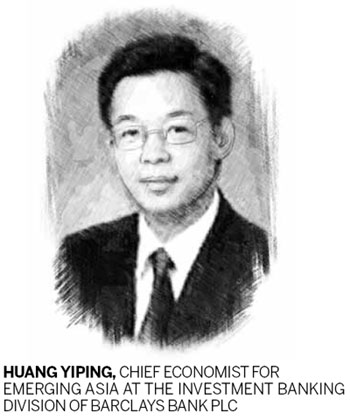
Local governments have recently announced many investment plans. It's understandable as economic growth continues to slow down. They want to get support from the central government and shore up the economy. But it's hard to say whether these plans will be implemented.
Local governments' financing potential has become very limited since the last round of expansion in 2008 and 2009. No matter whether they prefer to issue bonds or borrow from banks, it's no longer up to them any more. They need approval from the central bank and support from the banks. But after the credit expansion then, banks are no longer positive about lending money to them given the already deteriorating asset quality.
Compared to three years ago, the government faces tighter fiscal and financial policy constraints, with slowing tax revenues, falling land sales and sluggish bank lending.
Policymakers hoped that the corporate sector would also play a role through increasing investment in areas such as clean energy. But the corporate sector's investment response is not as fast as that from local governments, especially at a time of economic slowdown.
A2
Local governments' total investment plans must have far exceeded 7 trillion yuan ($1.1 trillion), based on recent media reports in some key regions. For instance, Tianjin announced a 1.5 trillion yuan investment program to build 10 industrial chains by 2016. Chongqing unveiled a 1.5-trillion-yuan program through 2015. Guangzhou plans to invest 1 trillion yuan in large projects, while Changsha has set out plans with a price tag of 829 billion yuan. In addition, Guizhou has announced a plan to invest 3 trillion yuan in infrastructure including transportation, water conservancy and information technology.
Although 7 trillion yuan sounds huge, these programs are just blueprints as local government officials have just taken office ahead of the leadership transition at the national level, and most of the programs will last for several years. That's quite different from the 4 trillion yuan stimulus package during the global financial crisis in 2008.
Most of the projects involve setting up industrial zones, especially for some emerging strategic industries. But the question is whether overinvestment will generate a new round of excessive production capacity and create more problems. It's better to let businesses and the market decide.
A3
Most importantly, none of these programs contains specific funding plans. Most local governments do not have their own financial resources to support these programs as tax revenues are slowing while land sales are falling. They have to either rely on the corporate sector, which is difficult in the near term, or borrow from the public or the financial system. The latter is conditional on macroeconomic policies decided by top leaders.
A4
It is quite likely that a recovery in growth could be delayed, alongside a downward shift in growth expectations, as downside risks remain. The economic slowdown may continue in the fourth quarter, and a rebound may remain out of reach in the years to come.
The government may increase direct spending, by using the Ministry of Finance's adjustment fund of up to 3 trillion yuan; it may lower tax burdens for Chinese businesses, possibly raising the export tax rebate by a maximum of 3 percentage points; and it may also subsidize consumer spending by providing cash subsidies, cheap consumer credit and tax discounts.
Reducing the tax burden on businesses would be a more practical way to spur the economy, although fiscal revenue growth showed some signs of declines.

Copyright 1995 - . All rights reserved. The content (including but not limited to text, photo, multimedia information, etc) published in this site belongs to China Daily Information Co (CDIC). Without written authorization from CDIC, such content shall not be republished or used in any form. Note: Browsers with 1024*768 or higher resolution are suggested for this site.
License for publishing multimedia online 0108263 Registration Number: 130349