Comments()
  Print
Print  Mail
Mail  Large Medium Small
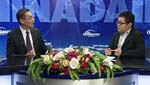
PARIS - China has maintained growth momentum and will continue to see higher growth in coming years, but it also faces challenges and needs to mull over "how to sustain a relative high rate of growth," said Angel Gurria, Secretary-General of the OECD, in an interview on Friday.
Gurria's remarks came as he inaugurated the OECD's first long-term economic forecast report on global growth over the next 50 years.
He said the largest and fastest-growing emerging economies fully assume a more prominent place in the global economy, with China and India being the principal engine in the drive. The two countries' growth has dramatically shift the balance of economic power, and change the composition of the global economy.
Gurria estimated that China's growth would be at 7.5 percent to 7.7 percent this year, and could expect "a higher growth in 2013 and even higher growth up to 8 percent in 2014," adding that it would maintain at this rate for fifty years.
China emerges in the new OECD forecast report: "Looking to 2060: Long-term global growth prospects" as the strongest economic growth power.
"In our study, we find that emerging economies, including China and India, will experience faster growth than more mature economies," said Asa Johansson, an OECD economist and the team leader of the report, in an exclusive interview with Xinhua.
"These countries will gradually catch up with the income levels of leading economies due to spreading out of best practices in product and labor markets, but also in catching up with technology in the leading economies."
"Currently, emerging economies have a lower level of technology and also a lower level of skills, so they have a greater scope for catching up, building up productivity and skills, therefore, they grow faster than more mature economies," she explained.
She warned that ageing will be a quite severe challenge in China in the near future as the labor force will decline "which will put a downward pressure on growth in China."
However, her report showed that China's share in the global GDP will rise from today's 17 percent up to 28 percent in 2030 and remain at the level till 2060. It is expected to surpass the United States becoming the largest world economy in a few years.
The report also projected that the combined GDP of China and India will surpass that of the G7 economies by around the year of 2025 and exceed that of the entire 34-member OECD bloc by the year of 2060.
"We do see a recovery in China. The only question is how to sustain a relatively high rate of growth," Gurria said.
In his view, concerns about the bubbles and the overheating have subsided, and now "the policy is more accommodating and more geared towards growth again."
He advised China to be more focus on "manage that curve" and deal with the questions of migration, ageing, environment and energy technologies.
He also called to accommodate a process "where there is a structural transformation of the productive model, which is increasingly moving towards knowledge and less towards labor and by accommodating millions of those who will have much higher and better skills and will be producing more high value-added products than simply producing labor."
He urged China to have more "knowledge-based input into the growth pattern," as he notes that the buildup of skills will add significantly to the economy in some lower income countries with low levels of education, including China.
Efforts should also be made to improve social services and social safety to boost people's confident in the future so that they are willing to spend and invest more rather than save money.
"So, you have a combined element of impressive transformation, you have a focus on domestic demand, which you do by delivering health and social services," Gurria stressed, adding that equity in the benefits of growth is very important.
Gurria hailed China's "Five-Year Plan" a workable way to show people the nation's goal and the roadmap of the development, referring it to a policy-based solution but also a very important communications-based solution, "in a context in which you do not run into conflicts with the rest of the world," a way mean you can develop but "avoiding or minimizing the number of conflicts that you have on the economic side."
Copyright 1995 - 2010 . All rights reserved. The content (including but not limited to text, photo, multimedia information, etc) published in this site belongs to China Daily Information Co (CDIC). Without written authorization from CDIC, such content shall not be republished or used in any form. Note: Browsers with 1024*768 or higher resolution are suggested for this site.
License for publishing multimedia online 0108263 Registration Number: 20100000002731