Japanese firms look to other markets


Year ahead provides opportunity to improve ties, trade official says
Diplomatic tensions and rising costs mean that an increasing number of Japanese companies are moving to emerging markets elsewhere in the region, a leading Japanese trade official said.
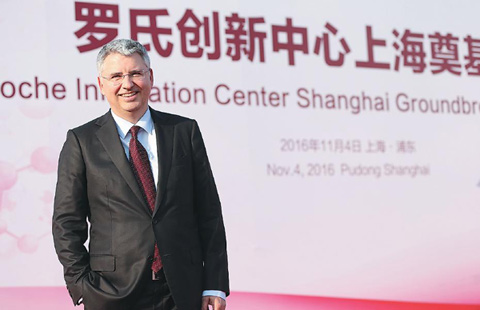
But Shintaro Mine, president of the Japan External Trade Organization in Shanghai, said that the time is right for tensions to ease.
"I think the countries should take advantage of the 35th anniversary of the signing of the Treaty of Peace and Friendship between Japan and China as a window of opportunity to improve relations."
Mine oversees his country's largest government-led foreign trade and investment office outside Japan. A poll conducted by the organization in December suggested that China's attractiveness as a top investment destination was declining.
Of the 8,000 Japanese enterprises surveyed, all with a presence in the Asia-Pacific region, 52.3 percent believed that China would still be an important investment destination in two years. This figure was down from 66.8 percent at the end of 2011.
The fall marked the steepest single drop for a country, Mine said.
"We noticed a surge in Japanese interest in emerging markets like Cambodia, Myanmar and Laos. There's already intense competition in countries such as Vietnam and Indonesia where Chinese companies have established a foothold," Mine said.
Concerns over China's rising costs have also come into play as higher wages and operating costs deter Japanese investors, he noted.
"Some Japanese firms lost the opportunity to bid for certain government procurement projects in China. These companies have a growing sense of uncertainty about carrying out business in China," he said.
Japan's automobile sector, tourism, agriculture and food exports are among the worst-hit industries since September, Mine noted. As a result, only a fraction of investment projects are being carried out as planned, while most operations have been halted or even completely stopped.
Mine's organization promotes trade and investment. It is organizing Japanese companies to participate in trade fairs in China between March and May.
The Ministry of Commerce said foreign direct investment from Japan to China rose 16.3 percent year-on-year in 2012, compared to 55 percent in 2011.
But he still believed Japanese investors are largely committed to China, given that overall FDI inflow to the country declined by 3.7 percent.
And there are early signs of improvement. Major Japanese vehicle brands, such as Toyota, Nissan and Honda, have seen sales rebound since November. Losses from tourism are balanced by an unexpected surge in business visits last year, Mine said.
Mine was confident that China is a market of great opportunities and Japan's expertise in technology and services can help China achieve its goals.
"We are actively promoting China's business potential. That's why we are keen to see relations improve as soon as possible."
Traditionally, multinational corporations came to China to benefit from low prices and costs but now most come for market access, said Dan Steinbock, research director of international business at the India, China and America Institute in the United States.
"Therefore, smart MNCs know that they can still enjoy cost-efficiencies in China's smaller cities, inland and the west — and that China's leading cities are about to become global market engines and thus very attractive destinations for FDI for years to come," Steinbock said.
But the economic interdependence between China and Japan is asymmetrical, said Chen Zhimin, dean of the School of International Relations and Public Affairs at Fudan University in Shanghai. "With China's fast development, the relative importance of Japanese investment is dwindling. In contrast, the success in the Chinese market, to some extent, defines the overall competence of Japanese companies."