Reducing income inequality an urgent task


The growing income inequality in China will be in focus at the annual sessions of the National People's Congress and the Chinese People's Political Consultative Conference. According to the government, the country's Gini coefficient - a widely used measure of income inequality - was 0.474 in 2012. This is a significant jump from about 0.3 in the early 1980s and is well above the internationally recognized warning threshold of 0.4.
Although income disparity across provinces has narrowed in recent years, the new Gini coefficient puts China among the most unequal countries in Asia and at the higher end of the global range. Economic reform has made some people very rich and created an affluent urban middle class. But many millions, particularly in the countryside, have been left behind.
China is not the only country in developing Asia to experience rising inequality. A recent study by the Asian Development Bank shows that the Gini coefficient increased in more than one-third of Asian countries with comparative data in the past two decades, including India and Indonesia. These countries account for more than 80 percent of developing Asia's population. But among these countries, China's Gini coefficient has increased the most and at the fastest rate.
Nobel Prize-winning economist Arthur Lewis once argued that development is inevitably inegalitarian, because it does not occur in every part of an economy at the same time. To a large extent, rising inequality in China and in a large part of Asia can indeed be explained by "unevenness in growth".
Rapid annual growth, at about 10 percent in China and 7 percent in developing Asia as a whole in the past 20 years, driven by forces of technological change, globalization and market oriented reform, has created enormous new opportunities.
Regrettably these opportunities have not benefited everyone equally - they have tended to favor owners of capital over labor, skilled and better educated workers over the unskilled and those with lower level of education, and coastal and urban population relative to those in inland and rural areas. Market distortions and corruption have made the situation worse.
The forces of technological change, globalization and market-oriented reform cannot and should not be reversed, because they are the engines of economic growth. So how can the Chinese government tackle the problem of high-income inequality?
The answer is by ensuring that everyone in society has equal access to opportunities.
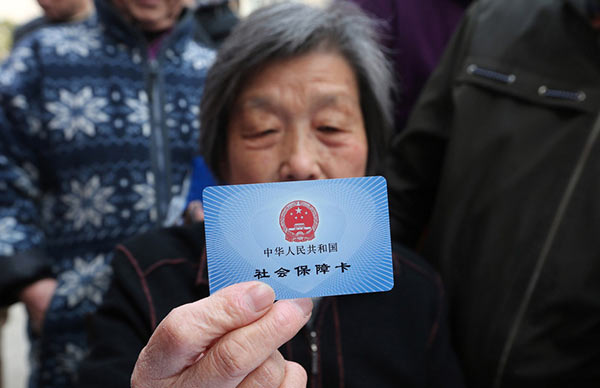
China needs to shift fiscal spending more toward public services - education, basic healthcare and social protection, and make the tax system fairer and more effective in generating the revenues needed for this type of spending. The government currently spends about 4 percent of GDP on education and 1.4 percent of GDP on healthcare - far less than the average levels of countries that form the Organization for Economic Cooperation and Development, which spend 6 percent and 6.5 percent, respectively. Without access to better services, low-income people have limited opportunities to build themselves and their skills and limited scope to benefit from the growth process.
At about 1.3 percent of GDP, China's personal income tax revenues are considerably lower than the average of 8-9 percent of GDP for high-income countries, and consequently play a very limited role in shaping income distribution. China's income tax system must be made more progressive so that the rich pay a greater and fairer share of income tax without weakening incentives and entrepreneurship.
China also has to reduce regional disparities significantly. This requires continuous investment in infrastructure, including transport, telecommunications and power generation, to better connect the country's interior with its coastal areas and to develop growth centers in inland provinces. Tackling regional inequality also requires reducing barriers to mobility of labor and capital across provinces, and investing in public goods and services in poor areas through fiscal transfers.
The creation of quality jobs should be at the heart of China's development policy. More jobs that are productive, well paid and in cities will help absorb a greater number of rural migrants, and thus reduce urban-rural income gaps, and ensure a high level of employment for young graduates, which in turn will prevent urban poverty.
Under the 12th Five-Year Plan (2011-15), China is to create 10 million urban jobs every year. To achieve this goal, promoting urbanization and developing the services sector are critical. Also, the manufacturing sector should be continuously upgraded through innovation and adoption of new technologies in order to raise productivity.
The government needs to prioritize equal access to opportunities. This requires giving migrant workers the same access to public services as urban residents, eliminating State-run companies' monopoly and strengthening their governance, and preventing corruption by making those in control of public resources disclose their assets.
Encouragingly, many of these policy elements are part of the 12th Five-Year Plan and were reconfirmed at the recent 18th National Congress of the Communist Party of China. The challenge is to make them a reality before inequality divides society and stunts growth.
The author is deputy chief economist at the Asian Development Bank. The views expressed in the article do not necessarily represent the views and policies of ADB or its board of governors or the governments they represent.