Market volatilities shake global recovery


The G20 has its hands full. At a meeting in Moscow earlier this month, the Group of 20 nations agreed that the global economy remained "too weak," requiring greater efforts to stimulate growth while trying to ensure that recovery will not be derailed by financial market volatilities.
The global economy was weakened mainly by financial market volatilities arising from the credit crisis in the United States. The ripple effect of this crisis triggered the outbreak of the sovereign debt crisis in Europe that pushed the global economy further into recession.
This situation gave a boost to the argument for austerity, which is favored by conservative economists who contend that fiscal discipline can bring calm to the financial markets and restore confidence in the private sector. With this renewed confidence, the private sector would invest again, bringing about an increase in economic activities and the creation of new jobs.
But, as many liberal economists have pointed out, austerity administered at a time of a debt-induced recession is tantamount to economic self-flagellation. Some of them were passionate in putting forward the view that the priority of the government of a recession-hit economy is to increase, rather than reduce, spending to stimulate growth and increase employment. Bond-holders, they surmise, will only punish economies that are on the decline. Nothing wins market confidence more than a sustainable growth momentum and declining unemployment rate, they argue.
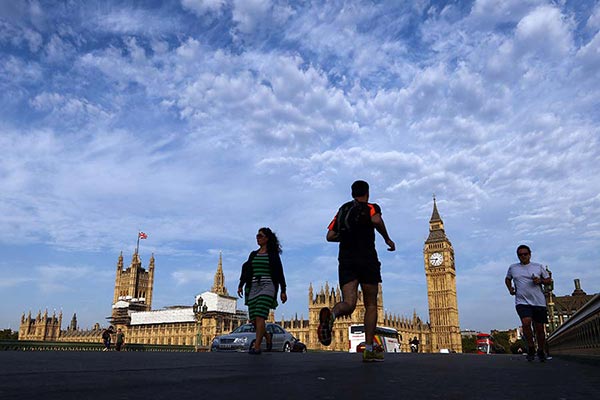
This "liberal" school of economic thinking appears to have swayed the consensus of the G20 decision-makers, as it has become clear that the austerity policies adopted by some governments, notably in the United Kingdom, have failed to produce the desired results. Instead of restoring confidence as promised, austerity has only deepened the recession, depressed investment and pushed up the unemployment rate, especially among the younger and more vulnerable segments of the population.
"The debate between growth and austerity seems to have come to an end, as captured in the G20's strong statement on growth and jobs," a senior US Treasury official was quoted by Reuters as saying. The communiqu issued by finance ministers and central bankers at the Moscow meeting acknowledged the benefits of expansive monetary policies, called quantitative easing, in the US and Japan.
An economic recovery is widely seen to be gaining traction in the United States. In Japan, the ruling party of Prime Minister Shinzo Abe has gained political capital in the latest parliamentary election to push ahead with its expansive economic policy, which is reportedly gaining wider public support.
But the International Monetary Fund has sounded a warning about the deepening threat of global market turbulence, noting that the stagnation in the eurozone and slowing growth in the emerging markets, particularly China and Brazil, could snag global growth. "Global economic conditions remain challenging, growth is too weak, unemployment is too high and the recovery is too fragile," IMF Managing Director Christine Lagarde told reporters in Moscow. "So more work is needed to improve this situation."
Emerging markets in Asia have escaped the financial tsunami that engulfed some developed economies. But they have been hit to various degrees by the slowdown in global demand for a wide range of consumer goods and raw materials.
The prevailing opinions emerging from the G20 meeting seem to suggest that a global economic recovery is still some years away. The biggest potential threat facing emerging markets is widely believed to be the winding down of the quantitative easing programs in the US and Japan that could trigger a massive outflow of capital.
The G20 statement said: "While our policy actions have contributed to contain downside risks, those still remain elevated. There has been an increase in financial market volatility and a tightening of conditions."