Making sense of the moves against monopoly


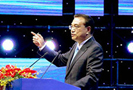
If you want to understand the motive behind China's recent high-profile crackdown on monopolistic practices and commercial corruption, look no further than Premier Li Keqiang's article in the Financial Times.
"Government will leave to the market and society what they can do well while concentrating on those matters within its purview," reads the article published on Sept 9 ahead of the Summer Davos Forum.
The comment is a clear indication that top Chinese policymakers are keen to change the government role from an all-round participant in economic activities to that of a regulator who ensures a level playing field for all sorts of business entities regardless of their ownership or size.
But changing the government role and regulating market order are colossal tasks that require long-term and enduring efforts and may face opposition from vested interest groups over time.
To begin the crusade, the government seems to have chosen a relatively easy task. It has targeted monopolistic practices and commercial corruption, because it can yield immediate results over a short period of time and help garner public support for the government's future reforms. With that goal in mind, the government has now stepped up its fight against monopolistic practices.
Those punished by the authorities included Belgian pharmaceutical company UCB and LCD panel maker Samsung Electronics. US medical giant Johnson & Johnson last month became the first Fortune 500 company to be ruled as holding a monopoly in China by a Shanghai court.
Last month, China also handed down its biggest fine for price fixing. The fine of 670 million yuan ($108 million) was levied on six milk powder companies, namely Mead Johnson, Dumex, Abbott, Friesland, Fonterra and Biostime.
Although there are many complaints of market monopoly, the exact reason as to why these companies have been targeted deserves attention. These cases have one thing in common. That is, they are all industries that are closely linked with people's livelihoods and are areas people complain most over unreasonable prices. It is clear that the authorities want to garner public support and to reestablish market order.
This also explains why the government has recently intensified the crackdown on commercial corruption and price fixing in the pharmaceutical sector. Global drugmakers , such as GlaxoSmithKline and AstraZeneca, have been investigated for suspected bribery, while investigations against 60 pharmaceutical companies for alleged unfair commercial practices are going on. Given the fact that high medicine prices have always been a major source of public outcry, it is understandable that the government zeroes in on such cases.
China's increased efforts to regulate prices also come at a time when the country has matured in its anti-trust fight. After China enacted the anti-monopoly law in 2008, it has gradually accumulated experiences and skills in handling monopolies.
The National Development and Reform Commission, the State Administration for Industry and Commerce and the Ministry of Commerce are the three government agencies that have been primarily tasked with the investigation into monopolistic practices. The State Administration for Industry and Commerce alone has probed more than 1,300 cases of alleged anti-competitive practices in the past five years. The government team has also expanded. Each of the three agencies now has 40 to 50 employees to exclusively handle monopolistic cases, from none five years ago. That also explains why anti-trust probes have grown steadily in the past few months.
It must also be pointed out that most of these probes are not specifically targeted at foreign companies. In fact domestic companies have also been subject to such investigations. In the most recent case, the Shanghai Gold & Jewelry Trade Association and five jewelry retailers were fined 10.6 million yuan last month for price-fixing.
In spite of this there is still an overall feeling that foreign companies, rather than domestic enterprises, are often the victims in such crackdowns. This is mostly because foreign companies hold the leadership in many consumer sectors.
According to Universal Consultancy research, foreign companies take up a bigger market share than their Chinese counterparts in 29 of the 41 fast-moving consumer goods sub-sectors. If we look at high-end segments of these sub-sectors, foreign companies' advantage extends to 35.
Although not all of these foreign companies form a monopoly, it is undeniable that they have bigger power in price setting and production chain control. So, whenever a probe is launched, foreign companies are more likely to be charged with monopolistic practices.
Another factor that has often raised attention is the absence of State-owned companies in energy, telecom and banking sectors in the investigations. Indeed, complaints over State control of these sectors have been loud. Their monopolies and anti-competitive practices are evident. These behemoths are free from anti-trust punishment because they are so big and significant that the three government agencies responsible for handling monopolies are not in a position to deal with them. It is the State Council that has the final say on whether or not their monopolies should be shattered.
The authors are analysts with Shanghai-based Universal Consultancy.