China, Japan, Singapore and South Korea have vividly demonstrated how significant investment in science can help to fuel national economic growth, according to latest research of Nature.
The Nature magazine, a prominent interdisciplinary scientific journal, published its Nature Index on Nov 13, a database of author affiliations and institutional relationships that are used to track contributions to articles published in top-class science journals.
At world level, East and Southeast Asia ranks the third measured by the countries' average contribution to each scientific research paper, while three of the world's top 10 biggest contributors – China, Japan and South Korea – are from the region.
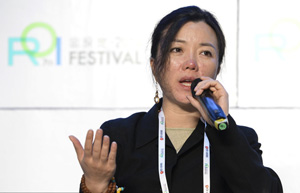
"The most important factor is the absolute increase in the budgets spent on R&D in the region," Nick Campbell, Executive Editor of Nature and Greater China Head of Nature Publishing Group, told China Daily in an email.
"As the prime funder of fundamental research, the government of any nation with serious science and technology ambitions naturally plays an enormous role in determining how that translates into knowledge-based economic outcomes," he said.
China's R&D spending reached as high as 1.18 trillion yuan ($192.81 billion) in 2013, or 2.08 percent of the country's GDP, according statistics released by the National Bureau of Statistics.
At the same time, China's weighted fractional count (WFC) - a measure of a country's relative contribution to each paper - increased by 15 percent in 2013 over 2012.
"This is even more impressive when com?pared to an increase of less than 1 percent, or even a decrease, for all other top 10 WFC countries," Campbell said.
China's heavy R&D investment came along with the central authority's innovation-oriented strategy, which was put forward at the 18th CPC National Congress in Nov 2012.
With changes in China's development, the strategy takes innovation has as the key to transforming development and optimizing the economic structure, which, on the other side, rose criticism for the relatively low investment on fundamental research.
For example, the country's spending on fundamental research remained around 5 percent to the total R&D fund since 2006.
"Compared to China and South Korea, Japan has greater funding for basic science," KAIST's Soon Park was quoted in the Nature Index Global, adding that science in these latter two countries is often perceived in "utilitarian terms".
"Every country is unique in terms of how such development plays out, but China, like any country, can learn from the experiences of others. For example there is a lot to be admired in how Korea innovates in its high-tech industry, driven by several world-leading companies," Campbell said.
"I am sure there are many in China that would advocate for a bigger focus on fundamental research if it could guarantee a long-awaited Nobel Prize winner."

Copyright 1995 - . All rights reserved. The content (including but not limited to text, photo, multimedia information, etc) published in this site belongs to China Daily Information Co (CDIC). Without written authorization from CDIC, such content shall not be republished or used in any form. Note: Browsers with 1024*768 or higher resolution are suggested for this site.
License for publishing multimedia online 0108263 Registration Number: 130349