In 2014, the company received 1,000 containers from Ecuador, a year-on-year increase of 80 percent. Its target this year is to raise it by another 30 to 50 percent.
Fruit dealers attribute the surge in imported food like bananas to the growing wealth of Chinese people and worsening domestic food safety. In addition, e-commerce has brought foreign products to central and western inland regions, an under-tapped market with great potential.
"When I was a kid, a banana was a luxury for an ordinary family like mine, not to mention an imported banana," said Zhang.
She was born in 1978, when China formally began its reform and opening-up policy.
"It's not far-fetched to say that imported bananas demonstrate the real purchasing power of ordinary Chinese people," she said.
Banana still has an exotic appeal, especially in the more remote parts of China's northeast, where the inhabitants might never have heard of the far-flung Latin American nation that grew it. Packed in a fruit basket, bananas can still brighten special occasions such as Spring Festival, when the area emerges from winter temperatures that can plunge to minus 40 degrees centigrade.
Fifty days before reaching China, the bananas were still green when a worker picked them on a plantation in Guayas, Ecuador. Then they were packed into the container and shipped from Guayaquil Port. After a 40-day journey across the Pacific, they arrived in Dalian.
But it was not like this always, says Mike Fang, who has worked for Maersk Line, the world's biggest shipping company, for 21 years, and has seen up close how China's development has transformed economic patterns.
He joined Maersk in 1994, when China's economy rocketed with double-digit growth as the country became the factory of the world.
"At that time, China imported large amounts of waste paper, plastic and metals to make low-end products for exports, which resulted in a high foreign trade volume, but limited contribution to a high-value economy," he said.
However, over the past decade, the imported items have changed. The demand for fruit, meat, dairy products and wine has increased dramatically, "particularly in the last three to four years", while imports of industrial waste are much less. "Actually, now our ships carry auto parts, instead of waste metals, from Germany to China," said Fang.
To adapt to the trend, Maersk has begun to restructure its China operations.
"Previously, we mostly handled China's exports, but now we have to think about how to carry products to China as soon as possible. For instance, we have put more cold chain containers on the lines between China and Latin America or Oceania for the fruit and fish imports," he said.
Fang believed the increase in imported products pressures Chinese producers to sharpen their competitiveness, which is also the key to the government's goal of upgrading China's economy.
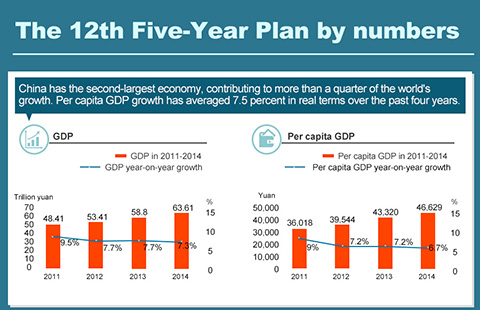
After more than three decades of rapid growth, the world's second-largest economy slowed its pace to 7.4 percent in 2014, a 24-year low, and the figure dropped to 7 percent in the first half of this year.
The government says the economy has reached a "new normal"-a slower but healthy growth. But, many worry that China's "economic miracle" might be over.
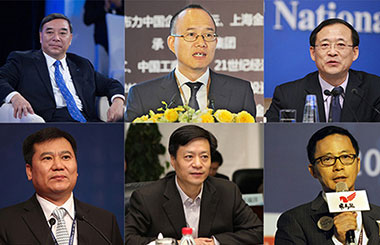
Liu Shijin, deputy director of the Development Research Center of the State Council, said the "new normal" means China's economy has shifted gears from high-speed to medium-to-high speed growth.
"Previously, China's economy was driven by investment and industrial development, which relied heavily on labor. But now it is transforming into a consumption-and services-oriented model. The changes will have long-term significance," said Liu.

Copyright 1995 - . All rights reserved. The content (including but not limited to text, photo, multimedia information, etc) published in this site belongs to China Daily Information Co (CDIC). Without written authorization from CDIC, such content shall not be republished or used in any form. Note: Browsers with 1024*768 or higher resolution are suggested for this site.
License for publishing multimedia online 0108263 Registration Number: 130349