BEIJING -- Sports industry is now one of China's most dynamic sectors and has experienced double-digit growth in recent years.
Chinese investors have frequented world media headlines for their big spendings on sports stars and soccer clubs in 2015.
For example, Chinese clubs spent the most on the global transfer market during winter window; China's Wanda Group became new FIFA partner; China's Hisense Group signed as UEFA Euro 2016 global sponsor.
RAPID EXPANSION AND HUGE ROOM AHEAD
In 2013, sports and relevant industries in China reached a total scale of 1.09 trillion yuan ($168.5 billion) and realized an added value of 356.4 billion yuan ($55 billion), accounting for 0.63 percent of GDP in the year, up by 10.8 percent compared to that of 2012, obviously higher than GDP growth in the same period.
In stark contrast to huge overcapacity in industries like steel, sports industry is in constant short supply.
"As I understand it, industries like sports and culture can only develop when people have more spare time and income at their disposal. Now China has just reached the right place and people are in need of leisure activities in sports and culture," said Wang Jianlin, chairman of Wanda Group, China's largest commercial property company and world's largest cinema chain operator.
In developed countries, sports industry makes considerable contributions to their economies, contributing 1-3 percent of the GDP generally, and plays an important role in creating jobs. In comparison, China's sports industry is still in infancy and has huge room to grow.
"The scale of China's sports industry and relevant industries, including the sportswear manufacture, amounted to just 50 billion dollars in 2014. America's sports industry turned out 500 billion dollars that year and has been growing, even with only sports games and sports activities being counted," said Wang.
CLEARING OBSTACLES AND PAVING WAY
On September 2, 2014, Chinese Premier Li Keqiang mapped out the plan of speeding up the sports industry development, boosting sports consumption and promoting public fitness in the State Council executive meeting. On October 20, the State Council unveiled a guideline, named "Opinions on Accelerating the Development of Sports Industry and Promoting Sports Consumption".
As a result, China's General Administration of Sports loosened its hold on administrative examination and approval of commercial and mass sports events.
In 2015, the General Administration granted the subsidy of 870 million yuan ($135 million) for 1,212 large sports venues to open for free or at a low charge. The administration also named seven national sports industry bases and 12 sports industry demonstration units around China.
Meanwhile, local administrations are eager to set up local sports industry bases. By far, nine provinces have constructed sports industry bases and 12 provinces and regions are about to join them.
SPORTS INVESTMENT HEATING UP
Sports industry has been on the speedway since 2105 as investors are optimistic for its future.
Wanda Group has purchased world top sports marketing company Infront Sports & Media at the price of $1.2 billion and World Triathlon Corporatino at $650 million.
China's leading e-commerce company Alibaba established Ali Sports Group, while Tencent, China's top internet service portal, has purchased online broadcasting right of a large number of sports events.
Ti'ao Dongli (also known as China Sports Media), a Beijing-based company specializing in sports broadcast, acquired broadcasting rights last May for the Chinese Super League (CSL) for 8 billion yuan (1.3 billion dollars) over five years covering 2016-2020.
Then LeSports, China's leading internet-based sports company, announced a wide-ranging strategic partnership with Ti'ao Dongli recently, obtaining online multimedia rights of the CSL in a deal worth 2.7 billion yuan ($420 million), headlined by exclusive global broadcast rights covering five seasons.
Chinese investors have been the most active buyers abroad last year. The following are Chinese investments in European teams: CMC/Citic Capital -- 13 percent stake in City Football Group (Manchester City parent firm); Rastar Group -- 56 percent stake in Spanish club Espanyol; Wanda Group -- 20 percent stake in Spanish club Atletico Madrid; CEFC China Energy Company -- 60 percent stake in Czech club Slavia Prague Ledus and complete ownership of French club Sochaux; United Vansen International Sports Company -- majority shareholder in Dutch club ADO Den Haag.
SPORTS GOODS MANUFACTURE BOOMING
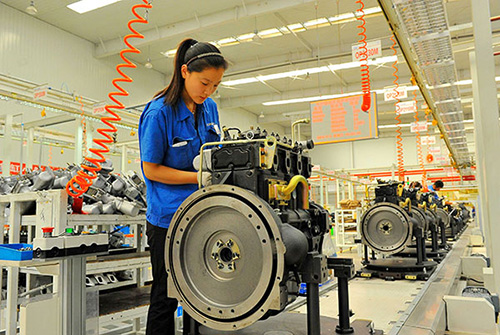
In terms of sports goods manufacture, leading enterprises represented by Anta sportswear company and Taishan sports equipment company, a sole supplier for four consecutive summer Olympics since 2004, have also registered rapid growth.
Anta's revenue in 2015 has reached 11.13 billion yuan ($1.72 billion) and recorded a net profit of 2.7 billion yuan ($417 million), a new high in the company's history, according to its financial report.
China's sport equipment manufacturing is expected to generate a revenue of $27.7 billion in 2015, up 9.5 percent from 2014. Over the past five years, revenue has been growing at an average annual rate of 12.3 percent. With exports accounting for 43.5 percent of industry revenue in 2015, the industry is heavily influenced by foreign demand.
It is expected that by 2020, total scale of sports industry will be more than three trillion yuan ($463.7 billion) and proportion of sports industry's added value to GDP will be one percent.
In line with the State Council's guideline, the overall scale of the sports industry is expected to reach five trillion yuan ($772.8 billion) by the year 2025 while the figure is estimated to be over 400 billion yuan ($61.8 billion) now.
"China will be the No. 1 in sport industry if we can turn the guideline into reality and the industry can create over 10 million jobs," said Wang, China's richest man. "Wanda Group is determined to invest more in the sports industry. I'm confident it's a profitable industry in China. The longer you build your brand, the better you'll benefit. That's the merit of the sports industry."


Copyright 1995 - . All rights reserved. The content (including but not limited to text, photo, multimedia information, etc) published in this site belongs to China Daily Information Co (CDIC). Without written authorization from CDIC, such content shall not be republished or used in any form. Note: Browsers with 1024*768 or higher resolution are suggested for this site.
License for publishing multimedia online 0108263 Registration Number: 130349