NEW YORK - A recent report said China's Foreign Direct Investment (FDI) in the United States hit a record of over $15 billion in 2015, yet hurdles to Chinese investment in the United States still exist. To keep the momentum and bring benefits to both, enhanced mutual trust and understanding are vital.
Reasons behind China's increasing FDI in US
Chinese investment in acquisitions, new operations and expansions in the United States grew to more than $15 billion in 2015, according to a report by the National Committee on US-China Relations and Rhodium Group.
Innovation clusters, strong protection of intellectual property rights (IPR) and a well-established market environment in the United States are the major draws for investment from Chinese companies. With a strong dollar and an increased interest rate, the US economy is expected to grow faster, which has made investment in the United States more alluring. The scale and maturity of the US market are appealing to Chinese companies as well.
Conversely, China's growth model overhaul, lower political barriers for outbound investment and greater confidence are leading to a record capital flow to the United States.
Chinese investment in the United States will expose Chinese companies to Western standards of corporate governance, which is conducive to their development as well.
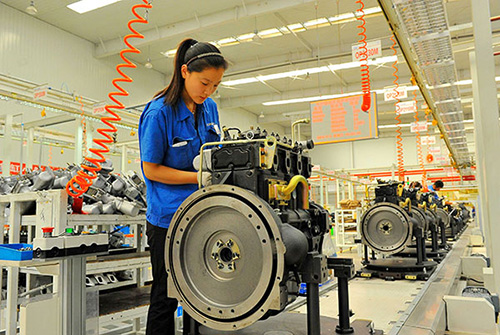
The time has gone when China acquired advanced technologies by providing markets. The country is now among the world's top high-end manufacturers in a wide range of industries, such as home appliances, glass, solar energy and cement; therefore, many Chinese companies are capable of investing in the United States, said Ye Meng, vice-chairman of China General Chamber of Commerce-USA.
China's FDI in the United States is still relatively small, as its stock only accounts for less than one percent of the total FDI in the United States, leading to great potential for rapid growth.
With over $30 billion already in pending deals and projects, 2016 is likely to be another record year for Chinese FDI in the United States, the report predicts.
China's growing FDI benefits both sides
Fears still linger that Chinese investment could compromise US security interests and lead to job offshoring. However, no such issues have emerged.
"So far we don't see any patterns of deals that don't make a whole lot of commercial sense," said Thilo Hanemann, a director at Rhodium Group who leads the firm's work on global trade and investment, during a panel discussion on Wednesday.
In fact, more Chinese FDI creates more jobs in the United States as the number of Americans employed by Chinese-affiliated companies rose by another 12 percent to 90,000 in 2015, said the report.
The majority of newly added jobs in 2015 resulted from acquisitions, and new Chinese owners tend to expand local employment after the acquisition is done, contrary to fears that Chinese investors could acquire US assets and then move related activities back to China, according to the report.
A case in point: Smithfield Foods added 1,500 workers after it was acquired by China's Shuanghui Group in 2013.
An increasing amount of Chinese FDI also spurs more exports to China, as some Chinese companies use their US operations to export products back home, according to the report.
For example, a $1.85 billion greenfield facility by China's Yuhuang Chemical in Louisiana, once completed, will export the majority of its methanol back to China.
Mutual trust is vital?
Despite all the benefits that Chinese investment brings to the US economy, rising politicization of the issue in the US presidential elections poses a risk to incoming Chinese investment.
"The first months of the year have produced numerous instances of politicians from both parties issuing dire but ill-founded warnings about Chinese investments, and introducing bills that propose severely clamping down on traditional US openness to FDI," the report said.
Between "a factory owned by an American company that employed 1,000 workers" and "a factory owned by a Chinese company that employed 2,000 workers," only 23 percent of the 1,000 respondents preferred the latter, according to a poll conducted in late March.
Perceived biases should be eliminated to pave the way for both countries to benefit from the momentum of China's increasing FDI flow to the United States.
"We need to make it easier for China to invest in America. Not only would it help invigorate domestic industries, it would also provide a path to greater security. If instead we let our fears lead us to greater isolationism, we will surely lose," said Zachary Karabell, head of global strategy at financial firm Envestnet.
China also needs to be more assertive and explain clearly how the investments help boost mutual trust, said Daniel H. Rosen, founding partner of Rhodium Group.
Meanwhile, Chinese firms should not necessarily feel they are going to be treated differently when investing in the United States.
Amid a gloomy outlook for the global economy, the world's two largest economies need more trust and cooperation rather than skepticism and isolation.
Authors of the report urged US Congress to ensure that "the debate about appropriate responses to Chinese FDI proceeds rationally and does not damage America's reputation for openness."
"In our view, we should not handle the Sino-US strategic relationship with the 'Cold War' mentality. The two economies are highly supplementary with tremendous synergies," said Xu Chen, chairman of China General Chamber of Commerce-USA.


Copyright 1995 - . All rights reserved. The content (including but not limited to text, photo, multimedia information, etc) published in this site belongs to China Daily Information Co (CDIC). Without written authorization from CDIC, such content shall not be republished or used in any form. Note: Browsers with 1024*768 or higher resolution are suggested for this site.
License for publishing multimedia online 0108263 Registration Number: 130349