Connoisseur of crises sees China easily avoiding one


 |
|
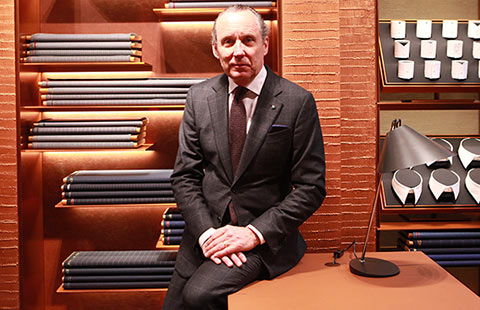
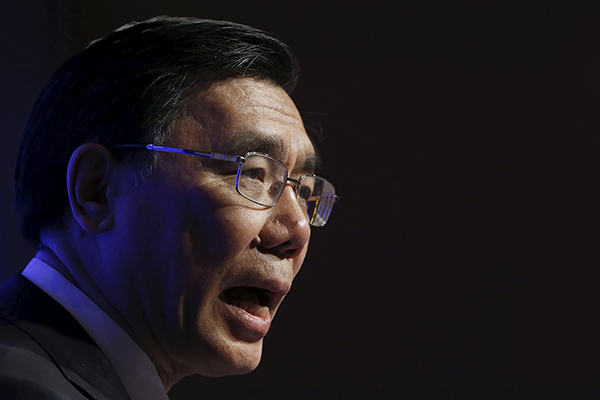
Jiang Jianqing, ICBC ex-chairman. [Photo provided to China Daily] |
ICBC ex-chairman Jiang Jianqing thinks Western experts' vision of Chinese financial meltdown is alarmist
Jiang Jianqing considers himself a connoisseur, not of fine French wines, as you might expect from a banker of his stature, but rather of financial crises.
During a career in Chinese banking that's spanned four decades-it included time as the head of Industrial & Commercial Bank of China, the world's biggest lender by assets-Jiang has studied meltdowns through the ages. He's written books and articles on banking history and the not-so-infrequent financial crises the world has witnessed over the past few centuries. "Younger generations will forget the reasons," he said, pointing to three enduring themes behind the calamities: economic imbalances, shoddy regulation, and greed.
Will China be the scene of the world's next financial train wreck?
In a recent interview, Jiang, 63, dismisses this sort of analysis from Western financiers and economists as alarmist. Relaxed and contemplative, having retired as chairman of ICBC in May, he said he doesn't see any signs of a meltdown. And he rejects claims that banks such as ICBC, one of China's big four State-backed lenders, are hiding mountains of undeclared bad loans.
Wild predictions to the contrary, he said, betray a lack of understanding of how China works and how far the Chinese financial system has come. "As Chairman Mao once said, 'If you want to know the taste of the pear, you must taste the pear,'" said Jiang, who worked as a farmhand and miner during the "cultural revolution" (1966-76), long before he joined the banking elites. "Some people write a lot of reports or articles about how a pear tastes by using only their imagination."
Jiang's different perspective is born of a 37-year career that mirrors the rapid rise of China's $11-trillion economy as well as the stop-start modernization of its financial system. When he became president of ICBC in 2000, he inherited a bank that was mired in bad debt, in need of a government bailout, and bereft of risk-management controls.
He turned things around. ICBC's official bad-loan ratio is lower than 2? percent, compared with 34 ?percent when he started working at the bank's Beijing headquarters in 1999. (Judged by more modern reporting standards, he said, the ratio then would have been 47.5? percent.) He counts improvements in risk controls among his proudest achievements.
According to Jiang, ICBC now classifies loans in 12 categories based on repayment risks, using a methodology that's stricter than the five-category system required by the China Banking Regulatory Commission.
Jiang ran ICBC during the biggest expansion of credit in history. The asset value of Chinese banks jumped 276 ?percent in eight years, to 218 ?trillion yuan ($33? trillion) as of June. That's more than double the amount held collectively by US commercial banks. ICBC had a market capitalization of $228 ?billion in early? November.
After overseeing the bank for 16? years, Jiang left to head an ICBC-led fund that plans to raise as much as $11.1? billion to invest in central and Eastern Europe. The venture is part of China's Belt and Road Initiative to promote trade and economic development along ancient Silk Road maritime and land routes.
The fund will focus on investment in infrastructure, high-tech manufacturing, and consumer goods, according to statements from ICBC and the Chinese government.
Heading the investment fund is a natural fit for Jiang, said Keith Pogson, a Hong Kong-based managing partner at Ernst & Young who worked with Jiang as ICBC's auditor from 2001 to 2012. "ICBC has been at the forefront of financing the infrastructure build-out both inside China and, increasingly, with Chinese projects or businesses outside China," he said. "That experience would be invaluable in doing similar things in Eastern Europe. Remember, that is really where Belt and Road ends up."
Although Jiang climbed to the pinnacle of Chinese banking, his salary last year was all of $81,000, or 0.3? percent of the $27? million earned by JPMorgan Chase CEO Jamie Dimon. Given his minister-level status in Chinese officialdom, Jiang probably enjoyed certain perks, such as a car and driver, but ICBC doesn't disclose them.
Shang shan xia xiang! "Up to the mountains, down to the villages" was a rallying cry of "cultural revolution". It recalls a tumultuous time beginning in the 1960s when millions of urban youth such as Jiang were sent to the countryside to be re-educated by the peasants.
He left his native Shanghai in 1970-a 17-year-old embarking on a four-day trip by train, bus, and foot to a remote part of Jiangxi province.
While someone his age elsewhere in the world might have been studying at a university, Jiang was working-first as a farm laborer and then as the lone teacher in a school, instructing kids in everything from mathematics to music.
Later, he was a coal miner in Henan province. For him, re-education worked. "The experience made me better understand grass-roots Chinese society," he said.
Jiang's first banking job came in 1979. He was an accountant in Shanghai at the corporate banking counter of a three-counter branch of the People's Bank of China, he said. By 1993, 15? years into the opening up of China under Deng Xiaoping, Jiang had become deputy head of ICBC's Shanghai branch. Within a couple of years he was running what's now the Bank of Shanghai.
In 1997, he rejoined ICBC as its Shanghai head. Two years later, Jiang was named a vice-president for ICBC.
As a banker in a government-dominated system, Jiang would have learned to balance "political and business interests," said He Xuanlai, a Singapore-based analyst at Commerzbank.
During his time at ICBC, he made his mark as an effective salesman-first by persuading Goldman Sachs to buy a 5.8 percent stake in the bank, then by taking it public in 2006, raising $22? billion, a world record at the time. "He's clearly one of the fathers of modern-day Chinese banking,"? Ernst & Young's Pogson said.
Although Jiang considers China's bad-debt workout during the 1990s more challenging than anything his country faces today, he sees thorny challenges ahead. The Chinese economy has decelerated from double-digit growth rates, slowing every year since 2010, and lenders need to cut off credit to the "zombie" companies as part of what will be a protracted deleveraging for the country.
Over the past two to three years, Jiang said, economic restructuring has put pressure on nonperforming loans. He said controlling the level of bad debt is "testimony that the risk-control systems we put in place have worked well."
Looking ahead, he casts a wary eye on China's growing web of shadow lending, with banks channeling money through intermediary structures to bypass capital and loan-loss provision requirements.
China has more work to do to get its financial sector on a firmer footing. Jiang said companies need to be encouraged to tap capital markets for financing instead of relying on bank loans, while wealth management products worth $3.9 trillion need better regulation and more transparency, with investors carrying the risks.
Ever the historian, Jiang takes the long view of the evolution of Chinese banking. "The Western banks have more than several hundred years of history," he said. "The modern banking system started late in China."
Jiang doesn't gloat about the comeuppance some non-Chinese banks endured during the global financial crisis in 2008. "The lesson we have learned from Western banks is that if China enters the water of financial reform and innovation," he said with a smile, "we ought to enter at the place that is most shallow."
As Jiang embarks on a new chapter in his career, the water will have to get deeper without him.
Bloomberg
- Chinese private banks' assets reach 132.9b yuan by Q3
- Centralized commercial paper trading platform opens in Shanghai
- 'Barbaric' stake buyouts test Chinese capital markets, regulators
- Key tasks for China's supply-side structural reform
- China's economic, financial progress applauded by IMF, WB officials