Globalization helps NZ family business tap China market


 |
|
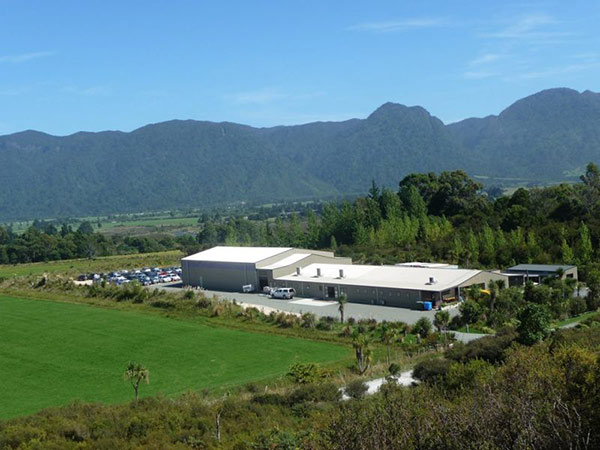
The headquarters of HealthPost in Collingwood in Golden Bay on New Zealand's South Island.[Photo provided to chinadaily.com.cn] |
HealthPost is a typical Kiwi family business, with mom and/or dad starting up and running the business and kids lending a helping hand.
The company packs and delivers health products ordered via mails or phone calls to customers living in New Zealand.
This has been the situation since the company was established in 1988 in the small village of Collingwood, Golden Bay on New Zealand's South Island.
This is still part of the story, but not all.
Changes began when Abel Butler, son of HealthPost founder Linley Butler, decided to set up a website for all the products in their mail-order catalogue in 2002.
"Linley did not like the idea of e-commerce as she even hated emails," Abel Butler said.
HealthPost chairman Peter Butler said it took several months for them to persuade Linley, promising her that if this new business model worked, they could employ more people and she might not need to work as late as one o' clock in the morning to handle orders herself.
Just as Abel Butler had imagined, their natural health products appealed to customers all over the world, with orders coming in from India, Turkey, South Africa and the United States.
"We did not search for them, they searched for us," Abel Butler said.
"I guess that was because the need for natural products was growing worldwide and they searched online and they found us," he added.
Abel Butler, the web manager at first and now the CEO of HealthPost, attributed this progress to grasping the right opportunities at the right time.
"Back in 2002, there were few online retailers in the health products sector and we were the earliest and we are still the largest," he said.
"Our upstream manufacturers also grow as our markets expand and we need more," said the chairman.
"Without globalization, New Zealand could still be an isolated island country down under, but due to globalization, we could now make products manufactured in a geographically remote area accessible to almost everyone in the globe," said the CEO.
 |
|
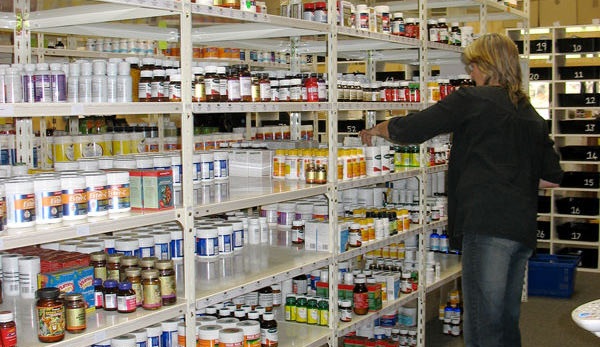
A HealthPost employee sorts products at the company's warehouse in Collingwood in Golden Bay on New Zealand's South Island.[Photo provided to chinadaily.com.cn] |
In 2008, the Butlers thought Korean consumers might be more interested in their products and they put more efforts into the market.
" We could see no big difference in sales related to Korean consumers after all these efforts, " Peter Butler said.
Two years later they turned their attention to the Japanese market by building a Japanese sub-site and hiring two Japanese employees.
But likewise, their efforts did not result in a significant difference in sales.
However, in 2014, Abel Butler recalled that they had noticed there was a significant increase in Chinese-related orders.
"The Chinese prefer to order a variety of products once while consumers in other countries might order one piece each time," Peter Butler said.
" You know we, of course, like these type of consumers and by the way, parcels to China seldom go missing, which might happen quite often in other developing countries such as in India," he added.
Although, the family attributes the increase to the common ground between traditional Chinese medicine, which is sourced from herbs and their belief in products made from natural ingredients and not tested on animals, they are still not exactly sure why the Chinese like their products.
"I guess the surge in inbound tourists and students from China might have helped them get to know us and brought in orders," Abel Butler said.
 |
|
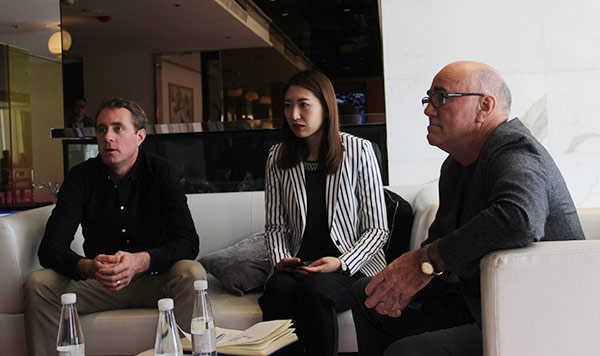
Healthpost's CEO Abel Butler (left), China country manager Harriet Zhou (center), and chairman Peter Butler speak with China Daily in Beijing on March 17, 2017. [Photo provided to chinadaily.com.cn] |
While the Butlers were still searching for the reasons behind their increased Chinese-related sales, a Chinese lady knocked on their doors and said she could help to expand the China market.
Harrriet Zhou, or Zhou Xinpei, who studied for her bachelors' degree at the Auckland University between 2008 and 2012, later became Healthpost's China country manager.
Abel Butler said he believed that hiring Zhou marked a great turning point for their business.
That same year, Able Butler, accompanied by Zhou, visited China for the first time. They visited Alipay, Baidu and showed up at health products expositions and shops selling imported products.
He said he was awed, not only by Chinese food which tasted so good, but also by the sound economy of the country and its people's purchasing power.
Back in his home country, they decided to hire four more employees of Chinese origin to set up and maintain a Chinese sub-site, the company's Sina Weibo and WeChat accounts and to serve Chinese customers.
In 2016, the company earned millions of New Zealand dollars from approximately 25,000 Chinese consumers, who accounted for 20 percent of all consumers. Two years earlier, the percentage was only two percent.
On Dec 12, 2016, HealthPost, a cross-border B2C e-commerce platform itself, joined Tmall International. Abel Butler said the company has seen robust growth in sales over the past three months.
Although HealthPost went online on Tmall in the second week of December, the company recorded 30,000 yuan ($4,355) in revenue on China's e-commerce website in that month alone, said Harriet Zhou.
She added that in January and February transactions reached 63,000 yuan and 81,000 yuan respectively and predicted that in March sales would hit 160,000 yuan as the company saw revenue reach 30,000 yuan in just one day after it held a promotion on Wednesday.
A herbal liquid for chest care manufactured by the Butlers' another firm BioBalance, a milk tablet, and manuka honey were the top three best sellers, said Zhou.
Abel Butler said he did not rule out the possibility that the company would open a bricks-and-mortar store in China even though more custom procedures might be needed.
"We are where our customers are so that they could buy at any channel convenient for them," said the CEO.
Abel Butler came to China in the middle of March for a second time, this time with his father Peter, to visit Alibaba in Hangzhou, to form more sales channel partnerships and to seek advice from advertising firms.
They also chatted with four Chinese customers face-to-face in Beijing to get answers on "why they like us".
He said he might come to China more often than before. "Perhaps every several months."
He also revealed that the company is going to hire more people of Chinese origin to fully meet demands from this vast country.
Peter Butler said that even though the Chinese government has lowered its expectations for economic growth in 2017, he still viewed China as the best market for his company as 6.5 percent growth is still much higher than economic growth in other countries including New Zealand.
When asked whether the company is open to capital from China, he said that although many big brands in New Zealand's health product sector have been bought by Chinese investors, he still prefers the company to be family-owned.
"But we are open to joint ventures or cross ownership. "
- Premier Li ambitious about China-New Zealand relations
- China-New Zealand partnership growing stronger: Chinese ambassador
- New Zealand looks to China to chart free trade course in troubled times
- China eyes new impetus in ties with Australia, New Zealand
- Li to focus on trade while in Australia, New Zealand