Chinese bike-sharing scheme transforms European city experience


MANCHESTER — The technology is new, but the image is older - bicycles.
China has, for decades, been associated in the minds of Westerners with a common image of bicycling workers and residents filling the streets. But in the 21st century, Chinese technology has made bicycles part of the internet of things (IoT).
A young Chinese company, Mobike, has created a fresh bike-sharing scheme that could change the lives of the people and the look of European cities, starting with the northern English city of Manchester, the first outside Asia to launch what is described as the world's first cashless and station-free bike-sharing scheme.
"Incredible" technology
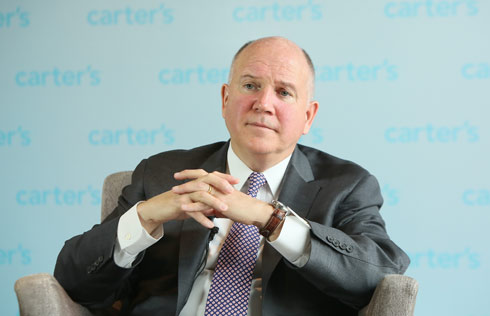
"At the end of last year, you can see all this press and rhetoric about innovation coming out of China and looking at all the different players there. For me, Mobike was the clear favorite," Steve Pyer, the UK general manager for Mobike, told Xinhua in an exclusive interview in Manchester.
Pyer described the technology as "incredible".
"Whereas most dock schemes have got nothing on them at all, suddenly here was this incredible innovation with all the technology on the bike. So you got rid of a lot of the barriers about having cycle hire in the city - which is the expense, the planning permission, and the effort just to put these docks in," said Pyer.
In total, 25 million journeys are made on Mobikes' digitally rented bicycles each day globally, a number that is growing, with the first launch of 1,000 bicycles on the streets of Manchester on June 30 and 750 bicycles in London in September. The scheme has also been launched in Florence and Milan.
Users install an app on their phone, make payments to the app and then unlock it for use.
Using a GPS enabled device means the bikes are connected to Mobike all the time, said Pyer. Mobike knows where its bikes are always and collects data that could be used for city planning and improving transportation.
And the bikes have also been designed for the rugged demands of rental in the city. They are sturdy, with an internalized shaft drive, airless tyres and no spokes. The wheels are magnesium alloy for durability, and it means the bike should be able to be out in the public realm with very little maintenance.
The existing bicycle hire schemes in European cities are often expensive and time-consuming for installment and maintenance.
London, for example, has an extensive scheme centered around docking stations scattered across the inner part of the city. The London scheme has reportedly cost taxpayers more than 60 million?pounds ($78 million) since its launch in 2010 and is still subsidized by 3.6 million pounds ($4.7 million) each year.
But Mobike, which costs nothing to public money, can create its presence in a short time. From initial talks, to bikes on the streets in Manchester was less than three months, according to Pyer.
"Suddenly you can get a rapid deployment and the city is just covered in bikes for everyone to use, and it really increases the access to bikes and the number of people that cycle," said Pyer.
Pyer had seven years of experience working on the London cycle hire scheme and he recognized in Mobike something more adaptable, leaner and younger than the traditional docking schemes, which he labels "old school".
"I just saw this coming and thought Mobike would be an amazing place to work," he said.
Chinese innovation welcomed
Mobike is a foretaste of what may be a theme in the coming decade - the arrival of Chinese technologies in the rest of the world, in this case, the urban Western world.
It seems fitting then, that this very new technology should arrive outside Asia for the first time in Manchester as the city was the world's first industrial city, where the industrial revolution created a wholly new environment at the beginning of the 19th century that was the template for cities across the world in the ensuing two centuries.
As a post-industrial city, Manchester has adapted to a new century, and with a plan called Transport Strategy 2040, the regional travel body Transport for Greater Manchester (TfGM) is taking a long view for big area encompassing several million people.
TfGM wants to create world-class links that support economic growth and access for as many people as possible, and bikes are part of that.
Manchester was the first city in Britain to adapt the new wave of urban trams in the early 1990s. This has transformed travel in the city and changed the face of the city center, driving traffic out and creating new and better links.
And bicycles form a similar part of TfGM's plans for the future, so it was smart thinking from Manchester and adaptability from Mobike that saw the two combine to deploy in the city, said Pyer.
Long-term benefits expected
Mobike's deployment of Chinese technology in a Western setting is public and new.
Pyer said: "There are not many companies that have been born and bred in China and exported themselves to the world. Mobike is one of the pioneers of that."
Mobike and its experience rolling out across Europe will be watched as an example of what could happen with the application of Chinese technology and business.
"Lots of people are looking at it, wondering what is going to happen, how is it going to work. Thankfully our partner in Transport for Greater Manchester, which is really forward thinking, can see the benefit of doing so," said Pyer.
The benefits of successful partnership between Mobike and any city could be long-term and rewarding - the health of citizens could be improved, journeys changed, and even the infrastructure of the city altered as people find uses for bicycles in their lives.
"You can see the benefit it is bringing to cities and to citizens, and cities are waking up to realize that," said Pyer.