Comments
  Print
Print  Mail
Mail  Large Medium Small
|
Pedestrians walk past a billboard promoting "Wenzhou City", a giant wholesale and retail commodities market in Dalian, Liaoning province. People from Wenzhou, a coastal city in Zhejiang province, renowned for their business acumen and frequently described as the "Jews of the East", have struck it rich almost everywhere in the country by developing their family or private businesses. |
Place: Oubei in Wenzhou, East China's Zhejiang province.
Time: The summer of 1977.
The sticky weather is driving Zhang Chenming crazy. The last thing he needs right now is nosey cops asking uncomfortable questions. They have been coming by his little valve-making unit far too often these days, saying Zhang is suspected of "speculation".
Zhang had never imagined his small enterprise would eventually land him in jail, or that it would make his hometown Oubei a global valve hub.
With an area of less than 136 sq km, Oubei, a small town in Wenzhou, now has more than 3,000 valve manufacturers and its GDP has increased over 100 times to 9.3 billion yuan since 1978. When 67-year-old Zhang, one of Wenzhou's first batch of entrepreneurs, now sits at his luxurious 300 sq m office and reflects on his life, he attributes much of his success to the opening-up and reforms policy that China has pursued for 30 years.
These days BMW, Porsche and Mercedes-Benz cars are a common sight on the streets of Wenzhou, once known for its poor transportation and barren soil. There was a time when more than a third of the impoverished counties and towns of Zhejiang province were in Wenzhou. For a very long time, traditional farming failed to provide Wenzhou people one square meal a day. If they had to have a decent life, they would have to think of livelihoods other than farming.
In 1971, Zhang created such an opportunity for them, bringing the valve business from Fujian province to Oubei by establishing a small, collectively owned factory - one owned by the town. In those planned economy days, profit was equated to speculation and any business that made any profit would find itself on the wrong side of law.
One of Zhang's employees, Weng Shengxing, was good at marketing. But such were the laws at the time that the same marketing skills landed Weng in prison. "Had he been working today, he would be considered a marketing genius," Zhang says. "But in those days, the only thing his smart marketing earned him was a speculation charge." As founder of the valve factory, Zhang wouldn't be spared either. Also indicted in the case, he was sentenced to five years.
Zhang's second son Zhang Xiaodong recalls the tough days when his father was in jail. He and his four brothers would often go hungry as his mother's meager income wasn't enough to feed them. To support the family, he and his elder brother dropped out of middle school and started working.
Zhang and his five sons now own Baoyi Valve Group, one of the largest valve manufacturers in China, generating a revenue of 200 million yuan a year. Zhang Xiaodong is its general manager.
Zhang Xiaodong's struggles continued until 1982, when his father was released from prison and found a job as a sales director in a local collectively owned factory up to its neck in debt. Under Zhang Chenming's stewardship, the factory paid off all debts and moved out of the red in just eight months. But the factory director still didn't trust him and created difficulties for Zhang, at one point ordering him to get an order worth 500,000 yuan.
On his own
Zhang decided enough was enough and quit his job to set up his own business. That was 1983, his spirits bolstered by the local government's change of attitude toward self-employment.
On December 16, 1982, the Wenzhou government held a conference to award the self-employed in the area to recognize their contributions for the first time. This change of mood can be traced back to a year ago when Zhejiang Vice-Governor Yuan Fanglie came to Wenzhou as the city's party chief to reverse the profusion of self-employment, or "capitalistic", activities.
Following Yuan's tough policy measures, Wenzhou's secondary industry experienced a slump. Its growth rate had hit 31.5 percent in 1980 but dropped to 7 percent a year later, and even entered the negative territory by registering a 1.7 percent drop in 1982. In the face of this economic backlash, Yuan began to have a rethink of the private economy model. So in 1983, family workshops began to flourish again.
Zhang foresaw a private economy boom and he and his two brothers-in-law invested 3,500 yuan each to start their own valve manufacturing business. The family workshop was no more than 10 sq m and employed only seven people. Yet it grew quickly. In less than seven years, its revenue reached 2.5 million yuan while the monthly income of Chinese middle class was only 300 yuan. All profits were dutifully plowed back to expand the business as the three went about creating a business empire.
In 1993, a senior central government official called Jiang Mingkuan came to Wenzhou to examine whether the path the city was following was capitalist or socialist. He only met three people, Zhang being one of them.
Jiang asked Zhang whether the path of capitalism troubled him. Zhang answered in the negative. "China has such a huge population, if we only depend on State-owned enterprises, we won't be able to provide employment for everybody," Zhang told his visitor.
There was more to Zhang's conviction than his unflinching belief in individual enterprise. The meeting took place after Deng Xiaoping made his famous southern tour and reinvigorated the market reform process.
The central government's on-site inspection put a final seal of approval on the "Wenzhou pattern" - the model of family business. However, this would hardly ensure the resounding success this business model was looking for. For, in the race to make a quick buck, Wenzhou's cheap-jack entrepreneurs made the city synonymous with lousy products.
"My shoes made in Wenzhou would crack in less than three days," recalls Chen Jiandong, vice-editor of Wenzhou Economic Daily. At Zhejiang's capital Hangzhou, the public burnt more than 5,000 pairs of Wenzhou-made shoes in protest against their inferior quality at downtown Wulin Square.
Salvaging the name
To fix its tainted image, the Wenzhou government began to seize counterfeit and inferior products and promulgated regulations to rebuild Wenzhou's reputation.
Around the same time, a 22-year-old man named Huang Shengfeng, also from Oubei town, was wandering around a State-owned enterprise selling mechanical and electrical equipment in Shanghai. Chatting up the enterprise's salesmen, the young man found out the valve maker's supply always fell short of the demand, and took a small order to provide it valves to make up for the shortfall. Huang thus prepared the ground for what would become the third largest valve manufacturer in Wenzhou - Boteli Valve Group.
Baoyi and Boteli have something in common. In the late 1990s, both spent millions in research and development, and made innovation and quality their top priority. Also in the late 1990s, at the same Wulin Square, the Wenzhou government itself burned 4,000 pairs of counterfeit Wenzhou-made shoes in a move loaded with symbolism.
Baoyi and Boteli are now the market leaders in the valve industry. Both supply large State-owned enterprises including Sinopec and are moving away from the family ownership model by recruiting professional mangers. And, both are planning to list.
Despite its prosperity, Wenzhou still faces considerable challenges in industrial upgrade. There are around 300,000 enterprises in the city but most are small and fragmented. "Producers who do not have their own brands and compete only on low prices will have a tough time going forward," says Zhou Dewen, president of Wenzhou's association of small and medium-sized enterprises.
Even for industry leaders like Baoyi, the traditional business model is getting difficult by the day because of the rising costs of raw materials, labor and environmental protection.
Zhang says he has got this far because of 30 years of reforms. Charting the road for the next 30 years could be a lot trickier for Wenzhou's business folks.
(China Daily 06/30/2008 page1)

 Night views of Harbin through the lens
 Tibetans take train home after pilgrimage or travelling
 World's largest shaftless Ferris wheel built in China
 Ancient cities to be connected by Xi'an-Chengdu high-speed railway
 Snow turns Harbin into winter wonderland
 Reed Catkin Festival held in Wuhan
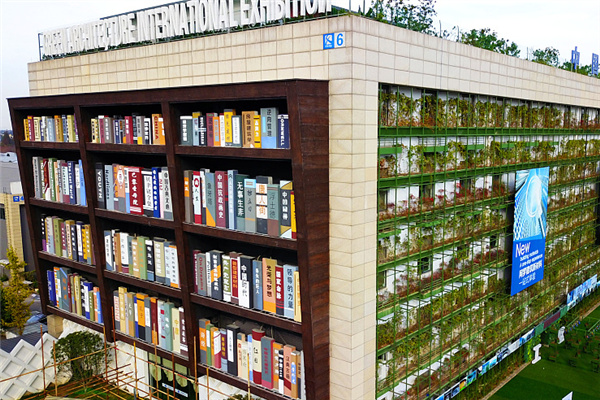 Is it a building or a bookshelf?
 First flight
 Polar icebreaker Snow Dragon arrives in Antarctic
 Xi's vision on shared future for humanity
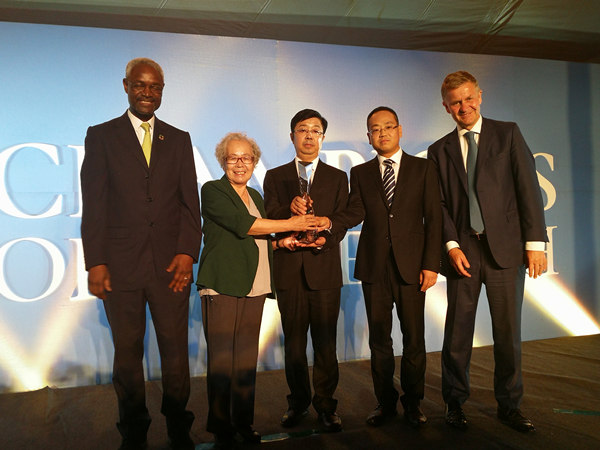 UN's top environmental honors go to three in China
 German trains collide near Duesseldorf, several people injured
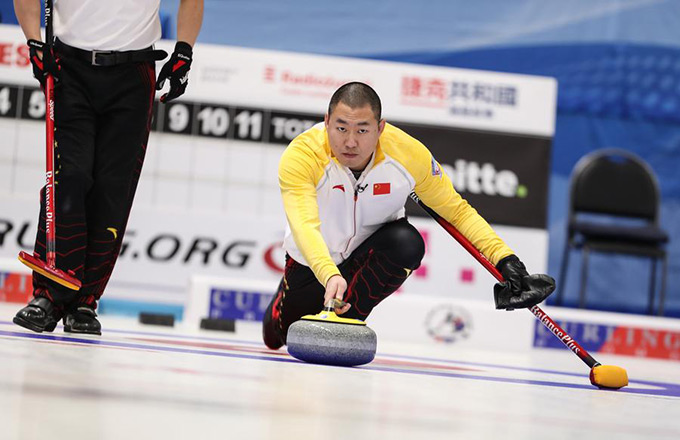 China beats Germany 7-4 in men's curling Olympic qualification
 Bayern beat Paris Saint-Germain 3-1 in UEFA Champions League


Copyright 1995 - . All rights reserved. The content (including but not limited to text, photo, multimedia information, etc) published in this site belongs to China Daily Information Co (CDIC). Without written authorization from CDIC, such content shall not be republished or used in any form. Note: Browsers with 1024*768 or higher resolution are suggested for this site.
License for publishing multimedia online 0108263 Registration Number: 20100000002731