Comments
  Print
Print  Mail
Mail  Large Medium Small
The US government's plan to soak up toxic assets from banks through a Public-Private Investment Fund, announced on Feb 10, has left some important questions hanging in the air. Just who will be the investors? And how much will they invest? And how exactly will these toxic assets be valued?
The idea of spreading the risks and potential benefits among public and private investors has merit. No single investor group can afford to absorb the estimated $2 trillion in bad debts. Opening up the investor pool could help increase transparency, restore confidence and bring in a fair price. The challenge is finding the best system for achieving this.
Auctions, with their sealed or shouted bids, should be ruled out; the potential for collusion among bidders and the likelihood of shutting out smaller investors would make it difficult to reach a fair value. On the other hand, a sequential subscription of the bad loans could address these issues and enable the risk to be spread across a variety of investor types.

In sequential subscription, different investors would subscribe to the bad loans in stages, starting with governments, then small investors and finally big investors. The phasing would be organized so everyone gains or loses at the same rate. This framework would also provide a fair and reasonable way to determine the value of the bad loans by letting the best-informed investors have the final say, as the following example shows.
Any offloading of the toxic assets needs to start with a rough estimate of their worth in a few years time when the economy recovers, so investors have some idea what they are investing in and what they might stand to gain (or lose if the assets under-perform). Currently, the US government is in the best position to provide that estimate. Let's say for illustrative purposes that it projects the assets to recover $900 billion-$1.3 trillion of their $2 trillion face value.
In the first subscription stage, the US Federal Reserve and foreign governments with sovereign wealth funds would submit their bids - say, $400 billion for the Fed and $200 billion for foreign governments. They would not know at this point what share of the total they would get because that would depend on subsequent investors. Nonetheless, their participation would be a confidence booster.
In the second stage, small investors could come in, ideally through online subscriptions where they would be issued with an identity number and be allowed to make one bid each. There would be a cap on their total collective bid, say $300 billion, to protect them from heavy losses that could result if the combined investments from stage one and stage two exceed the predicted $900 billion minimum return. In this example, they invest a total $250 billion.
In the third and final stage, big investors, such as Warren Buffett and large, reputable mutual funds, would be allowed to closely examine the books on the banks' bad loans and make their bids based on this information plus the sum total of the previous bids ($850 billion). Unlike the government assessors, they would be motivated by profit-making. If they think the toxic assets will earn, say, $1 trillion, they might invest $72 billion. If they think the assets will earn only $900 billion, they invest $25 billion. By investing less, they would get a smaller share of the total return so the motivation would be strong to find the best level of investment and balance risk and returns. That motivation could be bolstered by publicizing the names of big investors and bringing public scrutiny into play.
The attraction of a subscription scheme is that everybody is in the same boat - the rate of return is the same for each investor. Moreover, the process is transparent; it is open to small investors, and it lets these small investors piggyback on the know-how of larger investors. That is all good news but, of course, it will not address the entire $2 trillion problem of bad assets.
It seems inevitable that further government capital injections will be needed and banks will have to take some of the losses on the chin. This can be seen in the context of the "bad bank" proposal that has been under discussion. Toxic assets would be transferred to the bad bank so the good banks - the banking system - could be cleansed and get credit flowing back into the economy.
In the example I have used, the bad bank would be represented by the investments raised through subscriptions. Let's assume a total of $1 trillion (based on the big investors subscribing $150 billion at stage 3 in the belief that $1.18 trillion can be recovered from the toxic assets). That still leaves a $1 trillion capital loss. A capital injection from the government could cover part of the loss while the banks would absorb the rest. Let's say the banks absorb $400 billion in losses. Although significant, it would be far better than being stuck with $2 trillion in toxic debts.
The example given here is a simple illustration of how to use sequential subscriptions to price and distribute toxic assets. It is conceivable these assets could be sliced into many more pieces, depending on the types of assets and/or the levels of risk involved. Nonetheless, the principles of this system hold. While some losses are inevitable, a subscription system would ensure that no single sector holds the risk alone. And it would help to clarify some of the more problematic issues with the bank bailout: how to spread the risk and potential long-term payoffs, and determine fair value for the toxic assets.
The author is professor and Head of Economics of the Hong Kong University of Science and Technology. He was Senior Economist of IMF from 2001-2004
(China Daily 03/09/2009 page2)

 Night views of Harbin through the lens
 Tibetans take train home after pilgrimage or travelling
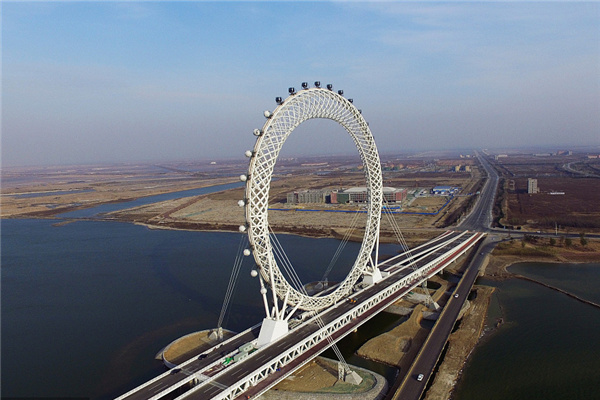 World's largest shaftless Ferris wheel built in China
 Ancient cities to be connected by Xi'an-Chengdu high-speed railway
 Snow turns Harbin into winter wonderland
 Reed Catkin Festival held in Wuhan
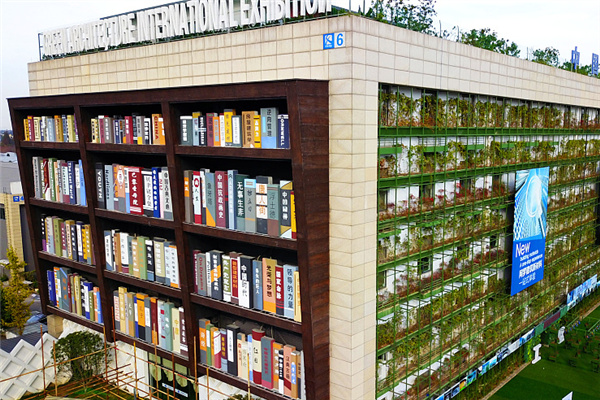 Is it a building or a bookshelf?
 First flight
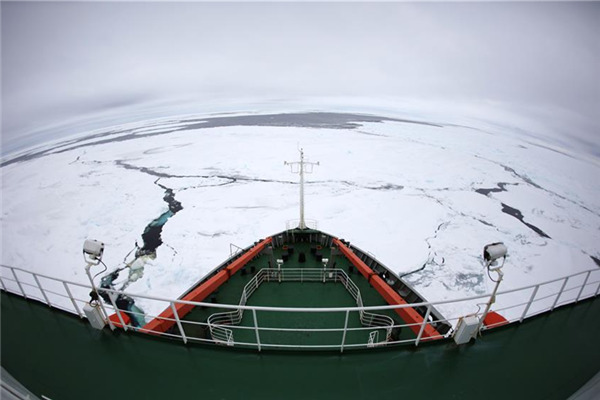 Polar icebreaker Snow Dragon arrives in Antarctic
 Xi's vision on shared future for humanity
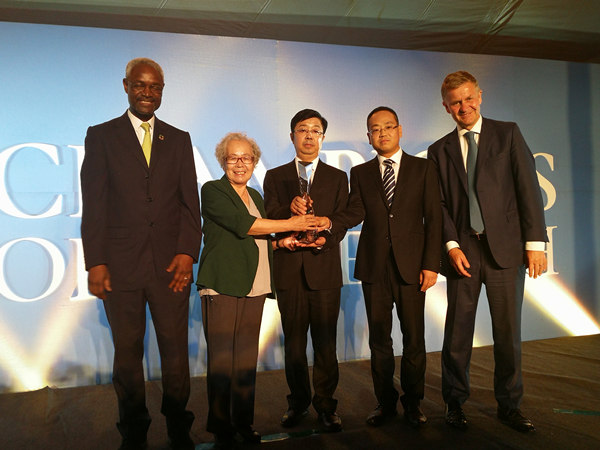 UN's top environmental honors go to three in China
 German trains collide near Duesseldorf, several people injured
 China beats Germany 7-4 in men's curling Olympic qualification
 Bayern beat Paris Saint-Germain 3-1 in UEFA Champions League


Copyright 1995 - . All rights reserved. The content (including but not limited to text, photo, multimedia information, etc) published in this site belongs to China Daily Information Co (CDIC). Without written authorization from CDIC, such content shall not be republished or used in any form. Note: Browsers with 1024*768 or higher resolution are suggested for this site.
License for publishing multimedia online 0108263 Registration Number: 20100000002731