Comments
  Print
Print  Mail
Mail  Large Medium Small
|
Two women in front of the People's Bank of China, the country's central bank. Chinese banks may issue as much as 9 trillion yuan in loans this year. File photo |
People's Bank of China officials said more loans are on the way last week, adding to the 4.58 trillion yuan ($670 billion) China has already lent in the first quarter, which is almost as much as it lent for the whole of 2008.
Analysts are now forecasting the country's "quantitative easing" to be worth as much as 9 trillion yuan in loans this year.
But some of the new loans may be going to uses other than those designated in the central government's stimulus program. They are reportedly either deposited in the banks or used to "stir-fry" stocks in the capital market.
"Some companies can get new loans through bill financing with extremely low interest," said Feng Wei, an analyst from Guohai Securities. "They can make a profit (on interest rates) simply by depositing the money back in the bank."
China Business News reported the China Banking Regulatory Commission (CBRC) is making new rules on loan use in an attempt to get a better handle on where loans end up. But officials would not confirm such regulations or say when they might take effect, when asked by China Daily.
Feng estimated 20 to 30 percent of new loans in the form of bill financing were turned into bank deposits or stock market funds, instead of supporting the real economy.
Some loans were issued only to make banks' lending records seem impressive, analysts said. Some institutional borrowers obtained short-term loans at the end of a month and paid them back the next month, according to Chen Shuixiang of China Jianyin Investment Securities.
"Arrangements are made between banks and trusted clients simply to raise the former's monthly performance claim," he said.
Bill financing accounted for 38.51 percent of new lending in January and 45.34 percent in February, according to Central China Securities analyst Nan Hanxin.
But in March, there were changes in the lending configuration and more money began to flow into sectors of the economy other than as short-term corporate finance. The proportion of bill financing fell to 19.35 percent, while the share of medium- to long-term loans rose to 41.76 percent from 34.25 percent in the previous month, according to Nan.
Also in March, 13.6 percent of the new loans fell in the category of consumer credit, in contrast with 4.09 percent in February.
Such changes are an improvement because there "seems to be more new loans available for the real economy", said Nan.
Liu Mingkang, the CBRC chairman, called for banks to "pay close attention to mounting risk from the recent lending surge and understand that dealing with the impact of the global financial crisis is a long-term task."
Liu is concerned about banks not properly checking borrowers' credit standing, lending too much to a few favored clients and offering too many short-term loans, he said.
A rise in bad loans might follow the lending surge, he said.
But the CBRC instructed banks to step up risk control in their lending, he said.
In a China Orient Asset Management Corporation survey of 333 banking officials, including 89 risk management executives, more than half the respondents said they expect bad loans to rise at their own institution in 2009 and 38 percent predicted bad loans will rise sharply in the second half of this year.
But few bankers expect the government to take a U-turn on its quantitative easing strategy. China's macroeconomic strategy "is clearly to solve today's problem today and leave tomorrow's problem to tomorrow. A revived confidence is the predominant emotion in Beijing, rather than worry that a large chunk of all this new lending will go bad", said Stephen Green, head of China research at Standard Chartered Bank.
Green said he expects record-lending to continue in April and May, bringing the total amount of new loans to about 7 trillion yuan in the first half of 2009 and 9 trillion by year's end.
(China Daily 04/27/2009 page4)

 Night views of Harbin through the lens
 Tibetans take train home after pilgrimage or travelling
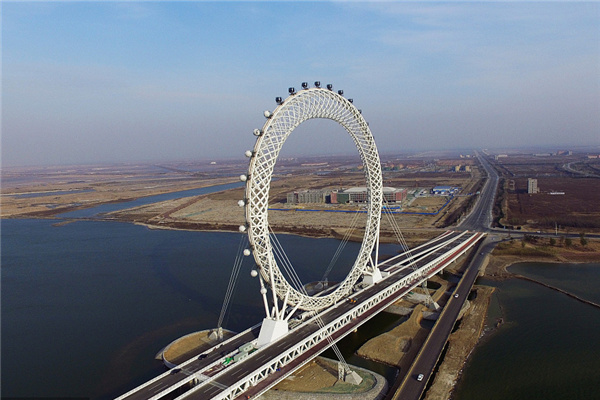 World's largest shaftless Ferris wheel built in China
 Ancient cities to be connected by Xi'an-Chengdu high-speed railway
 Snow turns Harbin into winter wonderland
 Reed Catkin Festival held in Wuhan
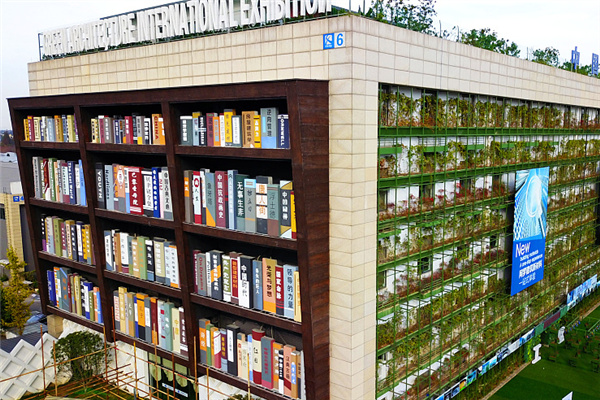 Is it a building or a bookshelf?
 First flight
 Polar icebreaker Snow Dragon arrives in Antarctic
 Xi's vision on shared future for humanity
 UN's top environmental honors go to three in China
 German trains collide near Duesseldorf, several people injured
 China beats Germany 7-4 in men's curling Olympic qualification
 Bayern beat Paris Saint-Germain 3-1 in UEFA Champions League


Copyright 1995 - . All rights reserved. The content (including but not limited to text, photo, multimedia information, etc) published in this site belongs to China Daily Information Co (CDIC). Without written authorization from CDIC, such content shall not be republished or used in any form. Note: Browsers with 1024*768 or higher resolution are suggested for this site.
License for publishing multimedia online 0108263 Registration Number: 20100000002731