Comments
  Print
Print  Mail
Mail  Large Medium Small

When Pang Jianli walked into a Beijing pharmacy to buy medicine for his flu-stricken son, he was greeted by an overwhelming display of boxes and bottles emblazoned with promises of miraculous cures.
"Unlike shopping in supermarkets, where I buy the brands I know and I know the brands I buy, buying drugs is different; the brands you know may not be what they claim to be," said the 38-year-old father.
China's poorly regulated medical market has spawned a new "Wild West" for untested drugs offered by fly-by-night firms. The medical free-for-all is reminiscent of the era of "snake-oil salesmen" over a century ago in the United States.
From impotency treatments, to drugs that prevent hair loss, to medicines that cure chronic diseases, Chinese consumers are bombarded by adverts for a vast array of treatments making false or inflated promises.
Analysts say the murky business practices and misleading claims may actually help the prospects of foreign drug companies scrambling for a piece of the $110 billion medications market in China.
"Nowadays, Chinese people don't trust Chinese medications. They trust Western brands more as they have a better reputation," said Huang Jianshi, assistant president of the Chinese Academy of Medical Sciences and Peking Union Medical College.
Foreign drug companies such as GlaxoSmithKline Plc and Pfizer Inc usually work directly with hospitals and doctors and rarely advertise, explained Du Jinsong, a pharmaceutical analyst with Credit Suisse in Hong Kong.
"Fake drug adverts have limited impact on foreign brands as foreign companies sell and market their products in a different way," he said.
Treatments being aggressively touted don't just promise to cure baldness or erase wrinkles, some also claim to cure chronic conditions such as hepatitis B, a disease that sometimes results in the need for a liver transplant, said Ewan So, president of the Society of Hospital Pharmacists of Hong Kong.
"If there was such a magic drug, we would have used it by now," he said. "A liver transplant costs between HK$500,000 to HK$600,000. Why go to all that trouble?"
China's State Food and Drug Administration (SFDA) counted 329,613 cases of the distribution of unlicensed drugs and medical products in 2007 and collected 746.17 million yuan in fines.
But the fines have done little to deter the sale of untested drugs in a country where enforcement is lax. Analysts said it was hard to measure to what degree public mistrust of adverts have affected drug sales, which grew 26 percent to 752 billion yuan last year in China.
"Like any other social issues in China, we now have adequate policy out there. The most crucial thing is how to effectively enforce the law," said Xu Jun, a pharmaceutical analyst at Orient Securities in Shanghai.
In an effort to clean up the industry, Beijing has issued a stream of curbs on advertising of medical products and services.
The latest rule, issued in February, banned actors from playing medical experts in advertisements for drugs after a group of Internet vigilantes exposed several fake experts and fake brands.
Like many regulations in China, the rules have not been strictly enforced.
"There are still these TV adverts that go on for half an hour with people saying how they are completely cured after taking a certain drug or injection," said activist Qing Song, a hepatitis B carrier. "But these are completely wrong."
One Chinese company promoted its anti-impotence drug by pretending that soccer star David Beckham endorsed the product even though his name and image were used without his consent.
In the advert, which featured footage of Beckham playing soccer, a voice speaking Mandarin, purporting to be that of the English soccer player, extolled the virtues of the drug.
"Want to know how I can keep being strong and running on the field?" said the voice-over. "USA Selikon capsules give me a big help. It is also the secret weapon with which I satisfy Victoria," it said, referring to Beckham's celebrity wife.
Chinese law makes it difficult for international celebrities such as Beckham to sue firms that use their likeness without their consent.
To illustrate the extent of the touting of fake drugs, one leading Chinese search engine lost 2.1 percent of its online marketing ad revenue when the government issued one of its rules limiting the advertising of unlicensed drugs.
Still, despite bans, unlicensed and untested medical products are heavily promoted on the Internet, TV and billboards, as well as in newspapers and magazines across China.
Another problem is drug piracy. Sometimes fake drugs are packaged and sold to look like the medications of reputable firms.
In one case in January, the government ordered doctors to stop prescribing a well-known diabetes drug after a fake batch of the medicine was linked to the deaths of two patients in the far western autonomous region of Xinjiang.
With many Chinese lacking comprehensive medical coverage and opting to self-treat rather than visit doctors, experts say that tighter regulation and better enforcement are crucial to weed out disreputable firms. At risk is the health of tens of millions of people who purchase these medications across China.
"Unlike tainted food which we can avoid, people have to take pills even after hearing so much negative news about drug quality," complained Pang as he exited a drug store.
Reuters
Editor's note: The IPR Special is sponsored by the State Intellectual Property Office and published by China Business Weekly. To contact the Intellectual Property Office, the IPR Special hotlines are 8610-64995422 or 8610-64995826, and the e-mail address is ipr@chinadaily.com.cn.
(China Daily 05/25/2009 page11)

 Night views of Harbin through the lens
 Tibetans take train home after pilgrimage or travelling
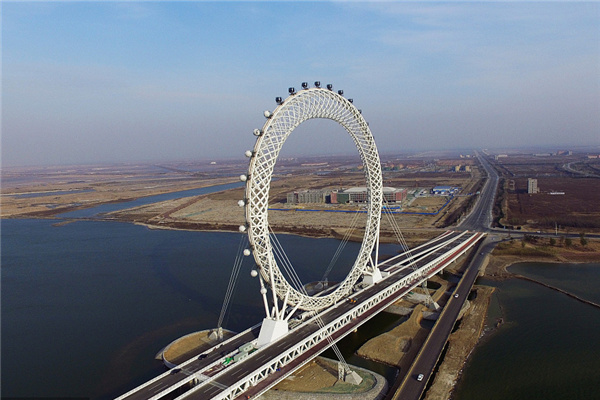 World's largest shaftless Ferris wheel built in China
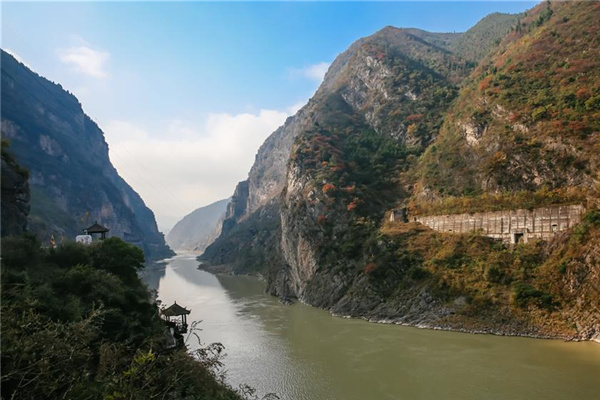 Ancient cities to be connected by Xi'an-Chengdu high-speed railway
 Snow turns Harbin into winter wonderland
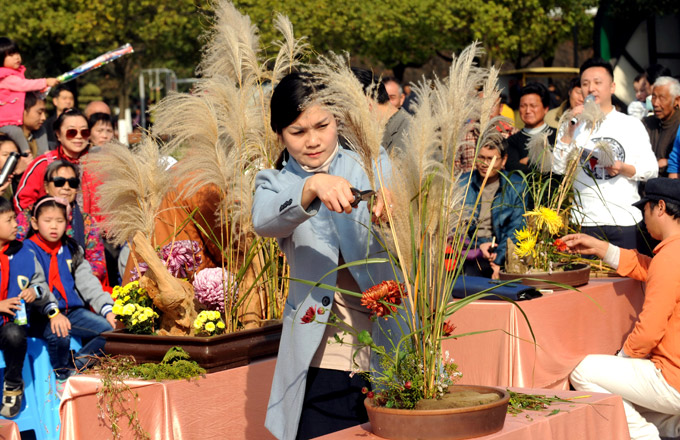 Reed Catkin Festival held in Wuhan
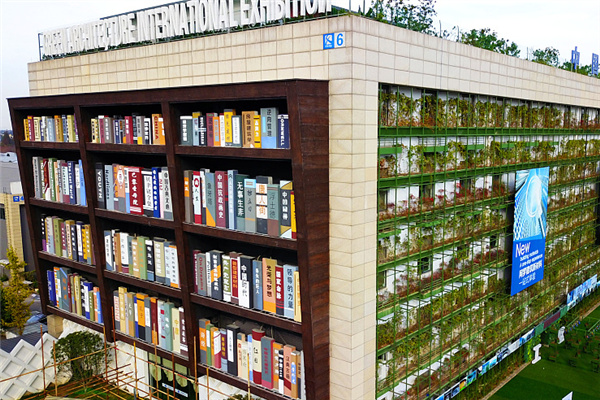 Is it a building or a bookshelf?
 First flight
 Polar icebreaker Snow Dragon arrives in Antarctic
 Xi's vision on shared future for humanity
 UN's top environmental honors go to three in China
 German trains collide near Duesseldorf, several people injured
 China beats Germany 7-4 in men's curling Olympic qualification
 Bayern beat Paris Saint-Germain 3-1 in UEFA Champions League


Copyright 1995 - . All rights reserved. The content (including but not limited to text, photo, multimedia information, etc) published in this site belongs to China Daily Information Co (CDIC). Without written authorization from CDIC, such content shall not be republished or used in any form. Note: Browsers with 1024*768 or higher resolution are suggested for this site.
License for publishing multimedia online 0108263 Registration Number: 20100000002731