Comments
  Print
Print  Mail
Mail  Large Medium Small
|
A man stands before a billboard of Bailian Group in Shanghai. Bailian Group, the country's largest retailer, recently submitted its restructuring plan to State-owned Assets Supervision and Administration Commission. Asianewsphoto |
SHANGHAI: The contraction in economic growth for Shanghai has accelerated the pace of restructuring among Shanghai State-owned enterprises.
Trading was suspended early this month for eight of 72 companies listed on the Shanghai Stock Exchange to allow restructuring talks. The latest was financial services providers Aijian Corp.
Prior to late last month, several publicly held or unlisted companies under the supervision of the State-owned Assets Supervision and Administration Commission (SASAC) had submitted restructuring plans. Among them is Bailian Group, the country's largest retailer and electronics giant SVA Group Co.
The SASAC reported that 30 of 46 supervised companies submitted three-year restructuring and development plans between July and March 18.
"Each group has already mapped out its core business and, guided by the asset regulator, nailed down corporate structures," Zhang Huiming, an economist at Fudan University, told China Business Weekly.
"The next step is to present their restructuring targets," Zhang said.
Zhang, who is actively involved in the local government's talks on state-owned assets' mergers and acquisition issues, said more restructuring plans are in the pipeline.
But the benefits of restructuring depend on the "market environment" and the "management capabilities" of the companies, he added.
By the end of 2008, the net assets owned by the local government-controlled companies reached 1.15 trillion yuan, accounting for one-tenth of state-owned assets nationwide.
Shanghai has suffered from the global economic downturn, and Zhang said local asset regulators determined the timing was right to encourage restructuring to simultaneously prop up mainstay companies and spin off bad assets.
Official figures showed the output of Shanghai-based industrial enterprises with more than 5 million in annual income totaled 188.9 billion yuan in 2009 - down 2.1 percent year-on-year.
The national output, by comparison, was 8.9 percent.
"The local economy's decline at levels sharper than the national average has become one of the major drivers for reform of State-owned assets," said Xu Wei, a strategic analyst at Guojin Securities.
Last September, Shanghai's municipal government announced that the number of Shanghai-based, State-owned groups would be trimmed from 47 to between 30 and 35 within the next five years.
The goals are to strengthen state-owned enterprises via restructuring, and attracting more involvement from foreign enterprises and area companies outside Shanghai, Yang Guoxiong, director of the local SASAC office, said at a recent news conference.
The accumulated capital raised by the exchange's 72 listed firms with major shares controlled by the local government reached 41.7 billion yuan in the stock market last year.
According to the local asset watchdog's deputy director, Liu Xie, the proportion of listed assets among the total state-owned assets will increase from 18 percent to 40 percent within the next three to five years.
"The 40 percent target will be translated into over 250 billion yuan in assets injected into these publicly-held companies," Guojin's Xu said.
Shanghai-based State-owned companies have to accelerate their restructuring efforts to overcome their currently poor financial performances to help Shanghai develop into an international financial center, said Mao Nan, a senior analyst with Orient Securities.
Shanghai Airlines, for example, lost 1.25 billion yuan in 2008 with a liability ratio of more than 90 percent.
The heavily debt-laden company has been listed "under special treatment" on Shanghai's stock exchange this year.
The market is mature enough for State-owned companies to float shares, given the stable capital market, said Changjiang Securities' Zhang Fan.
"Asset securitization is the major trend going forward," said Fudan's Zhang.
(China Daily 07/20/2009 page10)

 Night views of Harbin through the lens
 Tibetans take train home after pilgrimage or travelling
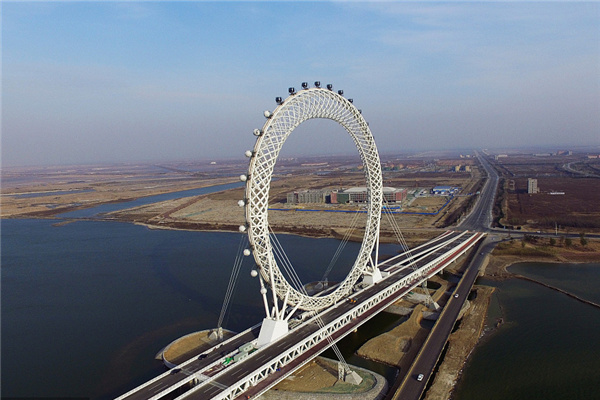 World's largest shaftless Ferris wheel built in China
 Ancient cities to be connected by Xi'an-Chengdu high-speed railway
 Snow turns Harbin into winter wonderland
 Reed Catkin Festival held in Wuhan
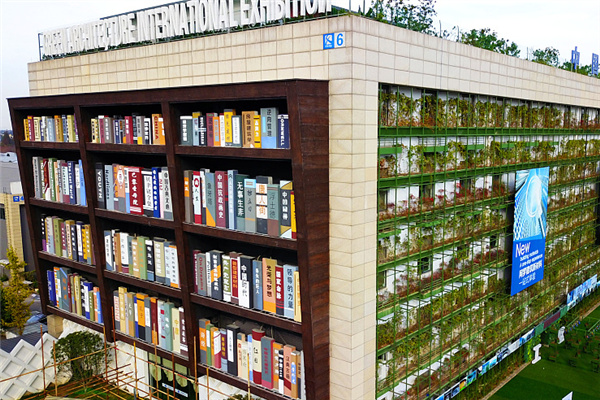 Is it a building or a bookshelf?
 First flight
 Polar icebreaker Snow Dragon arrives in Antarctic
 Xi's vision on shared future for humanity
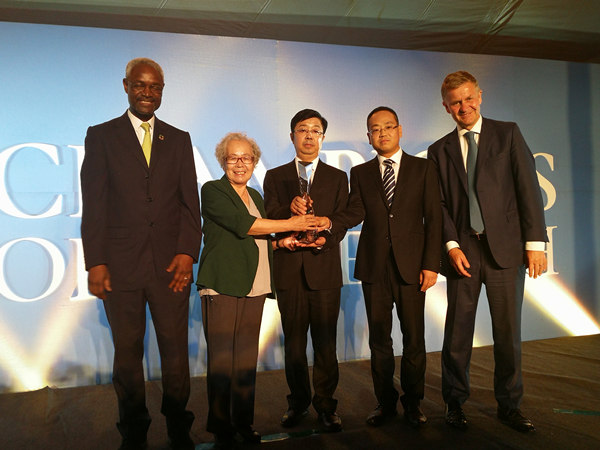 UN's top environmental honors go to three in China
 German trains collide near Duesseldorf, several people injured
 China beats Germany 7-4 in men's curling Olympic qualification
 Bayern beat Paris Saint-Germain 3-1 in UEFA Champions League


Copyright 1995 - . All rights reserved. The content (including but not limited to text, photo, multimedia information, etc) published in this site belongs to China Daily Information Co (CDIC). Without written authorization from CDIC, such content shall not be republished or used in any form. Note: Browsers with 1024*768 or higher resolution are suggested for this site.
License for publishing multimedia online 0108263 Registration Number: 20100000002731