Comments
  Print
Print  Mail
Mail  Large Medium Small

We all know about India's strength in services and China's strength in manufacturing.
But while the Chinese manufacturing industry has been hurting from the global export slump, sectors in India's services industry have been doing well.
India's emerging Legal Process Outsourcing (LPO) industry, in particular, has been booming.
In the last 12 months, the LPO sector in India has reported 200 percent growth, unaffected by the economic crunch.
LPO revenues grew from $80 million in 2006 to $225 million in 2007, and are expected to reach $640 million by 2010.
Just a few years ago, there was virtually no industry called LPO.
Some multinationals such as GE and Microsoft, which had become comfortable working in the Indian environment, decided to experiment with the use of English-speaking Indian lawyers to process legal work in other jurisdictions.
Local vendors quickly adapted India's tested outsourcing model to offer routine legal services such as e-discovery and document review.
And so began the growth of the LPO industry.
Noting India's success in offshore services, China has been trying to grow its own footprint in the industry, especially since 2000.
But China has managed to get only 10 percent of the world's share of outsourced services, compared to India's 37 percent.
If China wants LPO coming its way, it will need to pay attention to four factors that helped the process grow in India.
The first, of course, is India's command of English, the language of not just LPO but most offshore industries.
The Indian legal system, in addition, is built upon the British system, which makes Indian lawyers familiar with Western legal concepts.
Thanks to the government's emphasis, 200 million Chinese are now learning English. But getting trained in the law in English is a different game and will require decades of sustained effort.
A shortcut, though expensive, might be government sponsorship of Chinese graduates to attend English-speaking law schools in the region, including those in South Asia.
Second, India's federal and state governments have invested heavily in the economic infrastructure of IT and business process outsourcing. LPO uses the same infrastructure.
China has made strides in IT infrastructure, as well, but Chinese outsourcing firms are still small compared to Indian giants like Infosys and Wipro.
The influence of Chinese outsourcing firms over State policies and resources is also correspondingly smaller.
Third, even though LPO can offer savings of 30 percent to 70 percent for Western firms, many have yet to come on board because of concerns about information and data security.
Any vendor that wants to win business must maintain the confidentiality and sanctity of privileged attorney-client information.
As long as the Chinese government remains interested in controlling Internet activity, India will retain a big advantage.
Finally, the Indian government has undertaken worldwide campaigns to showcase India's strengths to reduce investor sensitivity to economic and political risks.
Successive campaigns, from BJP's much-criticized "India Shining" to the current "Incredible India" initiative, have ensured that Indian policymakers make frequent friendly visits to Western countries, and that each visit is accompanied by productive discussions and events with bankers, investors and trade organizations.
India's success in LPO came from a regional competitive strategy that weds skillful private entrepreneurship, wise economic policy and strong public diplomacy.
While China has a stronger infrastructure than India, it will probably need to rethink some aspects of its political and diplomatic strategies if it wants to wrest a bigger share of the lucrative knowledge-based services market.
Jalal Alamgir, Ph.D., is the author of India's Open-Economy Policy (London: Routledge, 2009), and teaches international relations at the University of Massachusetts, Boston. Matthew Sullivan is a principal at Red Bridge Strategy, where he leads its LPO Advisory Practice.
(China Daily 08/10/2009 page2)

 Night views of Harbin through the lens
 Tibetans take train home after pilgrimage or travelling
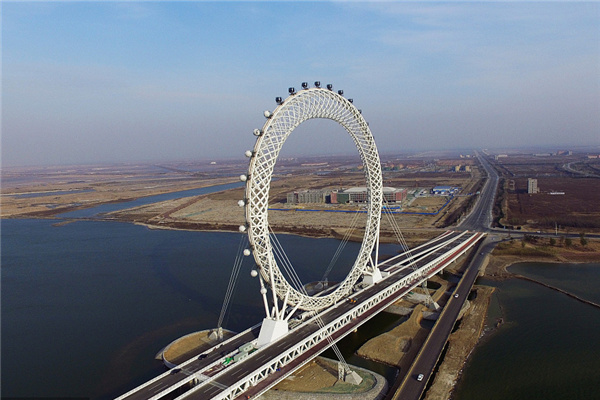 World's largest shaftless Ferris wheel built in China
 Ancient cities to be connected by Xi'an-Chengdu high-speed railway
 Snow turns Harbin into winter wonderland
 Reed Catkin Festival held in Wuhan
 Is it a building or a bookshelf?
 First flight
 Polar icebreaker Snow Dragon arrives in Antarctic
 Xi's vision on shared future for humanity
 UN's top environmental honors go to three in China
 German trains collide near Duesseldorf, several people injured
 China beats Germany 7-4 in men's curling Olympic qualification
 Bayern beat Paris Saint-Germain 3-1 in UEFA Champions League


Copyright 1995 - . All rights reserved. The content (including but not limited to text, photo, multimedia information, etc) published in this site belongs to China Daily Information Co (CDIC). Without written authorization from CDIC, such content shall not be republished or used in any form. Note: Browsers with 1024*768 or higher resolution are suggested for this site.
License for publishing multimedia online 0108263 Registration Number: 20100000002731