Comments
  Print
Print  Mail
Mail  Large Medium Small
Over the last three years, retail prices for clothing in China have risen nearly to the level of the monthly income of ordinary citizens.

Chinese consumers also pay higher prices than foreign consumers to purchase foreign brand clothes, even if they are manufactured in China.
The reasons behind these price hikes are:
The Chinese government's policy-based support for textile exporters,
High logistics costs reflected in total clothing prices,
A small number of brands compared to the market size,
Chinese consumers' inherent desire to express their social status.
Currently, China's clothing exporters are considering the release of their own brands and intend to vitalize the domestic market. Furthermore, creating sales networks, including direct sales and online shopping, is a new trend in the industry.
Rising retail prices
At department stores in big cities such as Beijing, Shanghai and Guangzhou, fall and winter clothing that sold for 500 yuan to 1,000 yuan in 2006 now sell for 1,000 yuan to 2,000 yuan. Select ready-made clothes cost more than 4,000 yuan.
Meanwhile, the average monthly income per person in 2007 was 1,832 yuan and 1,969 yuan in Beijing and Shanghai, respectively. Clothing of the same brand is about 20 percent cheaper in second-tier cities. However, the average income per person in second-tier cities is also 20 percent to 50 percent lower than in the top metropolitan areas.
Chinese consumers also pay higher prices than foreign consumers. Consumers residing in the nation's first-tier cities earn one-tenth of the income made by consumers of industrialized countries in Europe and the US. However, Chinese consumers spend more than those in industrialized countries to buy clothing of the same brands. Jeans sold for $50 in the US are often sold for 800 yuan (about $117) in China.
Price drivers
The Chinese government has given policy-based preferences to textile exporters over the past few years.
Before 2004, the customs refund rate for textile and clothes was 15 percent. Since 2004, however, the rate has remained at 11 percent to 15 percent.
As clothes exporters have recently suffered difficult conditions, the Chinese government raised the customs refund rate again. Beginning Nov 1, 2008, the rate was increased to 14 percent for certain textiles, clothes and toys.
The proportion of logistics costs in the prices of Chinese industrial products is higher than that in industrialized countries.
In 2007, the proportion of logistics costs in China's GDP was 18.4 percent. By contrast, the proportion in the US, Japan, and Germany was only about 8 percent.
The growth in three main factors of logistics costs (transportation, storage, and management) was faster than China's GDP growth in 2007. In particular, transportation costs accounted for 2.47 yuan or 54.4 percent of total distribution costs, up 17.6 percent from the same period last year. Clothing companies usually put priority on exports since capital flow is faster in export markets than in the domestic market.
China's clothing market also has a small number of brands compared to its market size. While the population in Beijing is 17.43 million, the number of department stores listed in Beijing's telephone directory was 46 in 2007.
Beijing's 22 department stores exceeding 100 million yuan in revenue sell only about 500 clothing brands. Because of this limited choice for consumers, the brands that entered the market earlier have stronger market influence.
Since many department stores tend to accept brands that ensure a certain level of revenue, the variety of brands is actually shrinking. Also, department stores mainly promote and support mid-range to high-priced clothing lines that yield higher profits.
Furthermore, consumers in China's cities prefer high-priced clothes. In line with social identity theories, Chinese consumers have an inherent desire to attain high status in society.
For the past 30 years, income gaps have been steadily growing in Chinese society. As a result, many Chinese consumers began to place increased value on social status. Mid- and high-income earners in China's cities, who are the most sensitive about expressing their social status, are enthusiastic about spending money on expensive goods to exhibit their status.
Domestic markets
Clothing has recently faced renewed competition. China's clothing exporters have had to contend with the revaluation of the yuan, new labor laws and rising raw material prices.
Many clothing companies saw production increase about 30 percent. Indeed, most of them earn low profits because they provide raw materials, processing of primary products or OEM production. The operating challenges have prompted greater attention to the domestic market. Clothing exporters are seriously considering manufacturing their own brands for domestic consumers.
The present trend is to create new sales networks. Direct sales as deployed by companies like Vancl are rapidly growing along with online sales. Taobao, an online shopping mall, has become the largest clothing market in China. Meanwhile, as the Internet advances, information on global markets has become more transparent. Consumers search for products at the lowest price and even serve as overseas purchase agents.
While consumers' tastes have grown rapidly more sophisticated, ingrained habits are unlikely to change in such a short period of time.
With the rapid growth in China's economy, the newly rich are driving up demand for luxury goods and expensive clothes.
Meanwhile, problems in the distribution channel, including the small number of department stores and a monopolistic or "cartel" environment in the industry, will take substantial time to be resolved.
The author is a senior researcher with Samsung Economic Research Institute China. The views expressed here are her own.
(China Daily 08/17/2009 page2)

 Night views of Harbin through the lens
 Tibetans take train home after pilgrimage or travelling
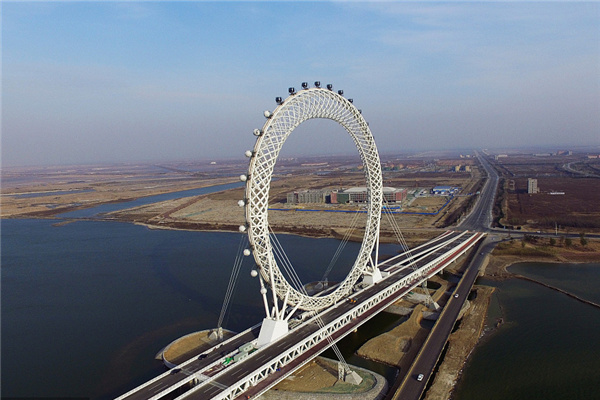 World's largest shaftless Ferris wheel built in China
 Ancient cities to be connected by Xi'an-Chengdu high-speed railway
 Snow turns Harbin into winter wonderland
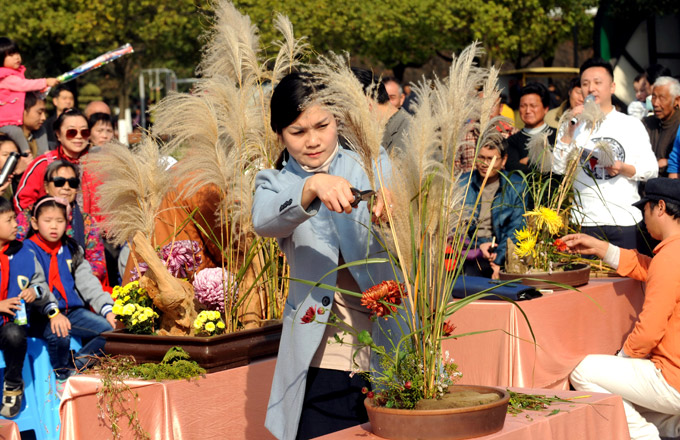 Reed Catkin Festival held in Wuhan
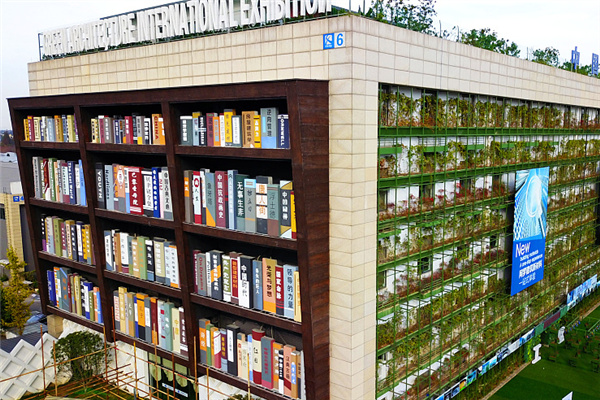 Is it a building or a bookshelf?
 First flight
 Polar icebreaker Snow Dragon arrives in Antarctic
 Xi's vision on shared future for humanity
 UN's top environmental honors go to three in China
 German trains collide near Duesseldorf, several people injured
 China beats Germany 7-4 in men's curling Olympic qualification
 Bayern beat Paris Saint-Germain 3-1 in UEFA Champions League


Copyright 1995 - . All rights reserved. The content (including but not limited to text, photo, multimedia information, etc) published in this site belongs to China Daily Information Co (CDIC). Without written authorization from CDIC, such content shall not be republished or used in any form. Note: Browsers with 1024*768 or higher resolution are suggested for this site.
License for publishing multimedia online 0108263 Registration Number: 20100000002731