Comments
  Print
Print  Mail
Mail  Large Medium Small
The government should raise the price of fresh water to encourage citizens to use recycled water, experts said.
The reclaimed water, sometimes called recycled water, is wastewater that has been treated to remove solids and other impurities and then allowed to recharge the aquifer, rather than being discharged as surface water.
Reclaimed water most commonly has been used for irrigation, dust control, fire suppression and other non-potable uses.
China has been using reclaimed water since the 1990s. By the end of February, there were 1,572 sewage plants treating 69 million tons of water per day across the country.
However, only 10 percent of recycled water is re-utilized, according to a report by Outlook Weekly, a news magazine. Some industry insiders believe most of the treated water goes back into waterways.
Beijing, a pioneer in recycling water, used 4.8 billion tons of reclaimed water in 2007, equal to the water supply of the Miyun reservoir, the largest fresh water source in the Beijing area.
In 2008 the amount grew to 6 billion tons, but it only accounted for 17 percent of the city's total water consumption, according to the Beijing Water Authority.
"The recycled water is not as cheap as we expected," said Li Hua, who lives in a residential area in Fangzhuang, where reclaimed water pipelines were laid when the Fangzhuang Sewage Treatment Plant was built in 2004.
Although the reclaimed water is regulated at $0.12 per ton by the government, residential property management offices usually charge residents more.
"We don't want to pay almost the same price of buying fresh water for recycled water to flush toilets," Li said.
Since 2004, the Beijing Drainage Group has built 500 km-long pipelines for reclaimed water. Those pipelines, at a cost of $249 million, surround the nine sewage plants and the Olympic Green to provide recycled water.
"It is an industry of high investments with slow returns," said an official from the Ministry of Water Resources.
"As the recycled water system is independent from the fresh water system, it also requires us to build another drainage system," the source said.
The Beijing government now subsidizes the use of recycled water. Plants that have received a $900 investment pay 25 cents to recycle each ton of water.
The government provides a subsidy of 10 cents per ton.
(China Daily 08/17/2009 page3)
 Night views of Harbin through the lens
 Tibetans take train home after pilgrimage or travelling
 World's largest shaftless Ferris wheel built in China
 Ancient cities to be connected by Xi'an-Chengdu high-speed railway
 Snow turns Harbin into winter wonderland
 Reed Catkin Festival held in Wuhan
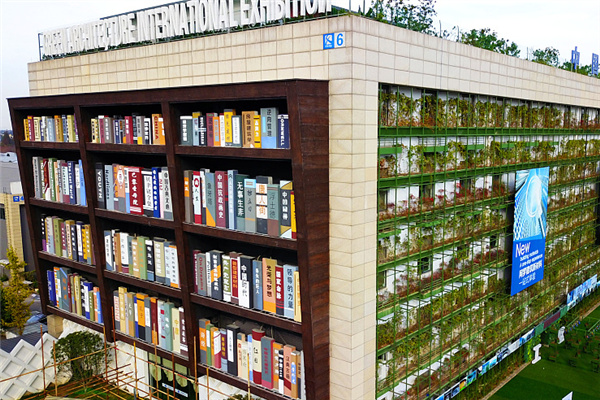 Is it a building or a bookshelf?
 First flight
 Polar icebreaker Snow Dragon arrives in Antarctic
 Xi's vision on shared future for humanity
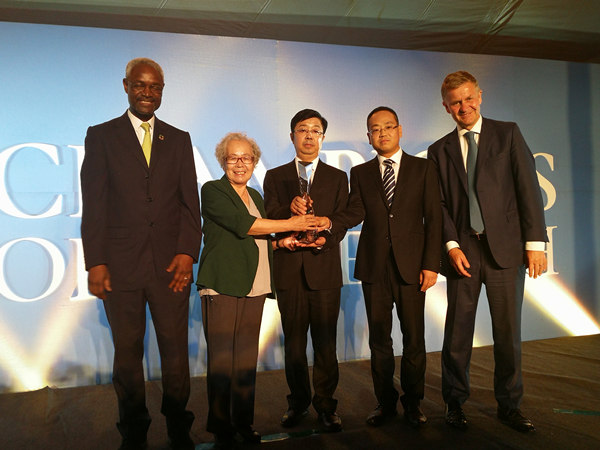 UN's top environmental honors go to three in China
 German trains collide near Duesseldorf, several people injured
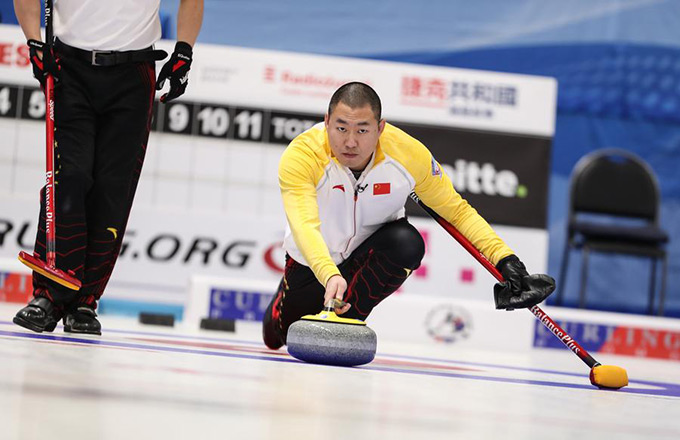 China beats Germany 7-4 in men's curling Olympic qualification
 Bayern beat Paris Saint-Germain 3-1 in UEFA Champions League


Copyright 1995 - . All rights reserved. The content (including but not limited to text, photo, multimedia information, etc) published in this site belongs to China Daily Information Co (CDIC). Without written authorization from CDIC, such content shall not be republished or used in any form. Note: Browsers with 1024*768 or higher resolution are suggested for this site.
License for publishing multimedia online 0108263 Registration Number: 20100000002731