Comments
  Print
Print  Mail
Mail  Large Medium Small
|
Employees configure a customer's iPhone 3G S at an Apple store in New York. Bloomberg News |
TORONTO: Former allies Apple and Google are quickly becoming rivals, and China may be their first major battleground as the two duke it out over a wireless subscriber base that's more than twice the size of the entire US population.
Two highly anticipated smartphones, Lenovo Mobile's OPhone and HTC Corp's Magic, will soon be sold by China Mobile, the nation's largest wireless operator by subscriber base. Another new smartphone, Dell's Mini3i, is already being sold by China Mobile. All three are powered by Android, Google's open-source mobile operating system.
At the same time, China Unicom, the second-largest national carrier, is reportedly close to signing a three-year deal with Apple to provide exclusive iPhone service in the country. An Apple spokeswoman would not comment, but the company's chief operating officer, Tim Cook, said in the company's latest earnings call that "we hope to be there within a year".
Although Apple's iPhone has a head start on Google's mobile devices, OPhone could get the jump on Apple in China in terms of initial user adoption.
Many of the vendors are likely to introduce Android-based smartphones in the fourth quarter of this year, or in early 2010, said Lei Shi, an analyst with BDA (China) Ltd, a Beijing-based advisory firm specializing in China's telecommunications, media and technology sector. The Android-based open-source platform will help lower the overall cost of smartphones, added Ning Liu, a principal analyst from BDA.
However, like any other newly-introduced operating system, Android's long-term success will depend on its user interface design and the built-in application offerings.
"You need to find the right user interface or find the right content for consumers," said Michael Meng, an analyst at Citigroup in Hong Kong. Operating systems typically need an extended period of time to find the right formula, he added.
The Apple iPhone, already a huge success in the US and several other countries, will undoubtedly draw a lot of attention when it premieres in China and may even entice some potential OPhone users away from China Mobile. Apple has proven successful at creating an iPhone fan base from both existing Apple loyalists and new enthusiasts who abandoned their old providers. However, its business model and revenue-sharing agreement with partner China Unicom is still somewhat uncertain.
"Both the Google phones and the iPhone can attract users with a great user interface, wonderful touch-screen technology, and various applications like Apple's App store," said Shi, but the iPhone could face a disadvantage because its Wi-Fi function will not be available this year in China.
Traditionally, Chinese consumers pay more for cell phones than consumers in North America, but are able to switch between carriers without having to worry about contracts. That may not be the case with the iPhone. Locking users into contracts is one strategy China Unicom is likely to use to try to retain customers, said Shi.
For years, Apple and Google have managed not to step on each other's toes when it came to products and business strategies. But that began to change in 2007, when both entered the extremely competitive smartphone market. Signs that tension between the two has grown in recent weeks include Apple blocking the Google Voice application from its online store iTunes, and Google CEO Eric Schmidt's resignation from Apple's board of directors.
China already has more than 700 million cell phone subscribers nationwide, and that number is growing each month. Yet less than 10 percent are smartphone users, which means the potential for growth in that segment is tremendous.
In January, the Chinese Ministry of Industry and Information Technology awarded the first ever third generation (3G) mobile network licenses to the nation's wireless carriers. This triggered a race to launch new individual 3G networks, which allow for high-speed data services such as music and video downloads.
Android, which was spearheaded by Google and is backed by a consortium of 48 technology and telecommunication companies, provides a powerful, open-source platform for vendors to develop their own smartphones and services. China Mobile is one of the founding members of the alliance.
Shi believes the Android-based phones will create a lot of buzz in China. "But it's hard to say whether in 2009 they can gain significant ground," he said. "The launch of the iPhone will cannibalize many potential users of Android phones. It may take some time for many handset OEMs (original equipment manufacturers) such as LG, Motorola and Samsung to offer attractive G-phone models in China, apart from HTC."
Another advantage for the Google phones over iPhones, according to Liu, is that China Mobile, with a 67 percent share, has a much larger portion of the mobile market than China Unicom. China Unicom also doesn't have the same level of marketing and distribution capability as its rival.
While China Unicom uses the more established and reliable WCDMA network, "the iPhone is just one of 5,000-plus handset models in China's market," said Liu. "I don't think it could easily convert the overall handset consumption habit of Chinese users only due to iPhone sales."
Despite their global size and strength, both Google and Apple are already latecomers to the relatively mature and extremely competitive Chinese wireless market. They'll be up against established international companies such as Nokia, Samsung and Sony Ericsson, in addition to a number of successful domestic manufacturers. In the end, it will take more than just a big name to prosper in the Chinese market.
Wang Hao in Edmonton, Canada, contributed to the story
(China Daily 08/31/2009 page7)

 Night views of Harbin through the lens
 Tibetans take train home after pilgrimage or travelling
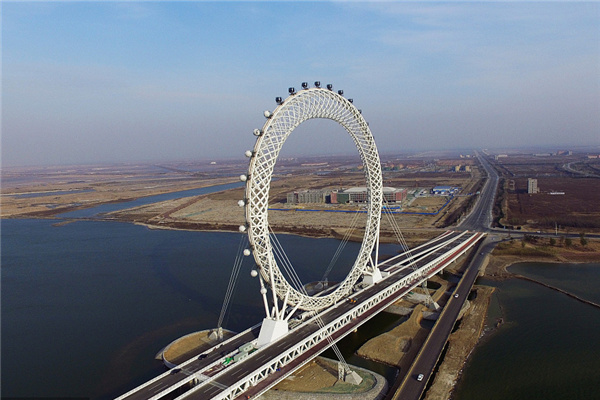 World's largest shaftless Ferris wheel built in China
 Ancient cities to be connected by Xi'an-Chengdu high-speed railway
 Snow turns Harbin into winter wonderland
 Reed Catkin Festival held in Wuhan
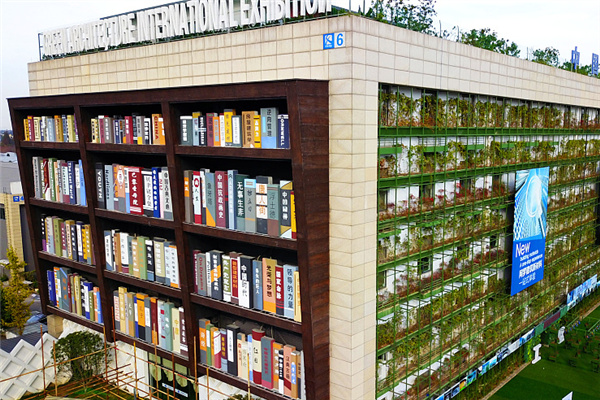 Is it a building or a bookshelf?
 First flight
 Polar icebreaker Snow Dragon arrives in Antarctic
 Xi's vision on shared future for humanity
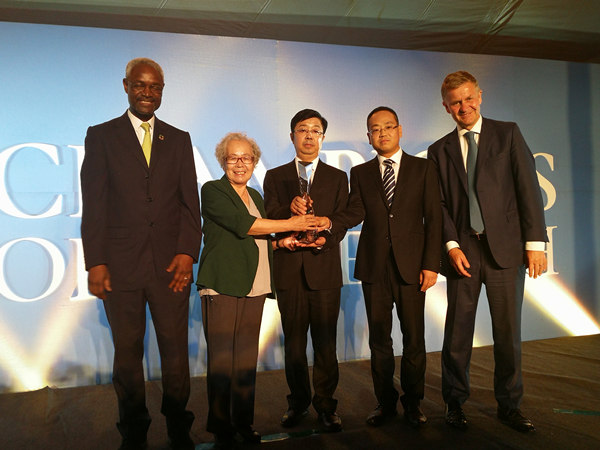 UN's top environmental honors go to three in China
 German trains collide near Duesseldorf, several people injured
 China beats Germany 7-4 in men's curling Olympic qualification
 Bayern beat Paris Saint-Germain 3-1 in UEFA Champions League


Copyright 1995 - . All rights reserved. The content (including but not limited to text, photo, multimedia information, etc) published in this site belongs to China Daily Information Co (CDIC). Without written authorization from CDIC, such content shall not be republished or used in any form. Note: Browsers with 1024*768 or higher resolution are suggested for this site.
License for publishing multimedia online 0108263 Registration Number: 20100000002731