Comments
  Print
Print  Mail
Mail  Large Medium Small
When 27-year-old Li Lin invited his parents to Beijing to visit the model apartment he had just bought, the family was surprised and very happy at how wildly its value had changed in a short time.
"You can say the apartment helped me earn more than 300,000 yuan in five months," Li said.
"I did not expect the value of my investment to rise that quickly," Li said.
Li's apartment is located between Beijing's East Third Ring and Fourth Ring Road, and is still under construction.
He bought it at a price of 19,000 yuan per sq m from renowned developer Vanke in March, and the value soared to a staggering 26,000 per sq m in August.
While government officials are pleased to see a recovered real estate sector, they also are starting to worry that prices are rising too quickly, luring speculators into the market and turning it into an asset bubble - not an economic driver.
"Based on a very favorable macro-economic environment, I feel we may face a long-term asset bubble problem," said Sun Mingchun, chief China economist at Nomura International (Hong Kong) Ltd.
"And it may be inevitable," he added.
Four factors
Sun said four factors could help form an asset bubble.
First, Sun said he believes China's economic growth is a "V" style in reverse, no doubt to meet its GDP growth target of 8 percent this year.
Second, consumer price index (CPI) inflationary pressure is small.
"China's CPI might fall 0.5 percent year-on-year for the whole of 2009," Sun said, forecasting a probably mild rebound next year.
Third, when it comes to liquidity, Sun regarded it as "extremely ample" this year, "very ample" next year and still "ample" in 2011.
With enough liquidity in hand, if people do not buy consumer goods, many might invest the money in assets, pushing asset prices to a new level, he said.
Fourth, the central government is unlikely to make a big change in terms of macro-economic policies, so "we can call it very mild", he said.
Although small adjustments might be adopted, they will not harm the core of the current economic policy environment, he said.
Loan growth could total 10 trillion yuan this year. And banks might continue to make loans of more than 10 trillion each year in 2010 and 2011 to reinvest in projects that had been activated by the stimulus plan but still need money for further construction, he said.
"When we look back in history, it is really hard to find a time when these four factors worked together. Investors and policy makers should be alert to this," Sun added.
Latest statistics show that housing prices in China's 70 major cities grew 1 percent in July from a year earlier - the biggest increase over nine months.
China's property sales surged 60 percent by value in the first seven months.
The A-share market also echoed the property sector's strong rebound.
The Shanghai Composite Index climbed to 3478.01 on Aug 4, from a two-year low of 1664.93 points on Oct 28, 2008.
Although a fierce correction followed, the market still closed at 2,989.79 points on Sept 11.
When a bubble forms
But how to tell a bubble is forming in the market? Sean Darby, chief strategist on Asia and emerging markets for Nomura, a Japan-based financial services group, said he would refer to some relative scales.
"As former US Federal Reserve Chairman Greenspan mentioned, it is always very hard to know when a bubble is forming. All you can do is to look at relative measures of wealth," Darby said.
It is worthwhile looking at affordability - the number of years it would take in average income to pay for a property, he said.
The method is also applied to the stock market. For example, people might look at the price you pay today and how many years you would be repaid based on the company's earnings, he said.
"Generally, you should never ever pay more than your own human life in terms of investment - for example, 20 or 25 years," Darby said.
"Right now people are staying clear-minded, (so the stock market) is still healthy. I can see no bubble," Sun said.
He recalled the recent stock market bubble in China, which collapsed from more than 6,100 points in October 2007 to 1664.93 points last October.
Theoretically speaking, the bubble bursting should have had a big impact on the Chinese economy, but the negative influence turned out to be limited.
Banks and enterprises remained sound. Ordinary people had been hurt a little, as they were the main force dealing stocks, but no big problems were reported, he said.
"The reason was that few people or enterprises borrowed money to play in the stock market. So the leverage ratio was low," he said.
"To be frank, people are talking about bubbles or valuation now, and that indicates they are still quite rational," Sun said.
But the real question, he added, is whether people's confidence might become irrational if the economy remains strong or even turns hot next year.
"Just like 2007, people argued a bubble when the index reached 3,000 points, but said it would soar to 8,000 points when the index was around 5,000 to 6,000 points," Sun said.
When asset prices keep growing, as Sun has predicted, confidence might swell among enterprises, households and banks.
That means when the bubble blows out this time, the outcome can be very different.
(China Daily 09/14/2009 page4)

 Night views of Harbin through the lens
 Tibetans take train home after pilgrimage or travelling
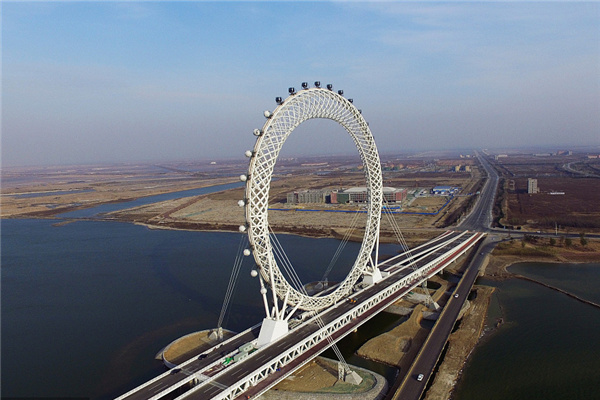 World's largest shaftless Ferris wheel built in China
 Ancient cities to be connected by Xi'an-Chengdu high-speed railway
 Snow turns Harbin into winter wonderland
 Reed Catkin Festival held in Wuhan
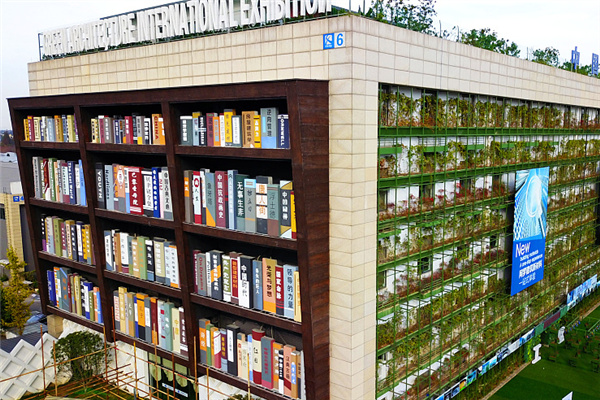 Is it a building or a bookshelf?
 First flight
 Polar icebreaker Snow Dragon arrives in Antarctic
 Xi's vision on shared future for humanity
 UN's top environmental honors go to three in China
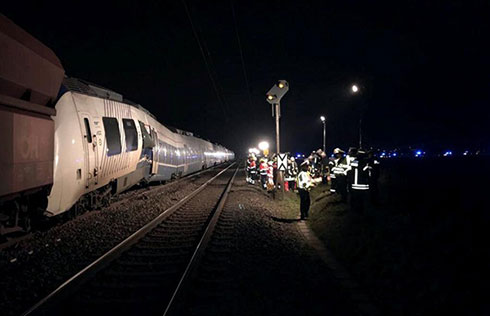 German trains collide near Duesseldorf, several people injured
 China beats Germany 7-4 in men's curling Olympic qualification
 Bayern beat Paris Saint-Germain 3-1 in UEFA Champions League


Copyright 1995 - . All rights reserved. The content (including but not limited to text, photo, multimedia information, etc) published in this site belongs to China Daily Information Co (CDIC). Without written authorization from CDIC, such content shall not be republished or used in any form. Note: Browsers with 1024*768 or higher resolution are suggested for this site.
License for publishing multimedia online 0108263 Registration Number: 20100000002731