Full text: China's political Party system
IV. Political Consultation in the Multi-party Cooperation System
Political consultation is a major aspect of China's multi-party cooperation system. The CPC consults with the various democratic parties and personages without party affiliation on major state guidelines and policies and key state affairs before making decisions and in the process of implementing the decisions. This is a vital link in the scientific and democratic decision-making process as well as an important means for the CPC to enhance its governance capability. After many years of practice, two basic modes of political consultation in the multi-party cooperation system have been formed: the CPC's consultation with democratic parties, and the CPC's consultation with democratic parties and representatives from all circles at the Chinese People's Political Consultative Conference (CPPCC).
The CPC Central Committee consults the central committees of democratic parties on important documents of the CPC National Congress and CPC Central Committee, proposed amendments to the Constitution and major laws, candidates for state leaders, significant decisions on pushing forward reform and opening-up, medium- and long-term plans for the national economic and social development, and issues having a great bearing on the state as a whole. Moreover, the CPC canvasses comments on key documents and events, and consults widely on other important matters.
The major forms of political consultation between the CPC Central Committee and central committees of the eight democratic parties are: The CPC Central Committee invites leaders of democratic parties to attend democratic consultation conferences and discuss state policies to be announced by the CPC Central Committee; top leaders of the CPC Central Committee hold high-level, small-scope talks with leaders of democratic parties to exchange views and ideas when the situation requires it; the CPC Central Committee or an agency entrusted by the CPC Central Committee convenes seminars participated by democratic parties and representative personages without party affiliation, at which important issues are briefed or certain topics are discussed, and policy-related proposals from democratic parties are solicited. Apart from consultation meetings and conferences, the central committees of democratic parties can put forward wri tten proposals on state policies and other important issues to the CPC Central Committee.
Their political consultation proceeds in the following steps: The CPC Central Committee brings forward an annual plan for political consultation according to the priorities of work of that year; the central committees of democratic parties and personages without party affiliation are informed of the topics for consultation and are provided with relevant materials in advance; the central committees of democratic parties make arrangements for relevant people to read the documents, conduct surveys and research, discuss the topics and bring up suggestions and proposals; democracy is fully exercised in the course of consultation, suggestions and proposals widely solicited, and common ground sought while reserving differences; and the CPC Central Committee studies the collected suggestions and proposals carefully, and gives prompt feedback to the central committees of democratic parties and personages without party affiliation about the follow-up actions on their suggestions and proposals.
Since the early 1990s, the CPC Central Committee's consultation with democratic parties has been covering more and more topics while the procedures have been gradually standardized. From 1990 to the end of 2006, the CPC Central Committee and the State Council, and their entrusted agencies, organized more than 230 consultation conferences, seminars and briefings, of which 74 were presided over by the general secretary of the CPC Central Committee. Over the past three years, democratic parties and personages without party affiliation have raised suggestions and proposals on the opinion-solicitation drafts of many important documents, such as the Decision of the CPC Central Committee on the Enhancement of the Party's Governance Capability, Decision of the CPC Central Committee on Some Major Issues Regarding the Building of a Harmonious Socialist Society, and Opinions of the CPC Central Committee on Further Strengthening the Building of the Multi-party Cooperation and Political Consultation System under the Leadership of the CPC. The CPC also listens to their opinions and suggestions on candidates for leaders of the National People's Congress and the CPPCC, amendments to the Constitution and a good number of drafts of state laws, including the Legislation Law, Anti-Secession Law, Law on Supervision of the Standing Committees of the People's Congresses at All Levels, Property Rights Law, the medium- and long-term plans for China's national economic and social development, such as the Outline of the 11th Five-Year Plan for the National Economic and Social Development of the People's Republic of China, as well as important matters bearing on the national economy and the people's livelihood, e.g., the building of a new socialist countryside and the reforms of the financial, healthcare and educational systems. Many of their suggestions and proposals have been adopted by the CPC Central Committee, the State Council and departments concerned.
Furthermore, the central committees of democratic parties and representatives of personages without party affiliation have submitted to the CPC Central Committee over 200 important written proposals. These proposals cover a wide range of subjects, including economy, politics, society, education, science and technology, culture, health, national defense, diplomacy and affairs regarding Chinese in Hong Kong, Macao and Taiwan, such as those addressing issues of economic and social development of the Yangtze River Delta region, the Bohai Sea region, the economic zone on the west coast of the Taiwan Straits and the Beibu Gulf region, those addressing reforming the compensation mechanism for exploiting the resources of the headwaters of the Yangtze, Yellow and Lancang rivers as well as underdeveloped regions, and those addressing the deepening of the reform of the cultural system and the promotion of traditional Chinese culture. Their proposals are highly valued and accepted by the CPC Central Committee and the State Council, and have produced good social effects.
The system for local CPC committees at various levels to consult the leaders of local committees of democratic parties at the corresponding levels on major issues of respective regions has also been institutionalized. The extensive consultation conducted by the CPC committees with democratic parties at various levels has vigorously enhanced the scientific and democratic decision-making of the ruling party.
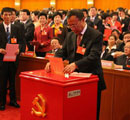
The CPC's consultation with democratic parties, personages without party affiliation and representatives from all walks of life at the CPPCC is another important way of political consultation. The CPPCC comprises members from 34 sectors, including the CPC, democratic parties, personages without party affiliation and representatives from all sections of society. Strengthening political consultation at the CPPCC is an essential aspect of developing socialist democracy and building socialist political civilization. Giving further play to the role of the CPPCC helps manifest and give full play to the characteristics and advantages of China's socialist political system and political party system, and contributes to the consolidation and development of a political situation characterized by democracy, solidarity, liveliness, dynamism, stability and harmony.