In stark contrast
The pandemic responses of China and the United States offer lessons for other countries










The whole world is still fighting the COVID-19 pandemic, with the death toll continuing to rise. This is the framework in which every analysis of the current situation must be put.
Starting from this, we can look at some specific aspects by highlighting the different responses to the pandemic. China was able to efficiently control the novel coronavirus within a few months. Furthermore, if we look at the official country figures on accumulated infections, other East Asian countries, such as the Republic of Korea and Singapore, have been relatively quick to control the virus. On the other hand, the Latin American region is struggling to cope with the virus, to the point at which many countries' health systems are being severely stressed. Albeit there are different national realities in this regard, we can mention Brazil and Peru as examples of this dire situation. But it is not only Latin America that is being hit hard by the pandemic. Among the 10 countries with the highest numbers of accumulated infections, six of them-the United States, France, the United Kingdom, Italy, Spain and Germany-are developed Western countries.
This leads to questions about the possible reasons underlying the different situations countries are in amid the ongoing pandemic. In this regard, it is by now apparent that the successful tools to deal with this worldwide crisis lie at the very heart of the socioeconomic, political and cultural traits of a society: social fairness, high technology availability and management, effective state administration, social mobilization and solidarity and a willingness to cooperate with other countries have been key factors in successfully controlling the spread of the virus.
By bringing this multidimensional context to the fore, it appears that in China, rapid State intervention manifested itself not only in the effective lockdown of Wuhan, the capital of Hubei province that was deadly hit by the epidemic, but also in the channelling of massive financial and infrastructural resources devoted to strengthening the health system. Among these efforts, of course, the in-record-time construction of modular hospitals stands out. In addition to these initiatives promptly initiated from top, one must add the widespread acceptance of the governmental measures and dispositions on behalf of civil society. Here, social acceptance did not equate to mere social acquiescence; citizens affected by mobility restrictions and/or isolated as suspected cases or close contacts were assisted by volunteers in every neighborhood on a daily basis, who checked their health condition and provided them with food and everyday supplies. This, in turn, was only possible within the context of a tight and homogeneous urban population social fabric. State intervention and social mobilization was assisted by information technology and big data tools, applied to monitoring positive infection cases and tracking close contacts, control of people flows and the drawing up of infection maps that were also made available to the public. The Chinese government also turned its communication and international cooperation policies into priorities. Early disclosure of scientific and epidemiological information was followed swiftly by President Xi Jinping communicating with several heads of state around the world, and Chinese national scientific developments and medical resources were made available to other countries. China dispatched medical supplies abroad at an early stage of the pandemic (Argentina, for instance, was one of the receiving countries), and the Chinese government granted its own vaccine developments the status of global public goods to be shared with developing countries.
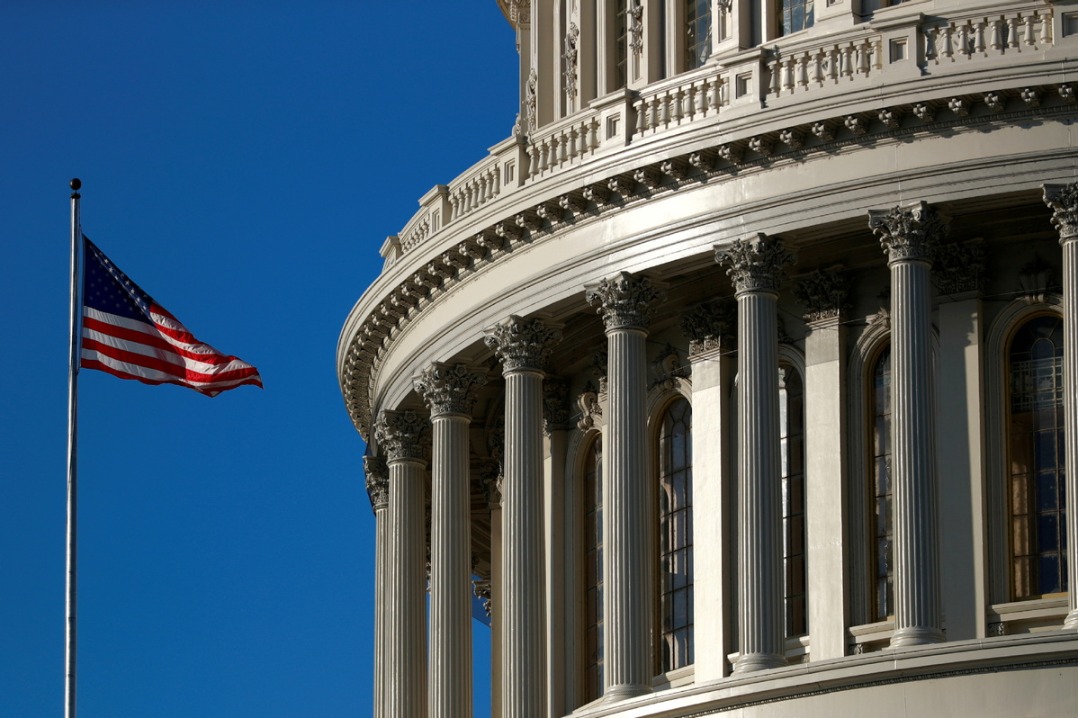
In almost all of these regards, the United States, the major power of the world, performed poorly. The initial response of the US government to the outbreak of the virus was belated at its best, and denying, reactive and blaming at its worst. The US administration then and now has stocked the country with vials for its own population and prohibited exports of related raw materials. On May 5, the Biden administration officially announced that the US will support the suspension of intellectual property protections for vaccines at the World Trade Organization. This measure was first proposed by India and South Africa half a year ago. The announcement soon encountered opposition not only from pharmaceutical corporations but also from the European Union, which reacted by criticizing the above-mentioned US restrictive export policies. Given that the WTO required unanimity for passing resolutions on property rights, the negotiations will surely take time. Finally, there might be difficulties in the process of extending the current US vaccination campaign across the country, given the existence of non-negligible poverty pockets and the large destitute population in several regions of the US.
Latin America has some lessons to learn from the contrasting examples of China and the US.Having a structural lack of economic resources and state capacities, together with large populations of poor crowded in slums, social solidarity must be consistently pursued, incentivizing in-territory vaccination campaigns and social assistance within the marginal areas of both cities and the countryside. In addition, international cooperation must be linked with and oriented to the strengthening of the scientific and R&D sector of the Latin American countries-for there are remarkable developments related to the health sector in Cuba, Brazil and Argentina, for instance-thereby making joint and responsible contributions to the fight of mankind against the COVID-19 pandemic.
The author is a professor in modern Asian history and Chinese history at National University of Cordoba (Argentina). The author contributed this article to China Watch, a think tank powered by China Daily. The views do not necessarily reflect those of China Daily.