

|
|

2009 SCO & BRIC Summits > Opinion
|
SCO comes of age for regional developmentBy Yu Sui (China Daily)
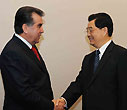
Updated: 2009-06-15 07:39 This year's annual summit of the Shanghai Cooperation Organization (SCO) is due to be held in Russian city of Yekaterinburg today. President Hu Jintao will attend the two-day summit, the ninth of it kind, and the first meeting of BRIC (Brazil, Russia, India and China) leaders. Since its founding in 2001, the SCO, a regional organization that includes China, Russia and four central Asian nations of Kazakhstan, Kyrgyzstan, Tajikistan and Uzbekistan, has maintained a good development momentum and accumulated rich experience of promoting regional economic and security cooperation. The Yekaterinburg summit will offer a platform for SCO leaders to review the results of its cooperation so far. The enduring vigor of the organization may be attributed to its founding political principles, including adherence to the principles of peace, cooperation, openness and not targeting a third party. Besides, its principles such as mutual trust and benefit, equality, coordination and respect for each other's diversity as well as aspiration for a common development, the "Shanghai spirit" has also contributed much to the organization's steady advancement over the past eight years. These principles and the Shanghai spirit, in tune with multi-polar globalization, are a reflection of Eurasia's demands for political and economic development and have effectively maintained the core interests of SCO members. The SCO has fully played its part in promoting political, security, economic and cultural exchanges and cooperation. Member states have held unrestricted consultations on major issues and effectively coordinated their stances, thus enhancing mutual trust.
In the realm of security, a top priority for the SCO, members have also achieved a great deal in the battle against terrorist, separatist and extremist activities as well as drug trafficking, weapons sales and cross-border crime. All countries have made huge efforts in pushing for long-term economic cooperation programs and concrete projects. The cooperation took the form of effective exchanges between members in the fields of culture, education, healthcare, sports, tourism, and science and technology. A number of non-SCO members, with increasing interest in the organization, have actively participated in a variety of its activities and mechanisms. At Yekaterinburg, SCO leaders are expected to discuss ways to deal with the complex international and regional situations. SCO members are expected to sign the Yekaterinburg Declaration, a joint communiqu and other agreements. In the context of the continuing global financial crisis, the summit provides a chance to evolve a common standpoint and initiate concerted action to deepen cooperation. Ahead of the Yekaterinburg summit, the SCO held an economic meeting aimed at deeper coordination and cooperation among members to ward off the worst effects of the financial crisis. To this end, member-states discussed how to strengthen cooperation for steady economic growth, greater investment and more integration of financial and insurance mechanisms in the region. It is expected that the SCO leadership will hold intensive consultations at the highest level on ways to deal with the ongoing crisis. SCO members have already worked out their own counter-crisis plans and taken a series of measures within bilateral and multilateral frameworks to minimize the impact of the financial crisis on social and economic development. As a regional organization largely dominated by a political agenda so far, the SCO has witnessed smooth cooperation in the security realm as terrorism is a common concern. Yet economic cooperation has made slower progress. That is because economic concerns are divergent and, therefore, the priorities different in bilateral and multilateral economic affairs. The Afghanistan issue is expected to be high on the agenda at this summit. Considering that the United States has shifted its anti-terror focus from Iraq to the central Asian nation, the SCO faces the question of how to handle its relations with the sole superpower on this issue. Although the expansion of SCO membership is not on the agenda now, the possibility cannot be ruled out. The SCO is now preparing documents on procedures to absorb new members. In addition to its six formal members, the SCO has four observers, namely, Mongolia, India, Pakistan and Iran. United by the common urge to maintain regional security, promote economic development, build mutual trust and pursue new developmental bonds, this SCO summit is expected to take further steps for strengthening unity among its members. Since its establishment, the SCO has suffered setbacks, too, in the process of its development. The US extending its military presence in Central Asia, after the launch of its anti-terror campaign in the region and political change in some Central Asian countries once cast a shadow over prospects of the SCO. However, the organization has endured these and a raft of other severe tests to move forward with a new vitality. After eight years of development and exploration, the SCO has emerged stronger through testing times and is now poised for more rapid progress. The author is a researcher with the Research Center of Contemporary World |
       |
主站蜘蛛池模板: 成人无码午夜在线观看| 亚洲人成网站18禁止无码| 国产午夜成人久久无码一区二区| 亚洲欧洲日产国码久在线| 久久无码av一区二区三区电影网 | 欧美日韩精品一区二区三区不卡 | 国产精品一区中文字幕| 久久亚洲女同第一区综合| 国产av午夜精品福利| 中文字幕国产精品资源| 成人一区二区人妻不卡视频| 国产婷婷综合在线视频中文| 九九久久自然熟的香蕉图片| 欧洲亚洲国内老熟女超碰| 亚洲七七久久桃花影院| 精品一区二区亚洲国产| 国产精品二区中文字幕| 啊轻点灬大JI巴太粗太长了在线 | 亚洲色在线V中文字幕| 在线观看国产成人av天堂| 国产精品无码a∨麻豆| 午夜国产一区二区三区精品不卡| 午夜福利国产片在线视频| 无码国产午夜福利片在线观看| 久久久精品人妻一区二区三区| 热久久这里只有精品99| 精品无码视频在线观看| 日韩中文字幕有码av| 97超级碰碰碰免费公开视频| 国产69精品久久久久久妇女迅雷| 男女18禁啪啪无遮挡激烈网站| 99精品国产一区二区三| 欧美成本人视频免费播放| 国产av区男人的天堂| 国内精品自线在拍| 午夜视频免费观看一区二区| 在线国产精品中文字幕| 中文毛片无遮挡高潮| 日韩淫片毛片视频免费看| 精品午夜福利在线视在亚洲| 亚洲天堂网中文在线资源|





