

|
|

2009 SCO & BRIC Summits > Top News
|
India-Pakistan meet, what is at stake?(Agencies)
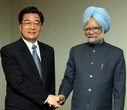
Updated: 2009-06-16 11:56 SINGAPORE - Indian Prime Minister Manmohan Singh is set to hold talks with Pakistani President Asif Ali Zardari on Tuesday, the first meeting since ties went into deep freeze following attacks in Mumbai last November. New Delhi has put on hold a 5-year-old peace process, saying Pakistan must act decisively against the Lashkar-e-Taiba militants India holds responsible for the Mumbai attacks. Islamabad says it has detained some militants, but needs more evidence from New Delhi for further action. The United States says it would like the nuclear rivals to reduce tensions and resume dialogue, so Pakistan can focus on the war against the Taliban and al Qaeda on its western front and increasingly in the heartland. Here are some questions and answers ahead of the Singh-Zardari meeting on the sidelines of the Shanghai Cooperation Organisation in the Urals city of Yekaterinburg. WHAT IS AT STAKE? Since the attacks in Mumbai in which 166 people were killed, India and Pakistan have traded accusations, stopped ongoing talks on a range of issues, and discouraged travel between the two countries, although the threat of a conflict has receded.
India has in the past accused Pakistan security forces of helping these militants cross the rugged frontier to carry out attacks in Kashmir and increasingly elsewhere in India. Islamabad says it gives moral support to the Kashmiri people in their struggle for self-determination. Hundreds of thousands of troops remain massed on both sides of the Line of Control dividing Kashmir between the two countries, although a 2003 ceasefire that ended almost daily artillery duels is still largely holding. The two foes, who have thrice gone to war since independence from Britain in 1947, have active nuclear and missile development programmes, and missiles capable of carrying nuclear warheads. HOW DOES IT IMPACT THE US WAR ON MILITANTS? Rivalry between India and Pakistan, dangerous as it is, has added another dimension to the US-led war on al Qaeda and the Taliban in Afghanistan and Pakistan. Washington wants Pakistan's army to stop thinking of India as the existential enemy and focus on Islamist militants attacking its heartland, coming as close to Islamabad as Buner, 100 kilometres (60 miles) away. If tensions could be reduced, and neighbours begin talking, the United States says the Pakistani army can then move its forces to the western front and fight al Qaeda and the Taliban. The last thing the army needs at this time is a distraction on the border with India as it begins operations in the Waziristan region in the northwest, home to the most recalcitrant tribes. WHO ARE THE KEY PLAYERS? Prime Minister Singh is a soft-spoken economist born in the part of Punjab that lies in Pakistan following partition of the subcontinent in 1947. He has made no secret of his desire to pursue peace with the estranged neighbour, saying this month he was ready to meet Pakistan "more than half-way" if it cracks down on militants attacking India. Singh returned to power last month with a mandate giving him a freer hand to manage Pakistan ties. President Zardari also has repeatedly called for peace with India, stressing the economic gains of increased trade with the rising Asian power. He also offered to overturn Pakistan's nuclear doctrine by offering to commit Pakistan to a policy of no first use of nuclear weapons. As he battles Islamist militants, including those who killed his wife and former prime minister Benazir Bhutto, in a fight he has vowed to "carry to the end", he would be looking at least to a resumption of dialogue with India. Any Indian concession on that score may help strengthen his shaky position at home. WHAT ARE POSSIBLE OUTCOMES? The two countries may agree to resume peace talks that had made little progress on Kashmir, but had opened the way for trade, transport, sporting ties between the two countries. They could also lay out ways they planned to tackle Kashmir, the dispute at the heart of more than 60 years of hostility. Indian and foreign analysts say that away from the public eye, the two sides came close to a breakthrough in 2007 before then President Pervez Musharraf ran into political problems that eventually forced him to resign. At a minimum, a summit would break the ice and ease tensions. |
       |
主站蜘蛛池模板: 亚洲国产成人无码AV在线影院L| 日本高清中文字幕一区二区三区| 三级全黄的全黄三级三级播放| 艳妇乳肉豪妇荡乳在线观看| 国产人成77777视频网站| 国产亚洲一区二区三区成人| 人人入人人爱| 成人aⅴ综合视频国产| 久久婷婷综合色一区二区| 免费人欧美成又黄又爽的视频| 久久天天躁夜夜躁狠狠85| 2020狠狠狠狠久久免费观看| 人妻少妇精品视频专区| 最近的2019中文字幕视频| 国产日韩入口一区二区| 日韩精品av一区二区| 国产91精品一区二区麻豆| 亚洲AV无码破坏版在线观看| 天堂资源国产老熟女在线| 亚洲欧洲∨国产一区二区三区| 成人精品区| 国产亚洲精品日韩香蕉网| 午夜免费视频国产在线 | 真实国产老熟女无套中出| 成人午夜av在线播放| 一区二区三区鲁丝不卡| 亚洲午夜无码av毛片久久| 好男人官网资源在线观看| 久久精品aⅴ无码中文字幕| 69天堂人成无码免费视频| 三上悠亚ssⅰn939无码播放| 99精品国产一区二区三区| 日韩一卡2卡3卡4卡新区亚洲 | 狠狠五月深爱婷婷网| 视频一区二区三区中文字幕狠狠| 久久毛片少妇高潮| 91一区二区三区蜜桃| 亚洲国产欧美一区二区好看电影| 国产97在线 | 亚洲| 国产一区二区日韩在线| 欧洲精品不卡1卡2卡三卡|





