Society
Fruits give farmers juicy bite of profits
By Duan Yan in Qixia and Hu Yongqi in Beijing (China Daily)
Updated: 2010-11-04 07:51
 |
Large Medium Small |
Price rise means rich pickings for growers, report Duan Yan in Qixia and Hu Yongqi in Beijing.
Lu Guoqi could not stop smiling. Sitting behind the bars of a tricycle loaded with apples, the grocer has been making a tidy profit in recent weeks.
"The price has never been so high," said the 58-year-old from Qixia in Shandong province. This time last year, he was making just 2.1 yuan (31 US cents) for every jin (a Chinese measurement equal to 500 grams) of apples. Today, the price is 3.1 yuan.
 |
|
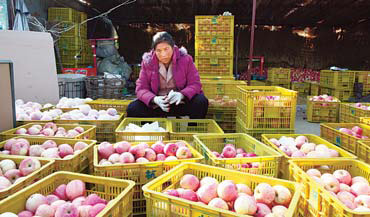
A retailer categorizes apples before packaging them for sale in a market in Qixia, Shandong province, on Oct 27. [Feng Yongbin / China Daily] |
Apples are the latest in the growing number of fruits and vegetables that have seen sudden price hikes over the last 12 months, with others including garlic, mung beans and cabbages.
Although many of the voices in the marketplace and in the media are laying the blame on opportunist speculators, experts say their involvement is only one of the factors driving up prices.
Qixia, often referred to as "the city of apples", is one of three major areas for growing the fruit in China (the others being in Hebei and Shaanxi provinces). With 650,000 mu (43,330 hectares) of land, farmers here produce 1.4 million tons of high-quality apples every year.
Yet, regular wholesale buyers say the fruit has been snapped up quicker than usual this year, leaving them with slim pickings.
Sun Shixian, who has been trading apples since 1997, looked far from happy as he held a basket of bruised apples that had cost him 2 yuan a jin. "This kind of apple was always considered 'damaged goods' but now the market standard has changed," he said.
Officials with Qixia's fruit industry bureau attributed the drop in quality to cold weather in last spring, which also affected yields, with production falling by 100,000 tons. (Although the Shaanxi authorities deny annual apple yields have fallen, buyers claim they are down at least 30 percent.)
Droughts and floods this year in South China have also hit growers, reducing their output, which is also contributing to the demand for alternatives.
"A shortage of other fruits means more buyers turn to apples," said Sun. "More disasters next year will likely push prices even higher."
What is worse for old hands like Sun is that the shortage has attracted many new players to enter the game. Although it is hard to estimate the number of buyers this year, industry analysts described the market as "wide open" due to the low investment threshold for agricultural products.
"Speculators figure out the overall supply and demand of agricultural products and start collecting (those in short supply)," said Li Minghui, a research fellow at the Chinese Academy of Agricultural Sciences' institute of agricultural economics and development.
 |
|
Farmers package apples in a factory in Qixia, Shandong province. With 650,000 mu of land, farmers in the city produce 1.4 million tons of high-quality apples every year. [Photos by Feng Yongbin / China Daily] |
Sun Fengjuan, who used to trade in corn and rice, is one of the new players. She arrived in Qixia on Oct 1 to buy 300 tons of apples.
"But the price kept rising and the quality was not that good, so I decided to be cautious and just get 100 tons," said the businesswoman from Jiamusi in Heilongjiang province.
"I'm not sure I can make a profit from the apple business but I'm already here, so I'll take the bet," she added.
As the produce being gambled on are non-staple foods in China, researcher Li said the government does not monitor the changing prices or keep national reserves.
This allows batches of fruit to be freely traded - often before it even ripens.
In August, wholesaler Han Lizhi said she paid 260,000 yuan ($39,000) to reserve 350 mu (23 hectares) of farmland in Jilin province growing Chinese cabbage. However, two months later, a broker offered her more than 400,000 yuan for entire yield, predicted to be 1,300 tons.
Han, who has run a stall at Shuangxing Market in Dalian, Liaoning province, for 26 years, declined the offer, believing an expected decrease in production "would push prices even higher".
She was right. On Oct 19, the price of Chinese cabbage rose from 0.8 yuan a kilogram to 1.1 yuan. A week later, it rose again to 1.5 yuan a kilogram.
 主站蜘蛛池模板:
亚洲成人av免费一区|
美欧日韩一区二区三区视频
|
国产精品国产三级国AV|
色偷偷中文在线天堂中文|
日韩高清不卡免费一区二区|
亚洲欧美人成人让影院|
亚洲高清免费在线观看|
97国产露脸精品国产麻豆|
国产精品99久久久久久宅男|
亚洲av日韩av永久无码电影
|
厨房掀起裙子从后面进去视频|
国产精品中文第一字幕|
国产色婷婷免费视频|
中文字幕日韩有码第一页|
狠狠综合久久av一区二|
色老99久久九九爱精品|
日本另类αv欧美另类aⅴ|
国产精品护士|
艳妇乳肉豪妇荡乳xxx|
伊人久久大香线蕉aⅴ色|
国产精品电影久久久久电影网|
手机看片AV永久免费|
2020年最新国产精品正在播放
|
亚洲人成精品久久久久|
欧美伦费免费全部午夜最新|
国产性天天综合网|
国产久免费热视频在线观看|
国产精品天天在线午夜更新|
中文字幕理伦午夜福利片|
伊人无码一区二区三区|
国语精品自产拍在线观看网站|
中文字幕无码日韩专区免费|
一区二区三区四区五区色|
国产亚洲欧洲三级片A级|
日韩av毛片福利国产福利|
国产AV大陆精品一区二区三区|
色综合网天天综合色中文|
九九热在线免费播放视频|
国产成人精品无码专区|
欧美精品亚洲精品日韩专|
91久久国产成人免费观看|
主站蜘蛛池模板:
亚洲成人av免费一区|
美欧日韩一区二区三区视频
|
国产精品国产三级国AV|
色偷偷中文在线天堂中文|
日韩高清不卡免费一区二区|
亚洲欧美人成人让影院|
亚洲高清免费在线观看|
97国产露脸精品国产麻豆|
国产精品99久久久久久宅男|
亚洲av日韩av永久无码电影
|
厨房掀起裙子从后面进去视频|
国产精品中文第一字幕|
国产色婷婷免费视频|
中文字幕日韩有码第一页|
狠狠综合久久av一区二|
色老99久久九九爱精品|
日本另类αv欧美另类aⅴ|
国产精品护士|
艳妇乳肉豪妇荡乳xxx|
伊人久久大香线蕉aⅴ色|
国产精品电影久久久久电影网|
手机看片AV永久免费|
2020年最新国产精品正在播放
|
亚洲人成精品久久久久|
欧美伦费免费全部午夜最新|
国产性天天综合网|
国产久免费热视频在线观看|
国产精品天天在线午夜更新|
中文字幕理伦午夜福利片|
伊人无码一区二区三区|
国语精品自产拍在线观看网站|
中文字幕无码日韩专区免费|
一区二区三区四区五区色|
国产亚洲欧洲三级片A级|
日韩av毛片福利国产福利|
国产AV大陆精品一区二区三区|
色综合网天天综合色中文|
九九热在线免费播放视频|
国产成人精品无码专区|
欧美精品亚洲精品日韩专|
91久久国产成人免费观看|