BEIJING - The breaking news of Mo Yan's Nobel Prize in Literature on Thursday evening soon aroused public curiosity of the 57-year-old Chinese writer: Why was it him that was favored by the Swedish Academy?
Less than half an hour after the announcement from Stockholm, Mo's works turned to "sold-out" status at China's major online book sellers.
One lucky buyer wrote in an online comment: "Rushed to purchase, but to my shame, I have not read any of his novels."
Although Mo was entitled one of the top domestic literature awards before the Nobel Prize, he is not the most popular novelist in China, in either the book market or in reputation.
Chinese media seemed to be stunned as some journalists were reported to be on their way overnight to Gaomi City of East China's Shandong province, Mo's birthplace where he stayed with his family.
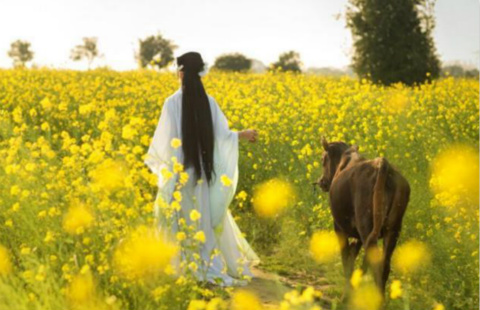
Born in 1955 into a rural family, Mo dropped out of school and became a farmer when he was a teenager. He joined the military and devoted himself to writing after Chinese literary circles started the introspective ideology for the "Cultural Revolution (1966-1976)".
For more than a century, Nobel Prize has been regarded by the world as recognition to an individual or even a nation's cultural and scientific advances.
Despite an economic miracle in the past few decades, scientists and experts in physics, chemistry and medicine have so far been deemed hopeless by the Chinese public to win Nobel Prizes in sciences.
Chinese scientists' failure to win a Nobel Prize has been blamed on the lack of originality, creativity and being xenocentric. However, Mo's novels, although believed by some to be too rustic, are labeled as realistic portrayals of contemporary Chinese people.
Yet Mo, whose novels were translated into several languages, was honored the prize, beating his major Japanese competitor who is more popular in China, Haruki Murakami.
Mo's novel "Big Breasts & Wide Hips," translated by Howard Goldblatt, tells a story of a mother who struggled and suffered hardship and intertwined fates with Chinese people in the 20th century.
His more recent work "Frog" more directly criticized China's one-child family policy, which helped control the country's population explosion but also brought tragedies to rural residents in the past 60 years.
"I think the reason why I could win the prize is because my works present lives with unique Chinese characteristics, and they also tell stories from a viewpoint of common human beings, which transcends differences of nations and races," Mo said on Thursday evening to Chinese journalists.
Mo also said many folk arts originated from his hometown, such as clay sculpture, paper cuts, traditional new year paintings, have inspired and influenced his novels.
Mo's prize may give powerful encouragement to the country's writers as the more reflective of Chinese lives their works are, the more possible they arise as a world literature.
The breakthrough of the Nobel Prize in Literature also came ahead of a key national congress of the Communist Party of China (CPC), which has called for cultural self-consciousness and self-confidence of the Chinese nation.
As the world's second largest economy with a history of thousands of years, China will inevitably encounter ideological disputes and even conflicts with foreign civilizations.
The country faces a yawning gap between the rich and the poor, worsening environment pollution and an aging population. Paying more attention to such issues, Chinese writers may create more works that record the nation's journey to rejuvenation.
With more Chinese writers like Mo, the world could learn a more real China. Perhaps, this is another reason for the Swedish Academy's choice.



Copyright 1995 - . All rights reserved. The content (including but not limited to text, photo, multimedia information, etc) published in this site belongs to China Daily Information Co (CDIC). Without written authorization from CDIC, such content shall not be republished or used in any form. Note: Browsers with 1024*768 or higher resolution are suggested for this site.
License for publishing multimedia online 0108263 Registration Number: 130349