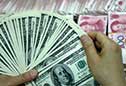
The health financing structure has been constantly improved. China's health expenditure comes from the government's general tax revenue, social medical insurance, commercial health insurance, residents' out-of-pocket spending, etc. In 2011, the total health expenditure in China reached 2,434.591 billion yuan, 1,806.95 yuan per capita. The total expenditure accounted for 5.1% of the country's GDP. In comparable prices, the health expenditure grew by an average annual rate of 11.32% from 1978 to 2011. Individual "out-of-pocket" spending declined from 57.7% in 2002 to 34.8% in 2011, showing that health financing is working better in the areas of risk protection and re-distribution. In 2011, the spending on hospitals and outpatient establishments was 1,808.94 billion yuan, and that on public health agencies, 204.067 billion yuan, comprising 71.74% and 8.09%, respectively, of the total health expenditure. Of the total spending on hospitals, those on urban hospitals, county hospitals, community health service centers and township health service centers stood at 64.13%, 21.28%, 5.17% and 9.3%, respectively.
Health resources have been developing in a sustained way. By the end of 2011, medical and healthcare institutions around the country totaled 954,000, an increase of 148,000 over 2003. Licensed doctors (assistants) reached 2,466,000, or 1.8 per thousand people, as compared with 1.5 per thousand people in 2002. Registered nurses totaled 2,244,000, or 1.7 per thousand people, as compared with one per thousand people in 2002. The number of hospital beds reached 5160,000, or 3.8 per thousand people, as compared with 2.5 per thou-sand people in 2002.
Marked improvement has been seen in the utilization of medical and health services. In 2011, medical institutions throughout the country hosted 6.27 billion outpatients, as compared with 2.15 billion in 2002; and admitted 150 million inpatients, as compared with 59.91 million in 2002. That year, Chinese residents went to the medical institutions for medical treatment 4.6 times on average; 11.3 of every 100 people were hospitalized; the utilization rate of hospital beds reached 88.5%; and the hospital stay of the inpatients averaged 10.3 days. These figures show that it has become increasingly convenient to see a doctor and more easily accessible to get medical services. In 2011, 83.3% of all households (80.8% in rural areas) could reach medical institutions within 15 minutes, as compared with 80.7% in 2002. Medical service quality management and control systems have been constantly improved. A system of blood donation without compensation has been established, so as to ensure blood supply and safety.
II.
Reform of Medical and Healthcare Systems
With years of effort, China has made remarkable achievements in the development of its healthcare undertakings, which, however, still fall far short of the public's demands for healthcare as well as the requirements of economic and social development. Especially when China turned from a planned economy to a market economy, the old medical care system has undergone great changes. So it became an issue of major importance for the Chinese government to provide better and more accessible medical and health services to the public. In the 1980s, the Chinese government initiated reform of the medical and healthcare systems, and speeded up the reform in 2003 after a success was won in the fight against SARS. In March 2009, the Chinese government promulgated the "Opinions on Deepening Reform of the Medical and Health Care Systems," setting off a new round of reform in this regard. The basic goal of this reform was to provide the whole nation with basic medical and health services as a public product, and ensure that everyone, regardless of location, nationality, age, gender, occupation and income, enjoys equal access to basic medical and health services. And the basic principles to be followed in the reform were to ensure basic services, improving such services at the grass-roots level and establishing the effective mechanisms.



Copyright 1995 - . All rights reserved. The content (including but not limited to text, photo, multimedia information, etc) published in this site belongs to China Daily Information Co (CDIC). Without written authorization from CDIC, such content shall not be republished or used in any form. Note: Browsers with 1024*768 or higher resolution are suggested for this site.
License for publishing multimedia online 0108263 Registration Number: 130349