BEIJING - At a corner of the Aegean Sea along the east coast of the Saronic Gulf lies the ancient Port of Athens -- Piraeus. Merely a dozen kilometers away from central Athens, it has long been the largest passenger port in Europe, bustling with ferries and cruisers.
Miles away to the west of the passenger terminal, there is also a real buzz in the container piers: towering cranes hoisting containers from giant ships by the water and trucks loaded with containers rumbling around in the yard. One logo is particularly striking - COSCO.
Since the largest Chinese shipper took over container operations at Pier II, Piraeus has enjoyed brisk growth of cargo traffic, and the pace has picked up even further since the June 2013 inauguration of Pier III. It became the third largest container port in the Mediterranean Sea last year, and its potential is yet to be fully tapped.
Behind the upswing of COSCO' s shipping and port services is China' s manufacturing boom, which has turned the once industrially backward country into "the factory of the world" and seen "Made in China" products closely woven into the life and work of people in virtually every corner of the world.
Such epic transformation is the main theme of the Chinese story since the inauguration of its opening-up and reform more than 35 years ago. Yet undeniably, the splendid process has also brought about some side effects that are now too dangerous and damaging to wait another day to deal with.
As Chinese political advisers kicked off their annual national meeting Monday in the Chinese capital, which formally lifted the curtain on this year's "two sessions," Beijing was enveloped in a thick pall of smog.
The inescapable canopy of air pollution is an alarming reminder that, after more than three and a half decades of rapid development, China has now reached a critical juncture similarly significant as the one in the late 1970s. But this time around the holy grail is a sustainable socioeconomic development model.
Late last year, the Communist Party of China Central Committee decided at a key plenary session to deepen reform in an all-round way, pledging to further improve China's economic structure and growth pattern, among others.
During their ongoing annual conferences, Chinese lawmakers and political advisers are expected to pool their wisdom and translate the epochal decision into concrete state policies and measures.
The impact of the decision and the upcoming policies on the world is very likely to equal that of their counterparts three and a half decades ago.
Closer economic symbiosis
Change is already afoot in that direction.
Thanks to China's efforts in economic restructuring, the denotation of the "Made in China" label is gradually shifting: Clothes and shoes are being replaced by much fancier stuff like laptops and bullet trains; the nation that used to clothe the world is now equipping it for better development with innovative products and cutting-edge technology.
An illustrative example is China' s high-speed rail systems. Boasting high performance and competitive prices, Chinese speedy trains have become increasingly attractive across the world. The first Chinese-built high-speed railway on foreign land was completed in Turkey in mid-January, and other cooperation deals have been reached with Thailand, Hungary and Serbia.
The mounting popularity of Chinese express trains, along with the global expansion of such Chinese behemoth manufacturers as SANY Group, is vividly emblematic of the rising status and influence of China's manufacturing sector.
The China-world economic symbiosis, however, is not confined to textiles and steel. Something less visible yet no less important is picking up momentum as well, and is playing an increasingly contributive role in undergirding the international trade.
That is the internationalization of the Chinese currency. Thanks to its unique advantages, Hong Kong has established itself as an offshore RMB center, but several others are catching up.
In April 2012, the City of London launched an initiative to turn the Square Mile into a center for RMB business. Besides, "red-back" business is gaining steam in Singapore too. Meanwhile, more and more countries have reached local currency settlement arrangements with China, promoting its international use.
Because of Washington' s flirtation with sovereign default, the world' s confidence in the dollar has been eroded. Worldwide traders are propelled to look for options, and the yuan is offering them a promising alternative.
During the "two sessions," representatives from across the country will explore ways to build upon the past progress and further push forward China' s economic and financial reform, which will benefit both China itself and the world at large.
The Beijing solution
On September 3, 2013, some 20 African civil servants from Ethiopia, Rwanda, Zimbabwe and Nigeria, began their first lesson under a tailored training program on public administration at China's National School of Administration in Beijing.
The project is just one of many. China's success has become a paragon that scholars and officials from across the world are eager to study and learn from. The reform policies due to be hammered out at this year's "two sessions" will add to the valuable trove of Chinese experience.
Without any doubt, some of the new measures will be about urbanization, a buzzword of the year and one of the hottest subjects during the "two sessions" at lower levels.
Analysts have predicted that the central points of a "human-centered" urbanization process will include lowering the barriers for China's 230 million migrant workers and 70 million non-local urbanites to settle in the cities where they work and live, and removing restrictions on hukou, or household registration, in towns and small cities.
Given that China spent 30 years to reach the level of urbanization that took Britain some 200 years and the United States 100 years, the future chapters of China' s urbanization story are also worth expecting.
Beneath the surface of China's successful story is a vein of pragmatic and strategic thinking. It is thanks to such thinking that China has decided to focus more on the quality rather than the speed of its economic development.
In essence, what China has been doing is thoroughly studying its own actualities and external environment, actively drawing lessons from the successes and failures of other countries, and eventually coming up with its own solutions based on the former and supplemented by the latter.
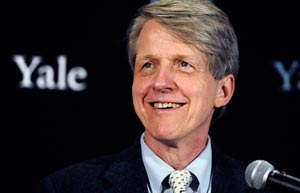
As China' s trajectory has eloquently proved, different conditions need different approaches, and every country can find its own way forward based on its national realities. History will not end in the way Francis Fukuyama has predicted.

Copyright 1995 - . All rights reserved. The content (including but not limited to text, photo, multimedia information, etc) published in this site belongs to China Daily Information Co (CDIC). Without written authorization from CDIC, such content shall not be republished or used in any form. Note: Browsers with 1024*768 or higher resolution are suggested for this site.
License for publishing multimedia online 0108263 Registration Number: 20100000002731